Chinese Markets Lose Trillions Amid AI Race With US, Raising Economic Concerns
· GlobeWire Daily Editorial Desk · Source: www.theguardian.com
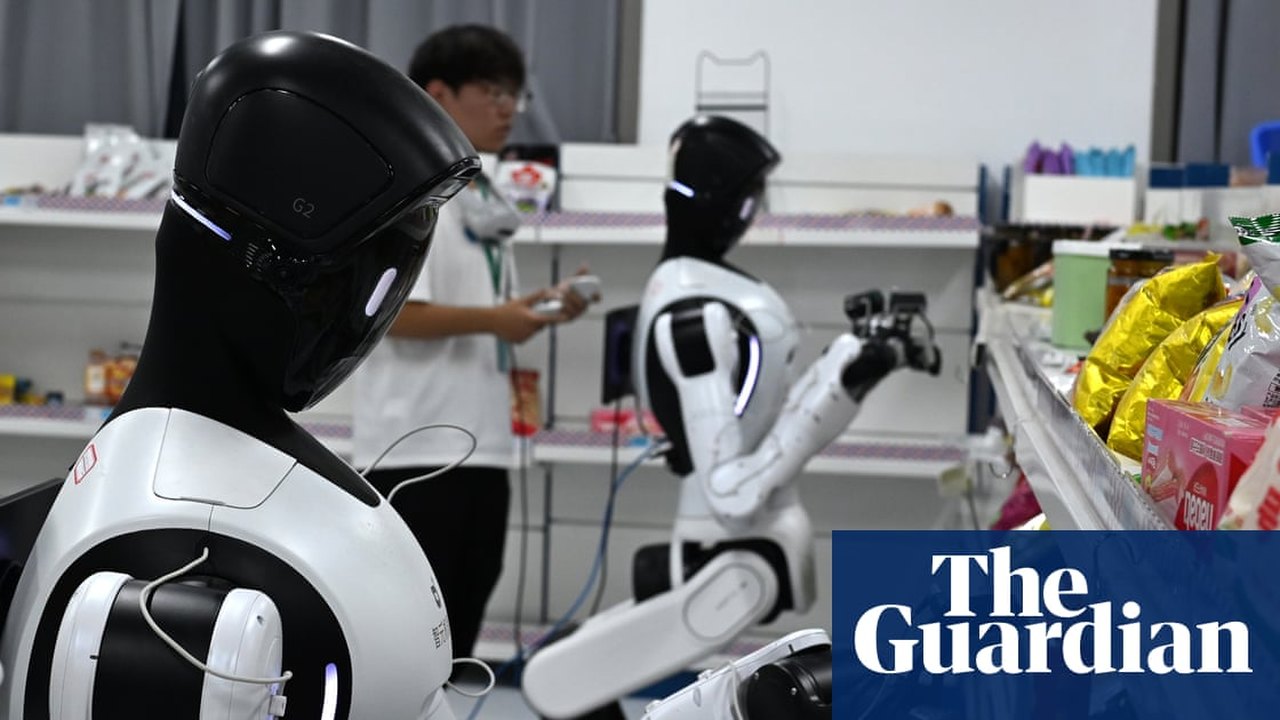
Image: www.theguardian.com · Photo source · Cropped to 16:9; original source image
Market Decline and AI Investment
China's stock markets have experienced a dramatic downturn, with trillions of dollars wiped out since May, largely driven by investor anxiety over the country's artificial intelligence sector. The STAR 50 Index, which tracks technology and innovation companies on the Shanghai stock exchange, has fallen 40% since June. Other major indexes have dropped approximately 20% over the same period, according to Bloomberg data.
AI stocks now account for over 40% of the total stock market value in China and Hong Kong, as reported by Goldman Sachs. This concentration means that any significant decline in AI-related valuations sends shockwaves throughout the broader domestic economy.
Government Support Meets Market Reality
Despite substantial government backing, including a 60 billion yuan ($8.3 billion) state-supported AI investment fund launched this month, Chinese technology companies continue to struggle with profitability. Many firms are finding it difficult to convert their innovations into sustainable revenue streams.
Consumer spending on technology products remains weak, particularly in areas like AI-powered devices and services. This lack of domestic demand undermines efforts to build a self-sustaining tech ecosystem.
Geopolitical Pressures Intensify
Western sanctions, especially those imposed by the United States, are compounding challenges for Chinese tech firms. The US has already banned humanoid robots from China, citing national security concerns, and is reportedly considering restrictions on Chinese components used in data centers.
These export controls limit Chinese companies' ability to compete globally, forcing them to rely more heavily on an underperforming domestic market.
Robotics Sector Faces Profitability Challenges
Beijing has identified robotics—often referred to as embodied AI—as a strategic priority, aiming to address demographic issues such as an aging population and shrinking workforce. However, demand for these technologies is primarily driven by government agencies and research institutions rather than everyday consumers.
Products like humanoid robots and robotic pets remain too costly and impractical for widespread household adoption. Shares in Unitree, one of China's leading robotics manufacturers, have halved since its August listing.
Policy Uncertainty Ahead of Leadership Transition
With top Chinese Communist Party officials meeting for the fifth plenum—a key event preceding next year's 21st Party Congress—policymakers appear hesitant to introduce bold economic stimulus measures. The politically sensitive period discourages risky interventions that might boost markets but could also backfire.
Analysts note that while there is optimism in certain sectors such as satellite technology and AI research due to strong state backing, the overall climate for tech investments remains uncertain.
Global Context and Future Outlook
Meanwhile, US-based AI company Anthropic has filed paperwork for what could become one of the largest initial public offerings in history, potentially raising up to $100 billion. In contrast, China currently lacks comparable high-profile IPO candidates among its tech firms.
As both nations vie for supremacy in artificial intelligence, investors and analysts are closely watching how Beijing balances long-term strategic goals with short-term economic realities.
AI-assisted reporting; source claims are attributed and have not been independently verified.
More to read
 Economic Indicators: Credit Concerns at CoreWeave, Pokémon Thefts, and Canadian Maple Syrup Shortages
 U.S. Mahjong Trend Provides Economic Lifeline for Chinese Manufacturing Hub
 South Korea Economic Growth Accelerates Driven by AI Chip Demand
 UN Warns Growing 'Opportunity Divide' in AI Could Exacerbate Global Economic Inequality
Related coverage
Related reporting available at publication.
Economic Indicators: Credit Concerns at CoreWeave, Pokémon Thefts, and Canadian Maple Syrup ShortagesU.S. Mahjong Trend Provides Economic Lifeline for Chinese Manufacturing HubSouth Korea Economic Growth Accelerates Driven by AI Chip DemandUN Warns Growing 'Opportunity Divide' in AI Could Exacerbate Global Economic Inequality Masahiro Sakurai Questions Long-Term Value of AI-Generated Video Games
 Educators Face New Challenges as AI Transforms Classroom Integrity