Ingenix Publishes Benchmarks for Thalamus Decision, a Typed-Decision Biological AI Model
· GlobeWire Daily Editorial Desk · Source: www.prnewswire.com

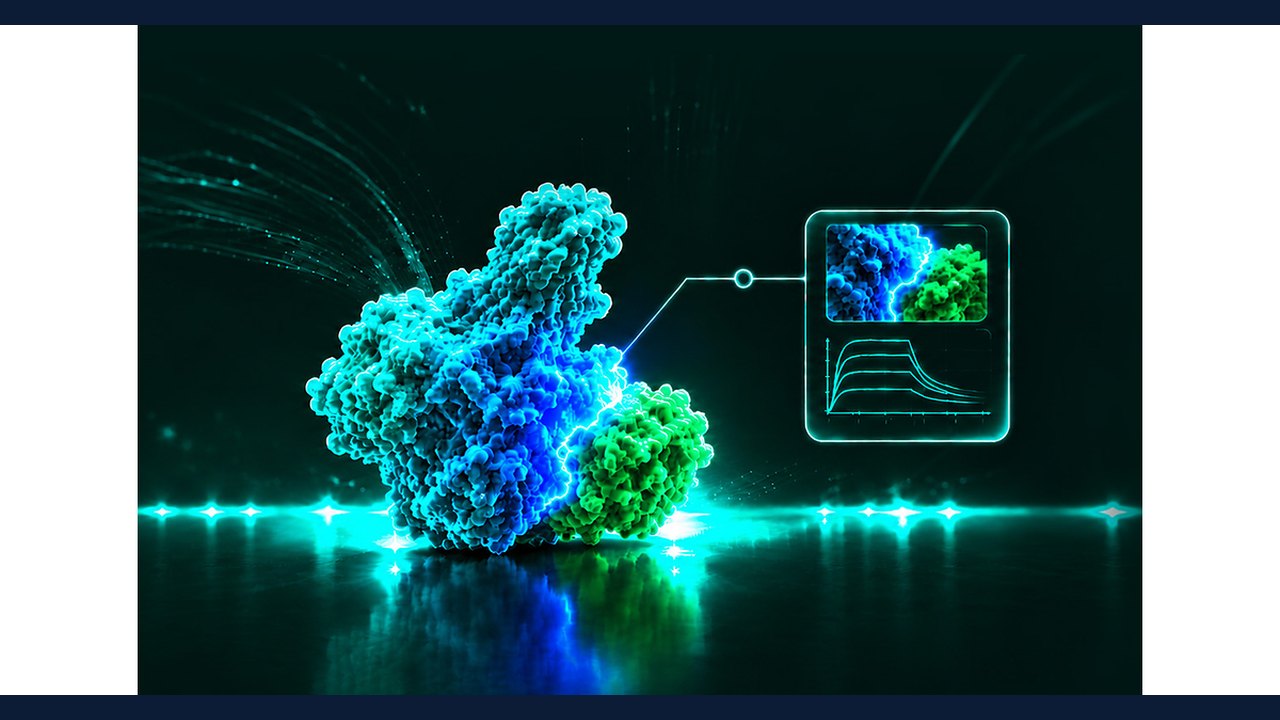
Original GlobeWire Daily editorial illustration — not an event photograph.
Polish artificial intelligence start-up Ingenix has published benchmark results for Thalamus Decision, described by the company as the world's first typed-decision biological model capable of interpreting gene-expression data.
According to the announcement published on November 17, 2026, in Warsaw, the model is designed to process biological samples directly rather than generating open text responses like standard large language models. The 9B version of Thalamus Decision is scheduled to be open-sourced on November 18, 2026.
Understanding Typed-Decision Biological Models
Unlike conversational models that write out descriptive answers, typed decision models produce calibrated confidence scores for discrete options. This structure is intended to help automated systems determine when to proceed with a decision and when to defer to human experts.
Key features of Thalamus Decision include:
- Direct Gene-Expression Analysis: Capable of reading bulk and single-cell RNA-seq expression profiles.
- Size Variants: Available in 9B and 27B parameter configurations.
- Task Versatility: Handles cell type assignment, cell malignancy judgment, tissue of origin identification, and cell line drug response prediction.
- Perturbation Response: Assesses whether gene silencing alters expression and in which direction.
Reported Benchmarks and Drug Development Implications
Ingenix reported that the model scored between 84% and 89% on two GDSC cell-line drug-response tasks, approximately 94% on gene-essentiality across tissues, and approximately 95% in identifying cancer model types. The company stated that the models outperformed text-only medical decision models by 37 points or more on sample-grounded biology tasks.
Based on calibrated confidence levels, the company reported that the 9B model automated 62.6% of decisions at a target error rate of 5% (with a 6.3% realised error rate), while the 27B model automated 66.2% of decisions with a 6.8% realised error rate. Ingenix suggested that such performance could potentially automate nearly two-thirds of early-stage drug development decisions, though independent validation is required.
Piotr Surma, CEO of Ingenix, stated that the tool aims to assist researchers in prioritizing promising molecules and proteins for laboratory progression and experimental validation. The company's background includes its foundational work on Modality Fusion and the Ingenix Biological Reasoning Engine.
Verification and Practical Implications
Readers and researchers seeking to verify these claims can review the official announcement on PR Newswire or visit the company's official website at ingenix.ai. Practical verification of open-sourced model weights will become possible following the scheduled release on November 18, 2026. Interested parties should consult technical documentation and peer-reviewed independent evaluations before deploying these models in production environments.
AI-assisted reporting; source claims are attributed and have not been independently verified.
More to read
 Biological Computing Co. Unveils TBC mischief 1: World’s First Public Neuron‑Derived AI Video Model
 Startup Radical Numerics Announces Omnii Defense Model to Flag Biological Threats
 Switch: A Unified Harness for Decision‑Model Agents
 Sino Biological Launches New Target Protein Collections for AI-Driven Discovery