Pokemon Anime Studio OLM Develops AI Coloring Tool Trained on Three Frames
· GlobeWire Daily Editorial Desk · Source: variety.com
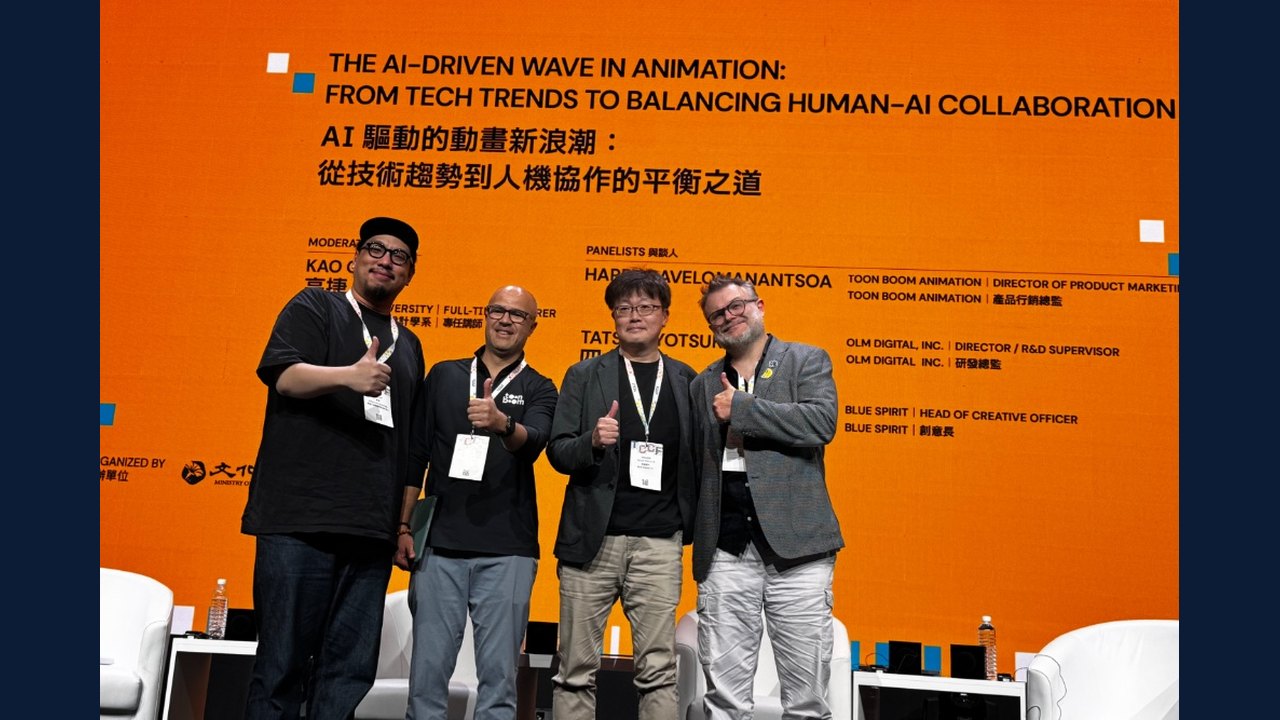
Image: Naman Ramachandran · Photo source · Resized and letterboxed to 16:9; no AI generation
Japanese animation studio OLM has developed an AI-assisted coloring tool that learns a production's visual style from just three hand-painted frames. The system was discussed by OLM Digital board director Yotsukura Tatsuo at the Taiwan Creative Content Fest (TCCF) in Taipei.
Project Background and Methodology
The tool emerged from ANIMINS, a 15-month research project led by Yotsukura under GENIAC, a generative AI program overseen by Japan’s Ministry of Economy, Trade and Industry, which concluded in February. Unlike models requiring massive external datasets, OLM's tool trains exclusively on a production's own assets. An artist manually colors three frames, enabling the software to learn line shapes and color palettes in approximately 90 seconds. It then colors subsequent frames in about 15 seconds each, with accuracy scaling up as more frames are hand-painted.
“Strictly speaking, it isn’t generative AI,” Yotsukura stated, noting that training solely on internal frames prevents external copyright concerns and allows the tool to adapt instantly to new characters or creatures.
Workflow Integration and Industry Reception
At the proof-of-concept stage, OLM estimated the tool reduced painting workloads by roughly 30 percent, though checking responsibilities increased slightly. Other software developers, such as Toon Boom Animation, are exploring similar bottlenecks in animation pipelines with comparable beta tools.
Industry leaders hold varied perspectives on artificial intelligence integration. While OLM views the technology as a way to secure creative freedom within fixed budgets rather than reduce staff, other studios face strict platform limitations. For instance, French studio Blue Spirit noted that platforms like Netflix currently restrict or prohibit generative AI use in certain commissioned projects under published compliance guidelines.
Verification and Practical Implications
Readers interested in verifying these developments can consult official announcements from the Taiwan Creative Content Fest or reports detailing Japan's GENIAC research initiatives. Practical implications for studios include potential efficiency gains in mechanical coloring tasks, though professional productions still rely on human artists for direction and final quality control.
AI-assisted reporting; source claims are attributed and have not been independently verified.
More to read
 foidfinder: Open‑Source Tool to Identify Anime Characters and Series from Images
 Ubisoft Launches 'Motherbrain' Studio to Advance Generative AI in Gaming
 Apple Creator Studio Adds New AI Features and Creative Tools
 Singapore's VisionX AI Unveils Hybrid AI Model AEGIS and Blockchain Investigation Tool TraceX