The Rise of the Threat Operator: How AI Is Redefining Security Operations and Careers
· GlobeWire Daily Editorial Desk · Source: thehackernews.com
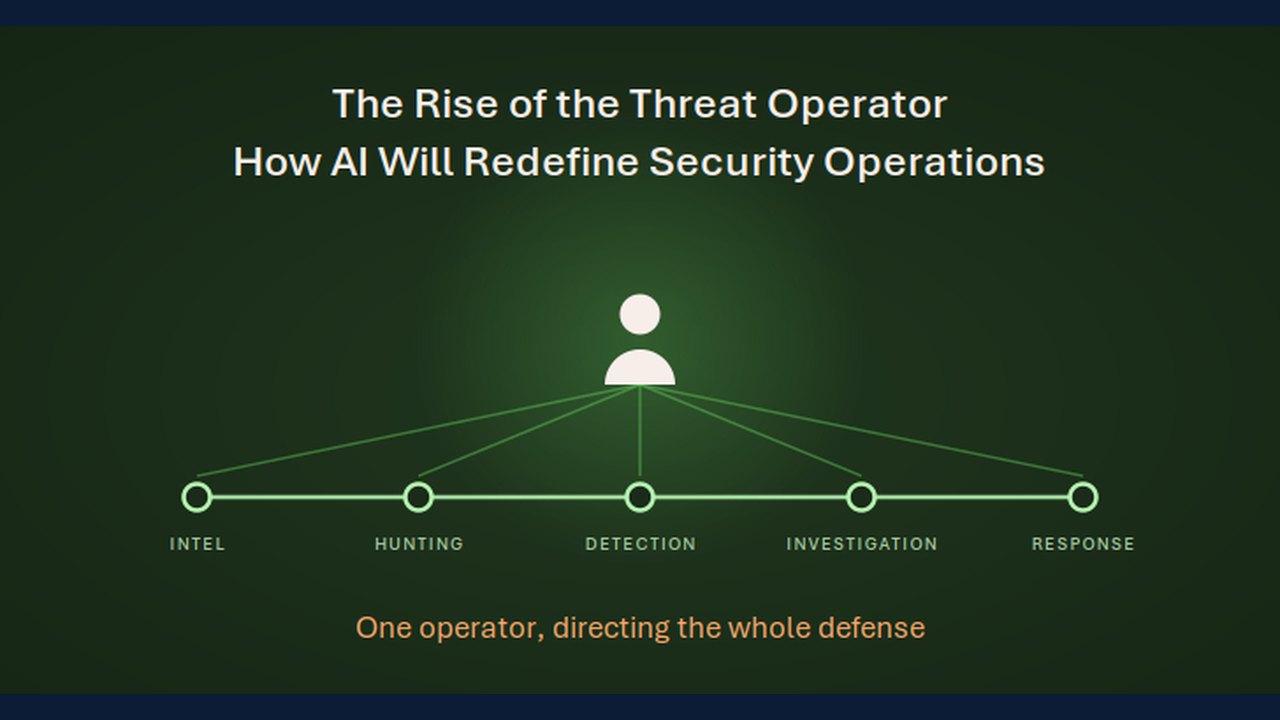
Image: The Hacker News · Photo source · Resized and letterboxed to 16:9; no AI generation
Artificial intelligence is beginning to automate foundational security analyst tasks, such as investigating alerts, collecting evidence, correlating activity across tools, and executing response actions. As these capabilities mature, Security Operations Centers (SOCs) are poised for structural changes in workflow organization, decision-making, and defensive expectations.
Traditionally, the SOC has relied on specialized functions supported by separate tools and manual handoffs, including threat intelligence, detection engineering, threat hunting, alert investigation, and incident response. AI is increasingly connecting these silos. For instance, intelligence regarding a new threat can generate a hunting hypothesis, reveal detection gaps, produce new detections, and guide containment strategies through coordinated AI agents.
The Emergence of the Threat Operator
To adapt to this shift, reports and industry discussions highlight an emerging role known as the Threat Operator. Rather than focusing solely on individual alerts, an AI-native Threat Operator translates business risk into defensive priorities, directs AI-driven operations, and exercises judgment over automated systems.
- Business Security Risk: Aligning security decisions with organizational priorities and critical assets.
- Threat and Adversary Understanding: Interpreting intelligence and anticipating targeted attacks.
- Defensive Operations: Overseeing detection, hunting, investigation, and response across the lifecycle.
- AI Orchestration and Judgment: Directing workflows, evaluating conclusions, and governing automated actions.
For example, if an AI system recommends isolating a compromised server, a Threat Operator must evaluate whether that action disrupts critical business operations. This represents a transition from a "human-in-the-loop" model to a "human-on-the-loop" supervisory approach, supported by governance frameworks such as the NIST AI Risk Management Framework.
Rethinking Professional Development and Career Paths
Because traditional alert triage and manual investigations have served as an apprenticeship for junior analysts, the widespread adoption of AI requires organizations to rethink how entry-level professionals gain experience. Without structured mentorship and a deliberate approach to training, the traditional progression from simple alerts to complex investigations may be disrupted.
However, AI can also provide junior operators with supervised exposure to a broader range of security activities, allowing them to review evidence, challenge assumptions, and learn from experienced colleagues. Security leaders are encouraged to build new training, governance, and progression frameworks that measure performance through defensive outcomes, the closure of detection gaps, and overall risk reduction rather than just traditional operational metrics.
Practical Implications and Verification
Organizations evaluating these changes should review their current operational dependencies, training pipelines, and risk tolerances. To verify original claims and explore specific platforms—such as Conifers.ai’s CognitiveSOC platform, which utilizes agentic AI for connected workflows and reasoning chains—security teams should consult the original announcement and associated vendor documentation.
AI-assisted reporting; source claims are attributed and have not been independently verified.
More to read
 Concerns Rise Over AI Sustainability and Data Security
 Warsaw Airports Resume Operations After Security Alerts on London and Copenhagen Flights
 Russian Security Services Respond to US Warning of Moscow Security Threat
 Laser Pointers Pose Real Threat to Aircraft – FAA Reports Thousands of Strikes and Federal Penalties Rise
Trending on GlobeWire Daily
Selected from recent coverage and related topics; not live search rankings.