ZTE Introduces Power and Cooling Infrastructure for High-Efficiency AI Data Centers
· GlobeWire Daily Editorial Desk · Source: www.prnewswire.com
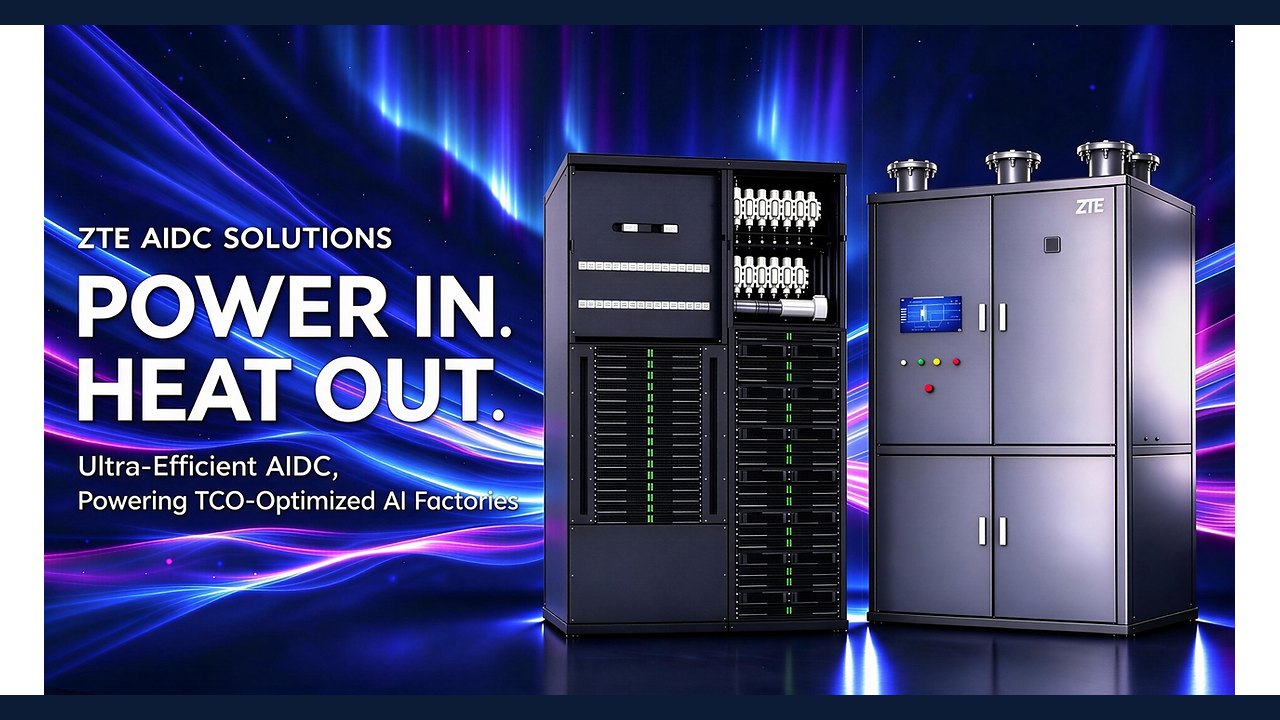
Image: ZTE Corporation · Photo source · Resized and letterboxed to 16:9; no AI generation
ZTE has outlined a systematic approach to update data center energy infrastructure as artificial intelligence workloads increase power density per rack. The company's strategy addresses rising energy demands through an 800V high-voltage direct current (HVDC) system and a megawatt-level liquid cooling Cool Distribution Unit (CDU).
Shifting Demands in AI Data Centers
As rack power consumption rises from traditional levels of 10-20 kW to 100 kW, 600 kW, or even 1 MW with high-density GPU clusters, traditional air cooling and multi-stage power conversion chains face technical limits. ZTE reports that these shifts require a transition from a focus solely on computing power to overall computing efficiency.
Core Technologies Presented
- 800V HVDC System: Designed to reduce power conversion losses at the source, offering modular flexibility, smart battery management, and support for both $\pm$400V and 800V standards.
- Liquid Cooling CDU: A 1.5 MW unit expandable to 2.4 MW intended to maintain precise temperature and pressure control, aiming to keep power usage effectiveness (PUE) stable within 1.15.
- Green Energy and Storage Integration: Incorporates smart photovoltaic and energy storage solutions, such as commercial storage cabinets and container systems managed via an intelligent energy management system (iEMS).
Practical Deployments
ZTE noted real-world implementations, including upgrades at the Nanjing Binjiang Data Center, which achieved a PUE of 1.15 using high-efficiency HVDC distribution and liquid cooling solutions. Additionally, ZTE reported collaboration with partners on the Karakoram-01 datacentercampus in Pakistan, utilizing plate liquid cooling and prefabricated power modules.
To verify original details and announcements, stakeholders can consult ZTE Corporation's official press releases and media contacts.
AI-assisted reporting; source claims are attributed and have not been independently verified.
More to read
 Aviemore Introduces Seal-Less Magnetic Coupling Pump Platform for Liquid-Cooled AI Data Centers
 Panduit Unveils AI Cooling Lab to Advance Data Center Infrastructure
 2027 Nissan Rogue Hybrid Introduces e-Power System with Impressive Efficiency
 VeriSilicon Introduces Low-Power Wearable Subsystem Solution for AI and AR Glasses