Renault and Peugeot Revive Group B Rally Icons as Electric Hyper Hatchbacks in Early Comparison
· GlobeWire Daily Auto Desk · Source: www.carscoops.com
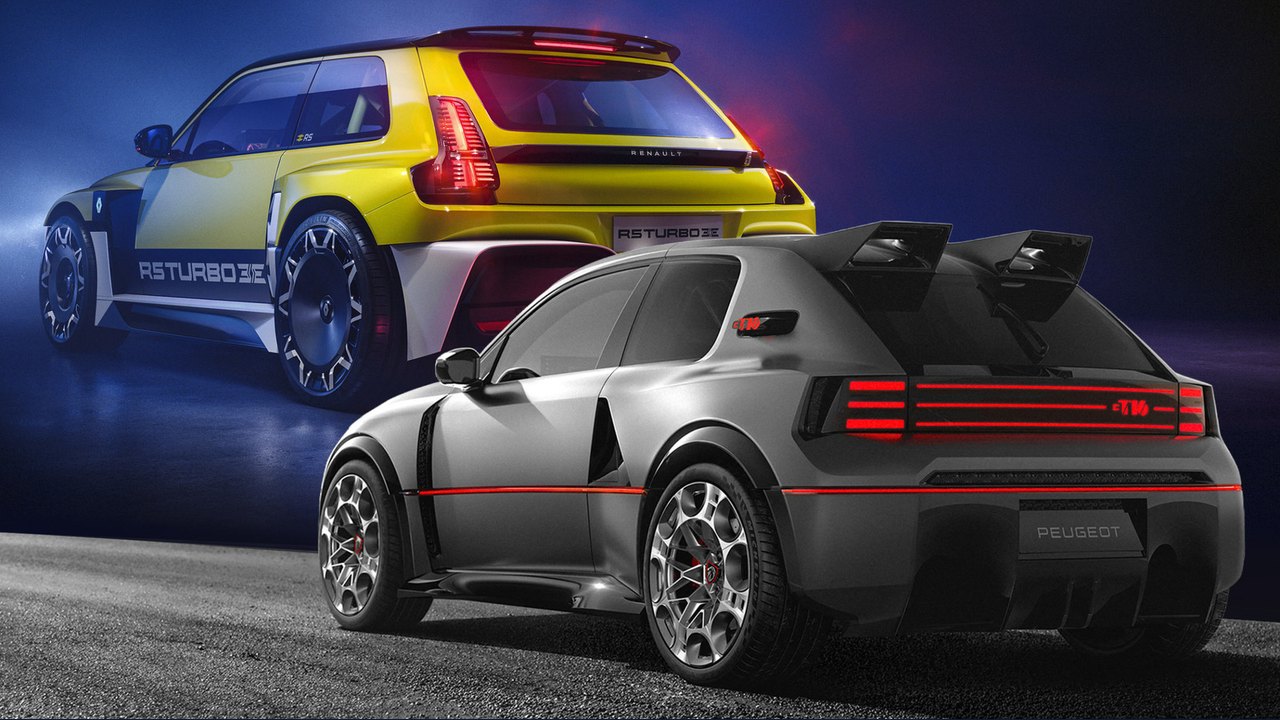
Image: CarScoops · Photo source · Resized and letterboxed to 16:9; no AI generation
Renault and Peugeot have introduced all-electric spiritual successors to their historic Group B rally cars, trading internal combustion engines for battery-electric powertrains in wide-bodied hyper hatchback designs. This early comparison examines the specifications and design intents of the Renault Turbo 3E and the Peugeot e-T16, ahead of any real-world back-to-back testing.
Design and Heritage
Both vehicles draw heavy inspiration from motorsport legends of the 1980s, retaining traditional three-door layouts, wide fenders, aggressive bumpers, and prominent aero elements.
- Renault Turbo 3E: Evolved from a 2022 concept into a limited-production supercar special, it bridges the gap between the classic R5 Turbo and the newer R5 E-Tech.
- Peugeot e-T16: Debuted as a concept in 2026, serving as a hyper-aggressive preview of the 208 hatchback planned for 2027.
Powertrain and Performance
While the original Group B hatchbacks placed combustion engines behind the driver, these modern EVs utilize specialized chassis engineering and floor-mounted batteries to manage weight distribution.
- Renault Turbo 3E: Utilizes an Alpine-developed aluminum tubular chassis and rear-wheel drive. Dual electric motors generate a combined 555 horsepower (410 kW), pushing the 1,450 kg vehicle from 0 to 100 km/h in under 3.5 seconds. Its 70-kWh battery supports fast charging from 15% to 80% in about 15 minutes.
- Peugeot e-T16: Built on Stellantis' STLA One architecture, featuring an all-wheel-drive setup with three electric motors generating a combined 816 horsepower (600 kW). It achieves a 0-100 km/h sprint in 2.5 seconds, powered by an 85 kWh battery capable of similar 10%-to-80% fast-charging times in about 15 minutes.
Interior and Practicality
Inside, both models feature two-seater layouts with bucket seats, roll cages, and vertical hydraulic handbrakes intended for performance driving. The Renault features a more conventional steering wheel and digital cockpit, whereas the Peugeot showcases a futuristic Hypersquare steering wheel and a 21-inch digital instrument cluster.
Availability and Status
The Renault Turbo 3E is a production model limited to 1,980 units with a starting price of €160,000, and is currently available to order for buyers in Europe, the UK, the Middle East, Japan, and Australia, with first deliveries expected in 2027. Conversely, the Peugeot e-T16 remains a concept car, though brand leadership has stated it could potentially reach production by 2027. Buyers and enthusiasts can verify original announcements and specifications directly through official Renault and Peugeot corporate channels.
AI-assisted reporting; source claims are attributed and have not been independently verified.
More to read
 MTN Group Enters Early Discussions to Acquire Rival Telkom SA in Cash-and-Stock Deal
 Adani Group Stocks Rally Following Strong Q2 FY27 Earnings Reports
 Assam Rifles Recruitment Rally 2026: 354 Group‑C Vacancies, Eligibility, and Online Application Window
 BMW M3 Electric Announced With Four Motors, 838 HP, and 404-Mile Range