Europe Plans to Catch the Next Computer Chip Wave with Photonics
· GlobeWire Daily Business Desk · Source: www.bbc.co.uk
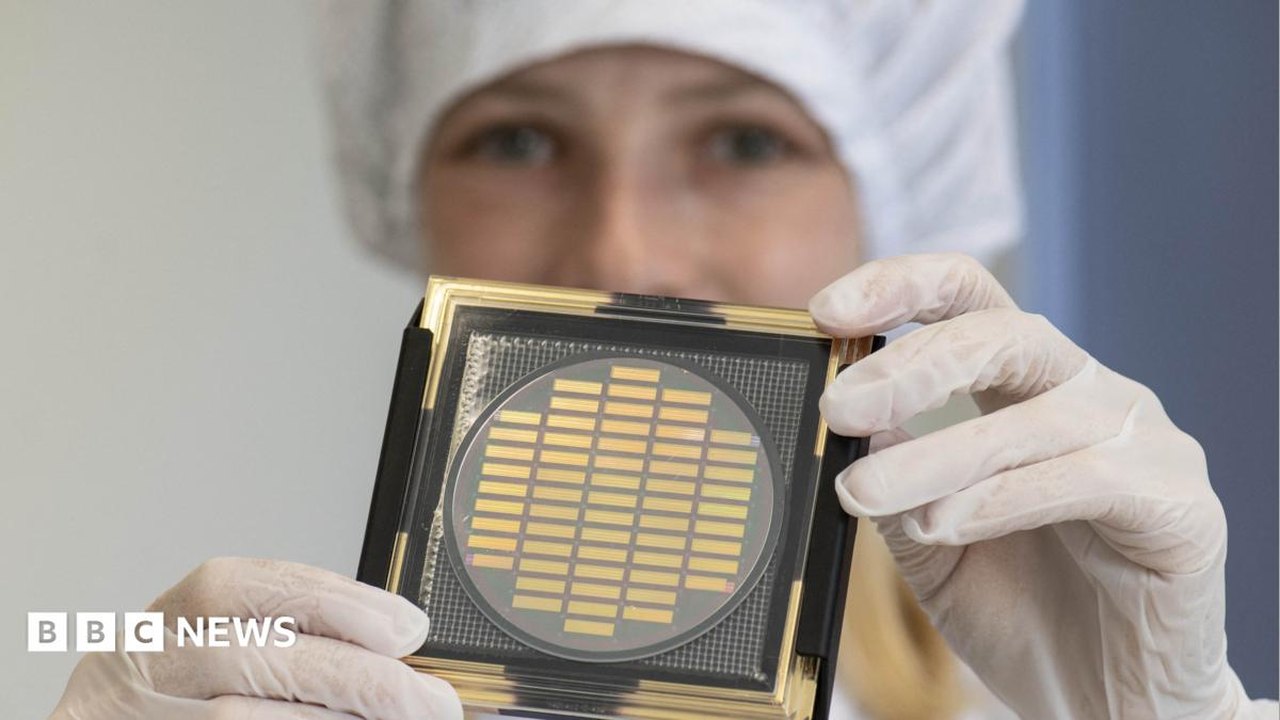
Image: BBC News · Photo source · Resized and letterboxed to 16:9; no AI generation
Europe is seeking a leading role in the emerging field of photonic chips, which process data using light rather than electrons. Reported claims suggest these components could offer faster speeds, lower energy consumption, and reduced heat generation compared to traditional semiconductors. While conventional microchip manufacturing is dominated by American, Taiwanese, and Chinese firms, the European Union has committed €400 million to a project named PIX Europe to support domestic manufacturing development.
The Eindhoven Pilot Project
Led by Ton van Mol at the Dutch research institute TNO, a new 10,000-square-metre factory is currently under construction on the High Tech Campus in Eindhoven. The facility aims to scale up photonic chip manufacturing from four-inch wafers to six-inch indium phosphide wafers. According to project timelines, the factory is due to fully open in 2030, with the intention of establishing a stable, reproducible, and high-yield process before opening as a foundry to industrial commercial partners.
The project relies on equipment from Netherlands-based ASML, a crucial supplier in the semiconductor industry. Former ASML chief executive Peter Wennink supports the initiative, describing it as a potential launchpad for the regional digital economy.
Global Context and Practical Implications
International competition in this sector is growing. For instance, US firm Coherent announced a six-inch indium phosphide manufacturing platform backed by public and private funds. Analysts note that Europe's strategy focuses on securing technological dependence rather than total industrial autonomy, given regional challenges like high energy costs and workforce shortages.
Once operational, the Eindhoven foundry model will allow external companies to design and build chips without constructing dedicated facilities. To verify original funding and project details, interested readers can consult official announcements from the European Union, TNO, and associated institutional reports.
AI-assisted reporting; source claims are attributed and have not been independently verified.
More to read
 JLR Plans Production of All-Electric Baby Land Rover Defender and Range Rover GT for Late Next Year
 Europe Plans Subsea Cable to Greenland Amid Shifting Global Alliances
 OPPO Find X10 Ultra set for next‑year launch with MediaTek chip, likely skipping India
 BAE Systems Plans 1,070 Job Cuts in UK Head Office and Air Business