How long will humans be needed for translation?
· GlobeWire Daily Business Desk · Source: www.bbc.co.uk
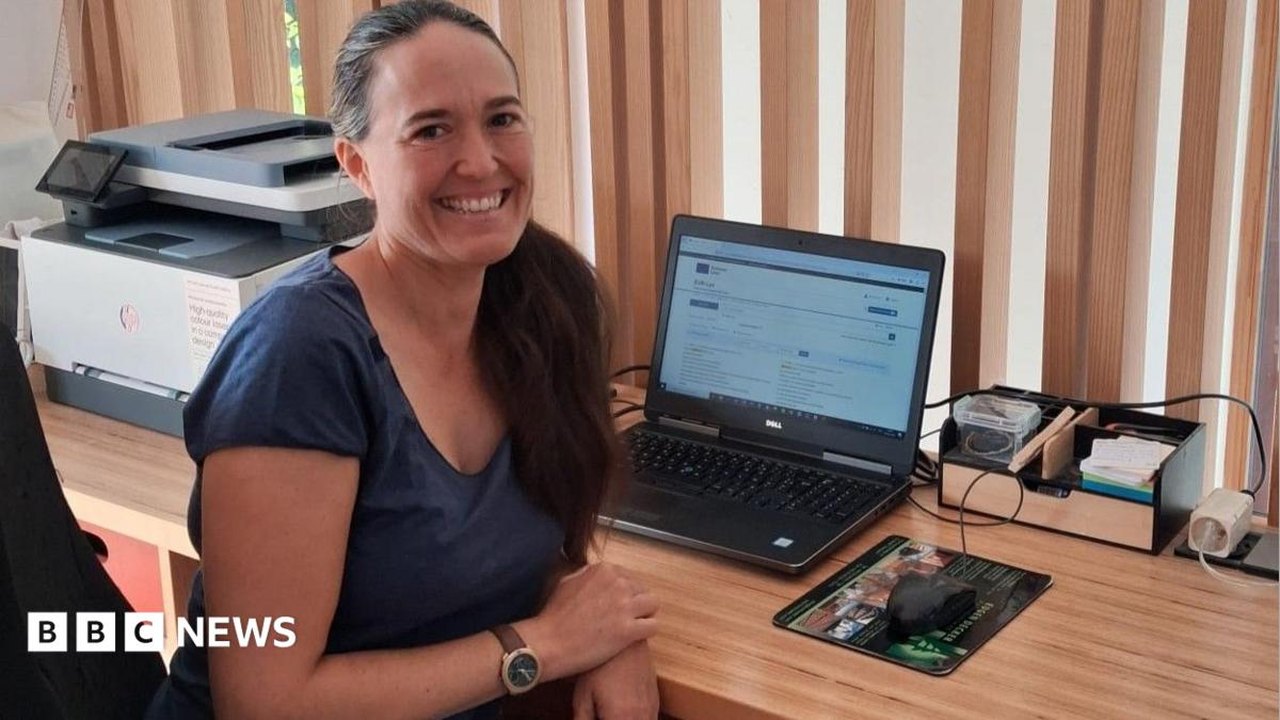
Image: BBC News · Photo source · Resized and letterboxed to 16:9; no AI generation
Google's translation service handles one trillion words per month, while direct sales of machine translation reached an estimated $1.4bn last year, highlighting the growing reliance on AI tools across industries. However, experts warn that while machine translation has become faster and more fluent, human oversight remains critical in high-stakes fields such as law, medicine, and encyclopedia publishing due to persistent risks of subtle errors.
The Rise and Reliability of AI Translation
Machine translation tools—including Google Translate, DeepL, Microsoft, Claude, ChatGPT, and Gemini—are increasingly used for everyday and internal tasks where raw speed matters more than perfection. Jonathan Zimmermann, founder of the Open Knowledge Association (OKA), notes that raw AI translation is often the right economic choice for tasks like translating internal documents or product listings. OKA utilizes AI to draft Wikipedia translations before human review, allowing the non-profit to operate at a scale that would otherwise cost millions.
However, a study run by OKA and funded by Wikimedia found that 27% of AI-generated text still required correction before publication, with three quarters of those corrections addressing errors introduced by the AI itself, and 5% to 6% altering the original meaning.
High-Stakes Risks in Law and Medicine
While low-risk tasks like translating weather idioms have manageable consequences, mistakes in regulated or technical fields can be severe:
- Legal Translation: Legal expert Ariella Baltiè noted instances where AI mistook nouns for verbs or translated technical terms incorrectly, which can lead to severe delays in official procedures.
- Medical Translation: Medical translation specialist Carol Bereuter highlighted a case where an AI mistranslated a Greek letter representing micro into milli, which could result in a thousandfold dosing error.
- Hidden Errors: Experts point out that modern AI translations often sound fluent and natural, making dangerous errors significantly harder to spot than older, clunkier machine translations.
Why 100% Reliability Remains Challenging
According to François Yvon, a research director at CNRS, the probabilistic nature of AI makes complete reliability difficult to achieve because what is statistically probable is not always correct. While future technological developments—such as multi-model systems that cross-examine outputs or systems capable of signaling uncertainty—may improve accuracy, complete elimination of human intervention is not yet guaranteed.
Readers can examine original platform announcements, academic studies by organizations like Wikimedia, or industry reports to verify current statistics regarding machine translation usage and error rates.
AI-assisted reporting; source claims are attributed and have not been independently verified.
More to read
 Delhi's AQI Plunges to 78 Following Widespread Rain: How Long Will It Last?
 Tinned Food and Long-Life Milk Boost Retail Sales After Government Campaign
 Royal Mail warned it will miss first‑class delivery targets for fourth year in a row
 Faisal Islam: The 10-year plan will have to fill the gaps from this 'micro Budget'