Robot Vessels Take On Dangerous Work of Mine Hunting Amid Gulf Tensions
· GlobeWire Daily Business Desk · Source: www.bbc.co.uk
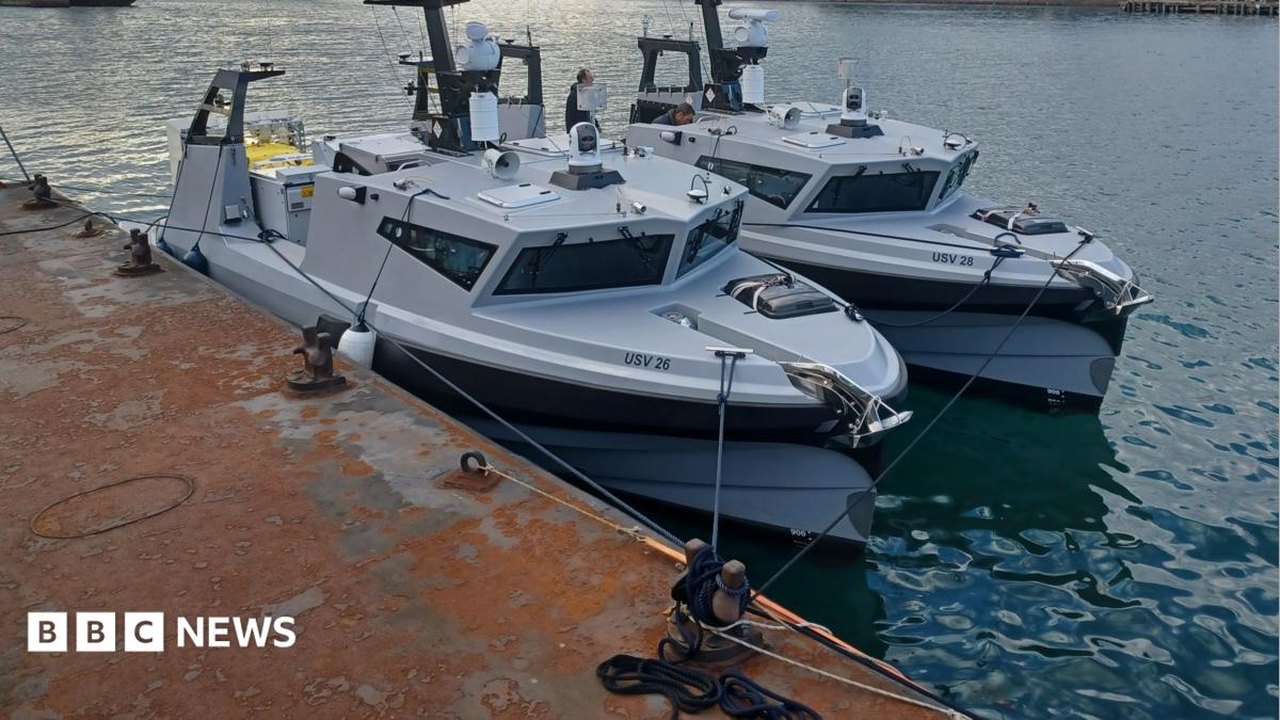
Image: BBC News · Photo source · Resized and letterboxed to 16:9; no AI generation
Autonomous and uncrewed vessels are increasingly being deployed to handle the hazardous task of sea mine detection, keeping human crews out of direct harm's way in regions like the Strait of Hormuz.
Navigating the Strait of Hormuz remains a high-risk journey for commercial shipping due to aerial threats and underwater mines. Modern sea mines can rest on the seabed, rising or floating to target passing vessels by detecting acoustic, magnetic, or pressure signatures. According to maritime experts, even the mere threat of mines can halt tanker fleets.
The Shift to Autonomous Systems
Traditional mine hunting relies on specialist vessels crewed by around 80 sailors. To reduce personnel risks and address recruitment challenges, defense groups and navies are turning to autonomous systems monitored from the shore by smaller teams, sometimes requiring only about 20 personnel working in shifts.
- Historical Use: Early systems like the Remus 100 robot were used during the 2003 Iraq war to scan the seabed using sonar.
- Modern Tech: The Thales Uncrewed Surface Vehicle (USV) uses sensors developed for the oil and gas industries, towing a device that creates high-resolution 3D seabed images refined by artificial intelligence.
- Risk Mitigation: Experts note that while robot boats and subs cannot completely prove the absence of mines, they significantly reduce risks and can either destroy mines or mark locations to avoid.
Strategic Developments and Challenges
Military forces worldwide are exploring hybrid models that integrate drones with conventional warships. Analysts emphasize that uncrewed vessels function best as part of a broader distributed force sharing data through a unified network architecture.
- Security Measures: If an uncrewed vessel is captured—such as an instance where Iranian forces retrieved a US autonomous sub—computer drives can potentially be wiped or destroyed remotely.
- Insurance and Economic Impact: Marine insurers report that the psychological impact of the mine threat and uncertainty over mine counts remain significant factors for shipping operations, though managed routes continue to see active shipments.
Practical Implications and Verification
For businesses and maritime operators, the expansion of autonomous mine-hunting tech offers a way to maintain supply chain continuity while protecting personnel. Stakeholders can verify original announcements and defense updates by consulting official releases from maritime authorities, defense contractors such as Thales, and naval research institutions like RUSI.
AI-assisted reporting; source claims are attributed and have not been independently verified.
More to read
 UK Agrees to Acquire Three New Mine-Hunting Motherships to Boost Defence and Security
 PM Modi Accuses Opposition of Spreading Rumours About Fertiliser and LPG Shortages Amid Gulf Tensions
 Tensions Escalate in Strait of Hormuz Following Mine Incidents
 Global Survey Reveals Work-Life Balance Now Outranks Pay for Jobseekers