The Search for Stealthier Drones as Delivery Noise Sparks Complaints
· GlobeWire Daily Business Desk · Source: www.bbc.co.uk
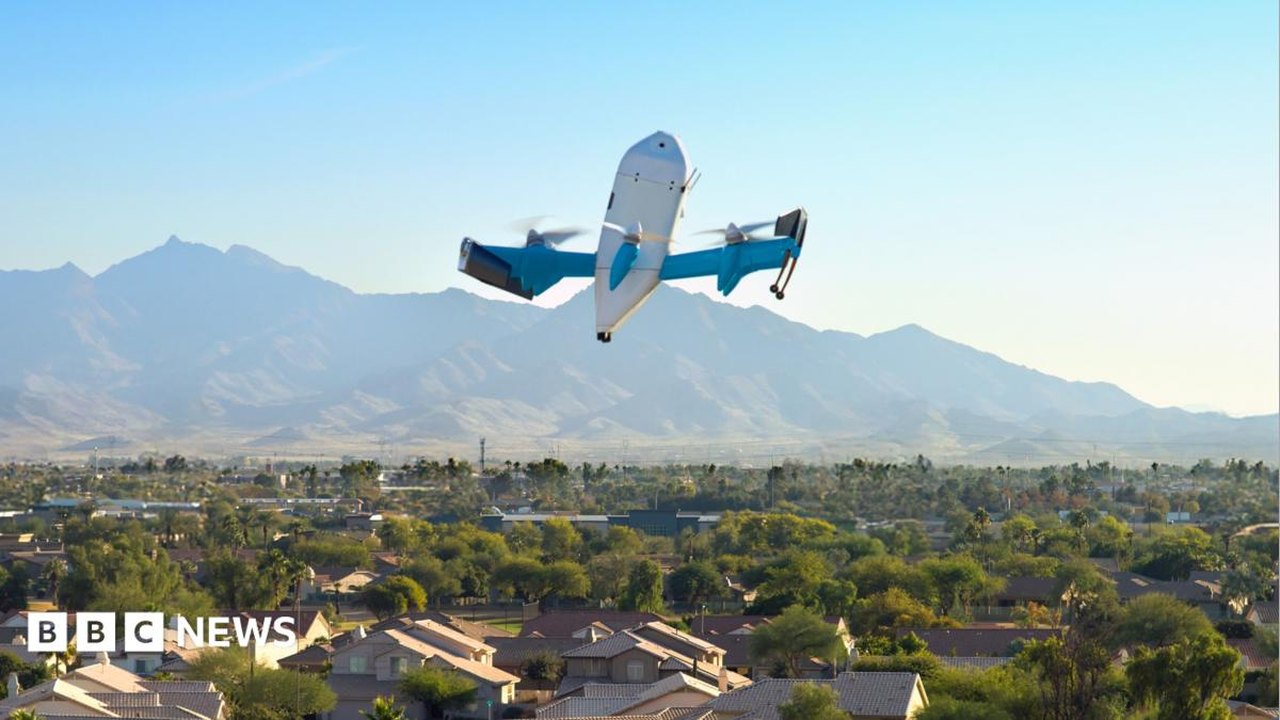
Image: BBC News · Photo source · Resized and letterboxed to 16:9; no AI generation
As commercial drone deliveries expand across the United States and parts of the UK, residents near flight paths report growing frustration with the high-pitched buzzing sounds of unmanned aerial vehicles.
Delivery drone services are scaling up. Amazon Prime Air is in the process of expanding deliveries to nearly 500 US towns and cities, while also operating in Darlington in the north of England. Other services deliver food and items from local businesses, making low-altitude drone flights an increasingly common feature in residential areas.
Community Impact and Acoustic Concerns
Residents like Ashley Schmidt in North Garland, Texas, report that the sudden whine of rotors pierces everyday background noise and disrupts outdoor activities.
According to Antonio Torija Martinez, professor in acoustic engineering and psychoacoustics at the University of Salford, drone noise is often particularly noticeable because:
- Drones operate at low altitudes directly over residential areas.
- They expose communities to novel sounds that differ from standard high-altitude traffic.
- People respond more strongly when a source is considered intrusive or frequent.
While the Federal Aviation Administration (FAA) regulates commercial drones in the US, it has faced criticism over delivery noise. The agency states that operators and local community leaders hold primary responsibility for addressing community concerns.
Technological Solutions for Quieter Rotors
Engineering firms and startups are developing new designs to reduce drone noise:
- Greenjets: A London-based startup has designed a propulsion system that encloses spinning blades inside a pod to muffle sound and direct noise away from the ground, which the company claims can reduce noise by at least two thirds. This technology has also been tested by police, harbour security, and conservation teams.
- Sharrow Engineering: Detroit-based entrepreneur Greg Sharrow developed twisted, loop-shaped blades without sharp tips to reduce propeller noise.
- Amazon and Wing: Major delivery operators report implementing custom-designed propellers and varying flight paths to lower perceived sound levels and minimize repeated overflights.
Verification and Practical Implications
Readers can verify company claims and regulatory guidelines by checking announcements directly from the FAA, Amazon Prime Air, Wing, and acoustic research published by institutions like the University of Salford. Practical implications for affected communities include engaging with local municipal leaders and drone operators regarding flight paths and noise mitigation efforts.
AI-assisted reporting; source claims are attributed and have not been independently verified.
More to read
 Royal Mail warned it will miss first‑class delivery targets for fourth year in a row
 DoorDash Announces $17bn Acquisition of Instacart to Expand Grocery Delivery
 AskGamblers Introduces Real-Time Casino Complaints Dashboard
 Gerard Butler's Upcoming Action Thriller 'Empire City' Sparks Hollywood Bidding War