Protests and Police Deployed as Poland's Constitutional Tribunal Leadership Crisis Escalates
· GlobeWire Daily Editorial Desk · Source: www.aljazeera.com
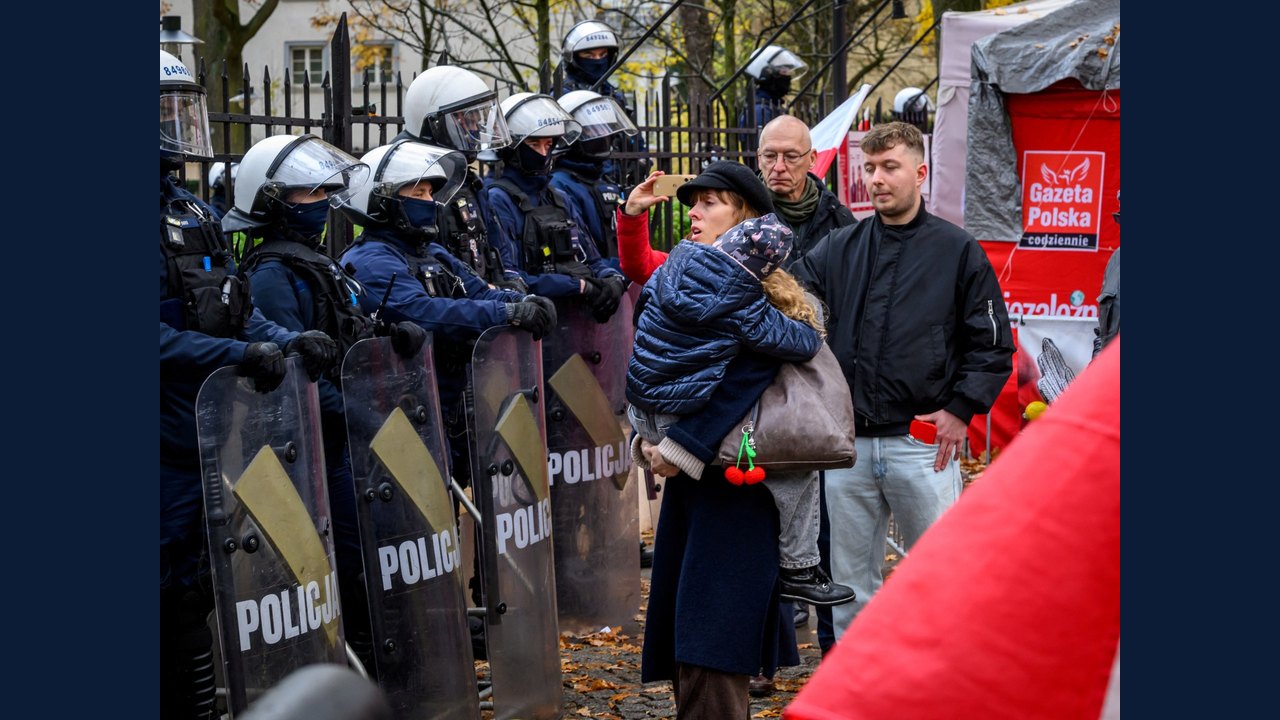
Image: Caolán Magee · Photo source · Resized and letterboxed to 16:9; no AI generation
Overview of the Crisis
On Friday night, October 31, 2026, riot police were deployed outside Poland’s Constitutional Tribunal in Warsaw following an escalation in the dispute over the court's leadership. Hundreds of demonstrators gathered at the site after judges elected by the current parliamentary majority announced the suspension of tribunal President Bogdan Swieczkowski and his deputy, Bartlomiej Sochanski. Police reported that three individuals were arrested after attempting to enter the court complex.
The confrontation pits Prime Minister Donald Tusk’s centrist government against the nationalist, far-right Law and Justice (PiS) opposition and President Karol Nawrocki, a PiS ally. Tusk’s administration argues that decisive measures are necessary to reverse years of political interference under the previous PiS government and restore judicial independence.
Background and Institutional Dispute
The dispute centers on the composition and legitimacy of the 15-member Constitutional Tribunal, which evaluates whether legislation complies with Poland’s constitution. Tensions trace back to 2015 during a transfer of power, when controversies arose over judicial appointments. Subsequent reforms implemented by PiS during its eight years in power were criticized by opponents and international bodies for bringing the judiciary under political influence.
In 2021, the European Court of Human Rights ruled that improperly appointed judges deprived litigants of a lawful tribunal. Later, in December 2025, the EU’s highest court found that the tribunal failed to meet independence requirements and that its rulings challenging EU law breached Poland's obligations as a member state.
Following Tusk’s return to office in December 2023, his government has frequently contested the tribunal's legitimacy. This year, parliament elected eight judges to the court. While President Nawrocki administered the oath to three, he withheld it from five others, who took their oaths independently. Tribunal President Swieczkowski refused to let those five adjudicate.
Recent Events and Conflicting Claims
- Suspension Announcement: On Friday, Judge Anna Korwin-Piotrowska announced a one-month suspension of President Swieczkowski and Deputy Sochanski, stating she was assuming temporary management. Her legal authority to do so remains disputed, as her claim is based on overall judicial seniority rather than tenure on the tribunal.
- Legal Measures: Justice Minister and Prosecutor General Waldemar Zurek initiated steps that could lead to criminal proceedings against Swieczkowski and Sochanski, actions which PiS critics label as politically motivated pressure.
- Presidential Response: President Nawrocki abandoned a diplomatic flight to Senegal, returning to Poland overnight to hold urgent parliamentary consultations and denouncing the events as a forcible takeover of a constitutional institution.
- Police Presence: Law enforcement stated the deployment followed concerns raised by Korwin-Piotrowska regarding potential threats to staff and public order, emphasizing that officers secured the grounds but did not enter the building.
Expert Perspectives and Practical Implications
Legal experts note the complexity and risks of the ongoing situation. Wojciech Przybylski, editor-in-chief of Visegrad Insight, characterized the historical moves as a power play to control the court system and maintain ideological alignment. Conversely, lawyer Marcin Matczak observed that the far-right opposition is defending its remaining institutional stronghold, while warning that the current government's hard-line strategies could set a risky precedent and alienate moderate voters.
Additionally, questions have been raised regarding the current coalition's adherence to depoliticization promises, following the parliamentary election of former cabinet minister Maciej Berek to the tribunal in September.
How to Verify
- Monitor official statements and announcements directly from the Polish Constitutional Tribunal, the Chancellery of the Prime Minister, and the Office of the President.
- Consult independent legal analyses from accredited academic institutions and established international monitors regarding Polish judicial reforms.
- Review official rulings from the Court of Justice of the European Union (CJEU) and the European Court of Human Rights (ECHR) concerning Poland's judiciary.
AI-assisted reporting; source claims are attributed and have not been independently verified.
More to read
 Liverpool vs Arsenal at Anfield: What the Numbers, Injuries and Recent Form Reveal
 Hundreds Evacuated from Oleshky Amid Rare Russia‑Ukraine Ceasefire, Media Say
 UFC Champion Islam Makhachev Hints at Impending Retirement After Record Streak
 Evacuated Residents from Occupied Oleshky Arrive in Ukraine via Belarus
Trending on GlobeWire Daily
Selected from recent coverage and related topics; not live search rankings.
 Manchester United Crisis Deepens After Defeat and Martínez Red Card
 Tottenham Defeat Crystal Palace Following Early Red Card for Mateta
 Air Chief Marshal AP Singh Retires After 42-Year Career; Air Marshal Ashutosh Dixit to Take Charge
 Solar Mills Empower Women in Ayodhya Amid Power CutsHundreds Evacuated from Oleshky Amid Rare Russia‑Ukraine Ceasefire, Media Say
 AI Usage Doesn't Equal Value, Oracle Warns Amid Rising Enterprise Costs