Global Backlash Grows Against Rapid Expansion of AI Data Centres
· GlobeWire Daily Editorial Desk · Source: www.bbc.co.uk
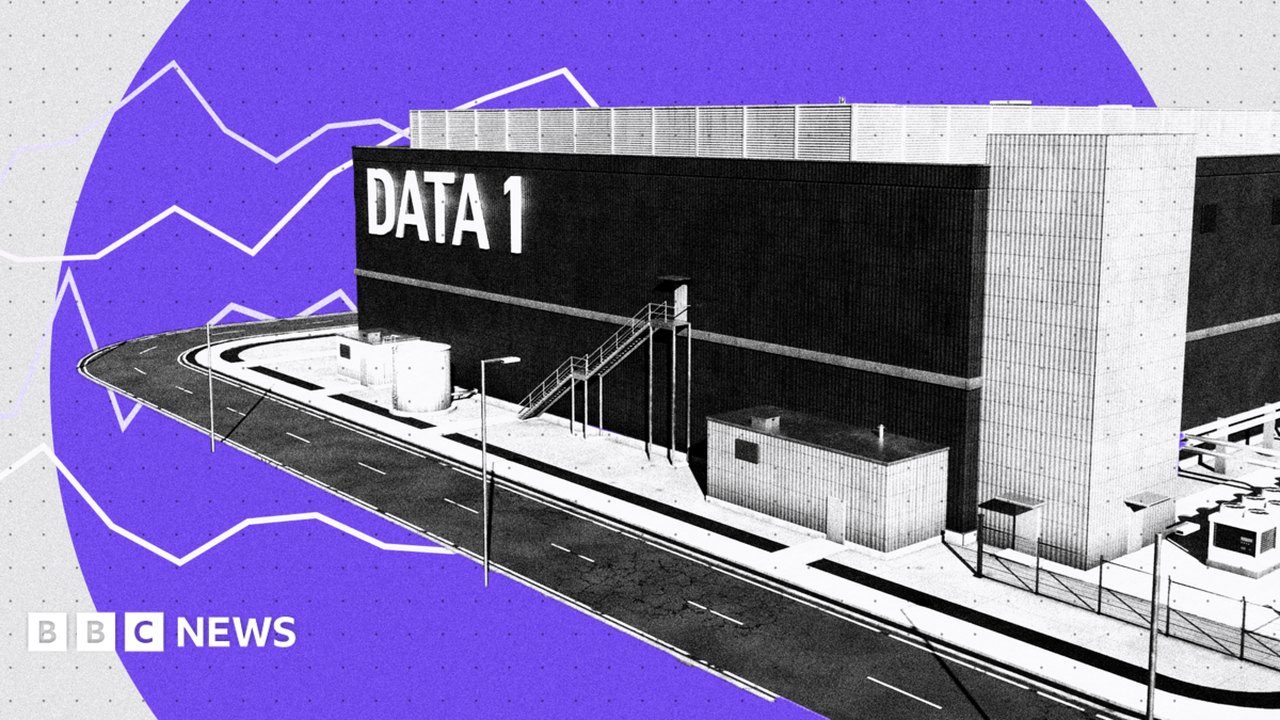
Image: www.bbc.co.uk · Photo source · Cropped to 16:9; original source image
The Rapid Rise of Global Data Centres
Data centres—the warehouse-like facilities that power internet activity, cloud storage, and artificial intelligence tools such as ChatGPT and Claude—have expanded significantly in recent years. According to tracking data from Data Center Map, there are approximately 12,250 operational and pre-operational data centres worldwide, marking a sharp increase from about 8,000 sites in 2021.
The United States currently leads the world with 4,767 sites, followed by European hubs led by the UK and Germany, while China holds the second-largest capacity globally. To support the heavy computing demands of advanced AI chips, facilities are growing larger, transitioning from urban areas near high-voltage power lines to expansive rural locations.
Environmental Concerns and Resource Pressures
The physical scale and resource consumption of these facilities have ignited public concern. Worldwide, data centres are estimated to consume more electricity than the entire country of France. This heavy power demand places pressure on local electrical grids, raises concerns over potential energy price increases, and drives up carbon emissions.
Additionally, the facilities require substantial amounts of water for cooling systems, leading experts to warn of potential local water shortages. Noise pollution, land usage, and local air quality are also central points of contention. For example, proposed power arrangements for large new campuses—such as utilizing methane gas turbines—have drawn scrutiny from environmental activists over potential air pollution, though local regulators maintain that such installations meet established air quality standards.
Political Debate and Economic Arguments
Public resistance has begun to influence policy. In the United States, approximately 16 states have proposed legislation to ban or temporarily block new facility developments, and the infrastructure debate has emerged as a topic ahead of upcoming midterm elections.
Proponents of the expansion argue that data centres are essential for national security and the progression of artificial intelligence. Supporters also highlight economic advantages, including foreign and domestic investment, increased tax revenue, and local job creation during construction and operation. Research from the Brookings Center indicates that hyperscale facilities—massive sites operated by major tech companies like Amazon and Microsoft—tend to yield greater local economic benefits than smaller colocation sites.
Practical Implications and Verification
Readers interested in examining the foundational reports, data mappings, and ongoing coverage can review the original BBC report and linked industry trackers at the BBC News Official Source.
Confirmed Facts vs. Unknowns
- Confirmed: The global count of data centres has risen from roughly 8,000 in 2021 to approximately 12,250. Multiple US states have proposed restrictions or bans on new builds, and global tech infrastructure spending continues to scale upward.
- Unknown: The long-term net economic impact on individual host communities remains debated, and the exact trajectory of future energy grid adaptations is not yet fully determined.
AI-assisted reporting; source claims are attributed and have not been independently verified.
More to read
 Ultraviolette Automotive Unveils New VX-100 Platform and X-47 Venom to Fuel Global Expansion
 Global Anti-Data Center Movement Offers Lessons for US Communities Facing AI Infrastructure Boom
 Meta Weighs Further Delaying Controversial Business Terms Amid Growing Industry and Political Backlash
 Why Silicon Valley Executives Are Facing Backlash Over AI Parenting and Relationship Goals
Related coverage
Related reporting available at publication.
Ultraviolette Automotive Unveils New VX-100 Platform and X-47 Venom to Fuel Global ExpansionGlobal Anti-Data Center Movement Offers Lessons for US Communities Facing AI Infrastructure BoomMeta Weighs Further Delaying Controversial Business Terms Amid Growing Industry and Political BacklashWhy Silicon Valley Executives Are Facing Backlash Over AI Parenting and Relationship Goals Federal Lawsuit Alleges EPA Failed to Regulate Cancer-Linked Pesticide Atrazine Under Clean Water Act
 Oxford Student Group Event at Oriel College Faces Calls for Cancellation Over Speaker Controversy