European Automakers Turn to Defence Contracts and Chinese Partnerships Amid Industry Crisis
· GlobeWire Daily Editorial Desk · Source: www.bbc.co.uk
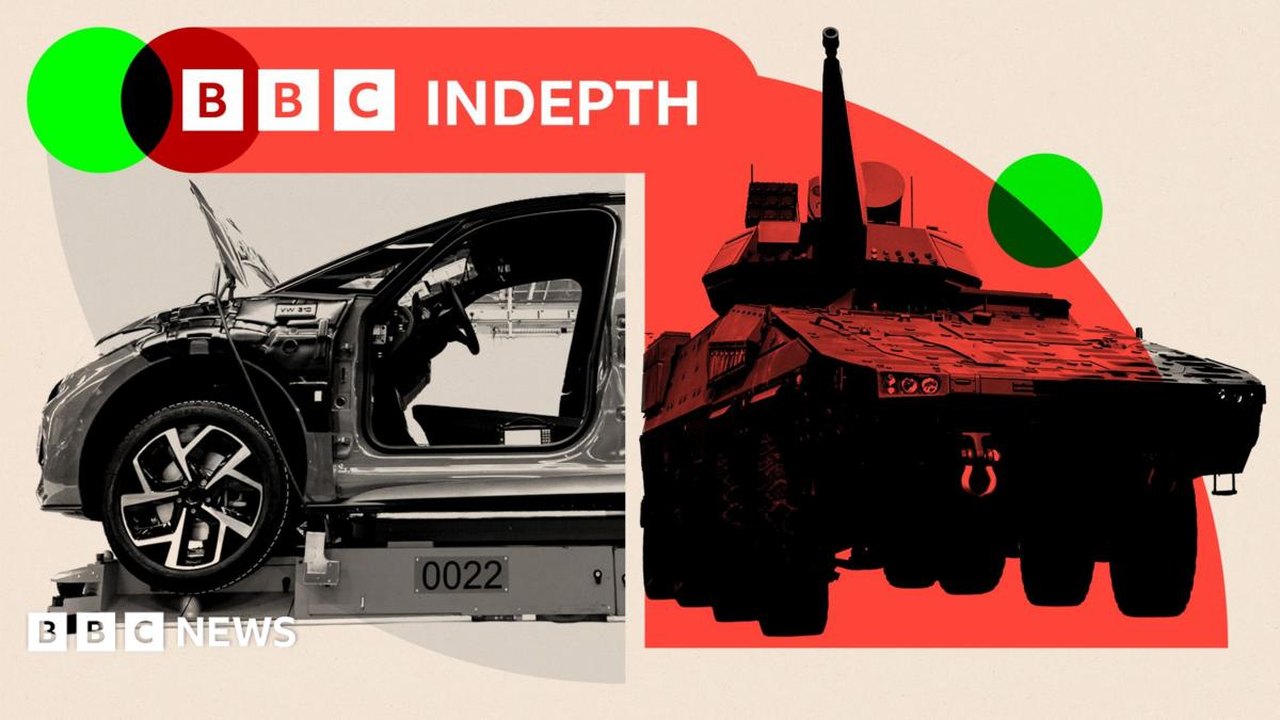
Image: BBC News · Photo source · Resized and letterboxed to 16:9; no AI generation
European car manufacturers are facing severe commercial pressures as they navigate slowing electric vehicle demand, high production costs, and rising competition from Chinese rivals. In response to underutilised factory capacity and declining outputs, several legacy automotive brands are exploring military manufacturing contracts and partnerships with Chinese companies.
The Shift Toward Defence Contracts
Facing what industry representatives describe as a highly challenging environment, multiple car makers are looking at rising European defence budgets as a potential avenue to utilise idle manufacturing assets.
- Ford UK: Ford has joined a joint venture bidding for a British Army contract to supply light mobility vehicles over the next five to seven years, utilising capacity at its Dagenham plant where engine output has declined over the past decade.
- Renault: The French car maker signed a strategic agreement with Thales to target military drone production.
- Volkswagen: VW has agreed to sell an under-used German factory to become a manufacturing hub in a joint venture with a defence investor.
- Jaguar Land Rover (JLR): JLR is also bidding for the military vehicle contract and has established a dedicated business unit for global military ambitions.
Industry associations note that while switching to defence work offers an opportunity to broaden customer bases, the overall volumes will not fully replace the mass consumer market.
Partnerships With Chinese Competitors
To offset fixed costs from idle assembly lines, some European automakers are simultaneously exploring collaborations with Chinese brands.
- Stellantis acquired a stake in Leapmotor, with production initiated in Poland before shifting to Spain.
- Nissan and Chery International UK signed a non-binding Memorandum of Understanding to study contract manufacturing options at the Sunderland plant.
- Volkswagen has considered sharing spare European factory capacity with Chinese joint-venture partners.
Industry Challenges and Outlook
Leaders across the sector point to a combination of expensive EV transitions, falling profitability, and vulnerable supply chains. While executives and trade bodies urge governments to support transitions into aerospace, defence, or alternative manufacturing sectors, analysts caution that structural overcapacity and shifting trade policies present ongoing hurdles.
AI-assisted reporting; source claims are attributed and have not been independently verified.
More to read
 Canada and European Union Focus on Defence and Arctic Cooperation at Montreal Summit
 European Defence Officials Urge Early Interoperability Testing and Open Architectures
 Anne-Sophie Woronoff Shares Personal Loss Amid European Heatwave Crisis
 Space Industry Faces Protracted Launch Capacity Crisis Through 2030s