Revised South Korean Military Academy Merger Plan Faces Persistent Scrutiny
· GlobeWire Daily Editorial Desk · Source: www.koreajoongangdaily.com
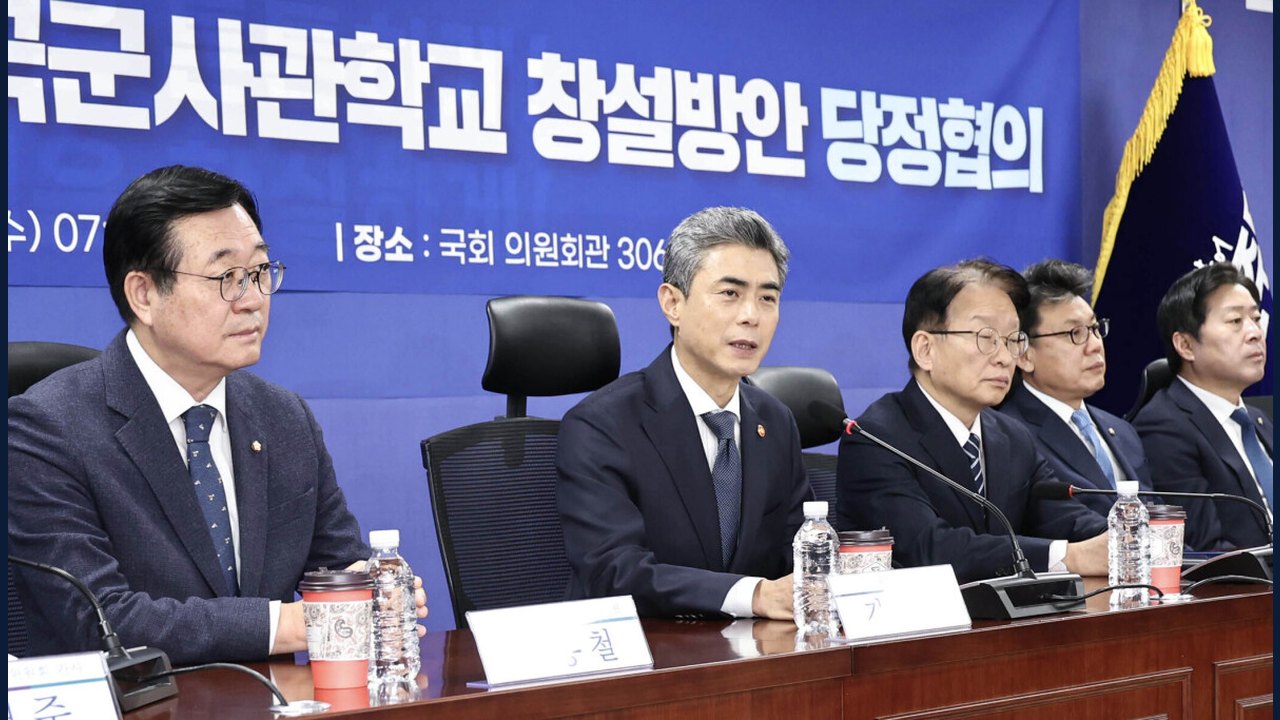
Image: koreajoongangdaily · Photo source · Resized and letterboxed to 16:9; no AI generation
South Korea's Democratic Party and the Ministry of National Defense unveiled a revised plan to establish a unified armed forces academy by merging the Army, Navy, and Air Force academies, aiming for a 2029 implementation framework. While authorities frame the restructuring as a necessary step for future warfare readiness and cite urban encroachment restricting training at the current Army campus, the proposal has encountered skepticism regarding shifting policies and underlying motivations.
Core Proposals of the Revised Plan
- Joint and Divided Training: First-year and fourth-year cadets would undergo joint education at a new facility within Daejeon's Jaun military complex, while second- and third-year education would be managed separately by each service branch.
- Relocation and Retention: The Army Academy is slated to move from northern Seoul's Taereung area to the central Chungcheong region. Meanwhile, the Navy and Air Force academies would maintain their existing facilities in Jinhae and Cheongju, respectively.
- Institutional Changes: If the relevant legislation is successfully amended, the three standalone academies would be replaced by separate service divisions under a single unified institution.
Unresolved Questions and Public Concerns
Critics and commentators point out that the government has altered its academy integration proposal multiple times within seven months, shifting from an initial two-year joint education concept to a four-year proposal before settling on the current hybrid model. Analysts argue that such repeated adjustments suggest improvised policymaking rather than comprehensive preparation for restructuring an 80-year-old military education system.
Furthermore, questions remain regarding how future warfare will evolve, with critics noting that comprehensive research and expert consultations are being promised only after deciding to relocate the campus. Observers also note that among major nations with standing forces exceeding 300,000 troops, very few operate unified military academies. Public officials emphasize that any reform of military leadership development must prioritize national security requirements and broad consensus over political objectives.
AI-assisted reporting; source claims are attributed and have not been independently verified.
More to read
 Pope Leo XIV Faces Scrutiny During Demanding South American Tour
 US Defense Secretary Pete Hegseth Faces Growing Scrutiny Over Pentagon Leadership and Controversies
 New Orleans Military and Maritime Academy to Be Featured in 'All Access with Andy Garcia'
 Mercedes-Benz Faces US Congressional Scrutiny Over Chinese Ownership and Tech Ties