Business Schools Turn to Humanities and Social Sciences to Meet AI, Sustainability and Equality Challenges
· GlobeWire Daily Education Desk · Source: www.thehindu.com

Image: www.thehindu.com — Creative Commons
Growing Calls for a Broader Curriculum
Business schools across the globe are re‑examining their curricula as they confront a set of societal challenges that traditional MBA programs are ill‑equipped to address. A recent editorial in The Hindu argues that the rapid rise of human‑AI interaction, widening economic inequality and the shift toward Industry 5.0 demand a stronger infusion of humanities and social sciences (HSS) into management education.
Why Humanities and Social Sciences Matter Now
The article notes three inter‑related trends driving this shift:
- Human‑Centric AI Development – Tech firms are increasingly hiring philosophers and ethicists to help AI systems formulate better questions and curb over‑confidence. The rationale is that philosophical training nurtures critical thinking and moral reasoning, qualities that can improve algorithmic decision‑making.
- Industry 5.0’s Emphasis on People and Planet – The emerging industrial paradigm stresses sustainability, cultural dynamics and community‑based trust. These aspects have traditionally been the domain of liberal‑arts institutions, yet they are now central to corporate strategy.
- Social Inequality and Identity Issues – Classrooms, described as micro‑cosms of society, surface complex questions of identity, prejudice and inequality. Social‑science modules can provide structured ways to explore these topics rather than allowing them to be ignored.
Current State of Integration
According to the editorial, many business schools have already woven sustainability and social‑impact topics into their programs. However, deeper HSS subjects—such as social change, international relations and holistic development—remain under‑represented. The piece highlights that while some institutions have successfully incorporated these perspectives, others struggle to move beyond surface‑level treatment.
The STEM‑Dominated MBA Mindset
A recurring observation is that many MBA candidates arrive with a STEM‑heavy background, which can make the pluralistic, non‑linear thinking championed by HSS feel “unnerving.” Without exposure to alternative disciplines, students may rely on entrenched assumptions and even unconscious prejudices. The editorial cites anthropology as an example of a discipline that can challenge the status quo and broaden managerial competencies.
Practical Implications for Students and Employers
- Curriculum Design – Schools may introduce mandatory modules on ethics, cultural anthropology, and literature to develop critical thinking and empathy.
- Recruitment Trends – Companies, especially those developing AI, are looking for graduates who can question underlying premises and anticipate societal impacts.
- Skill Sets – Graduates with HSS exposure are expected to be better equipped for stakeholder engagement, responsible innovation and navigating complex regulatory environments.
Comparisons with Past Approaches
Historically, MBA programs emphasized quantitative tools, linear models and profit‑maximisation frameworks. The editorial contrasts this with the current need for “pluralistic perspectives” that recognize social dynamics as integral to business outcomes. While earlier curricula treated sustainability as an add‑on, the new approach positions human and societal considerations at the core of strategic decision‑making.
What Remains Uncertain
The article does not provide specific data on how many schools have fully integrated HSS content, nor does it quantify the impact on graduate employability or corporate performance. It also stops short of detailing the exact pedagogical methods that prove most effective for blending these disciplines.
How Readers Can Verify the Information
The arguments and observations presented here are drawn from the editorial published by The Hindu on October 29, 2023. Readers can consult the original piece for the full context and any additional commentary:
[Why Management education needs Humanities and Social Sciences more than before – The Hindu](https://www.thehindu.com/education/why-management-education-needs-humanities-and-social-sciences-more-than-before/article71603453.ece)
Bottom Line
As AI reshapes the workplace and sustainability becomes a business imperative, management education is at a crossroads. Integrating humanities and social sciences offers a pathway to produce managers who can navigate ethical dilemmas, understand cultural nuances and lead responsibly in an increasingly complex world.
AI-assisted reporting; source claims are attributed and have not been independently verified.
More to read
 Odisha Closes Schools and Reschedules Civil Services Exams Due to Cyclone Arnab
 France Announces Overhaul of University Admissions Platform and Boosts Education Funding Amid Student Protests
 Global and National Education Updates: Admissions, Scholarships, and Partnerships Announced
 UK to Impose £925 Annual Levy on Overseas Students from 2028 – What It Means for Indian Applicants
Trending on GlobeWire Daily
Selected from recent coverage and related topics; not live search rankings.
 MP High Court Opens Applications for 418 Stenographer and Assistant Posts: Key Dates and Eligibility
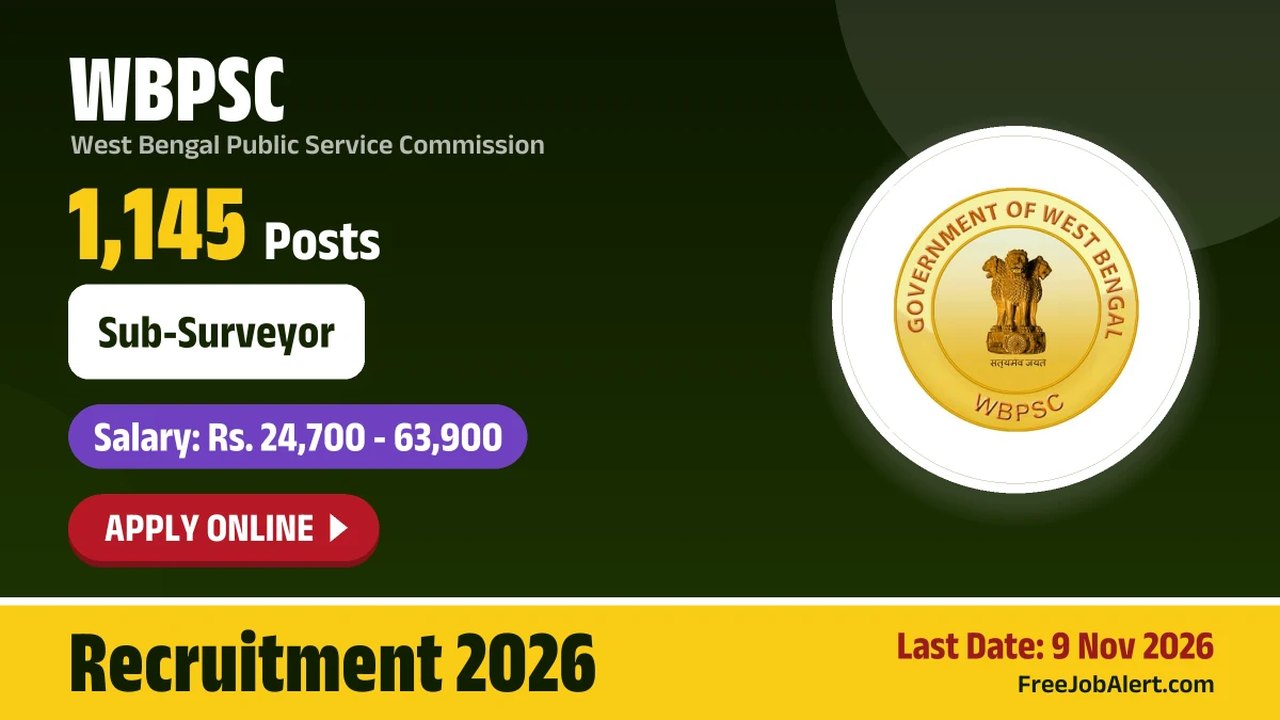 WBPSC Announces 1145 Sub-Surveyor Vacancies: Important Dates, Eligibility, and Application Details
 Community and Social Services Career Openings Highlight Regional Employment Landscape
 Weekend Alcohol Consumption and Women's Health: Examining the Science Behind Breast Cancer Risks
 Community and Social Services Openings Highlight Diverse Employment Landscape in Cheyenne, WY
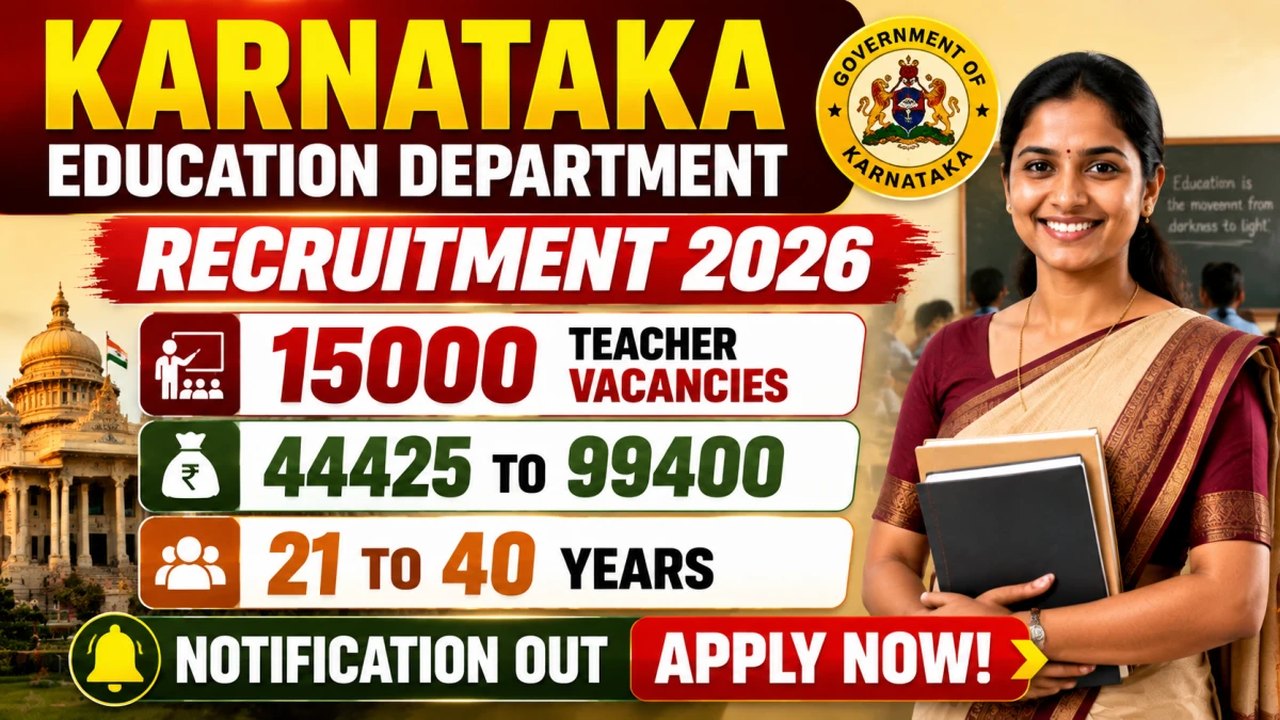 Karnataka School Education Department Extends Online Application Deadline for 2026 Teacher Recruitment to 16 November