Astronomers Debate the Nature of Mysterious 'Little Red Dots' Captured by Webb Telescope
· GlobeWire Daily Science Desk · Source: www.wired.com
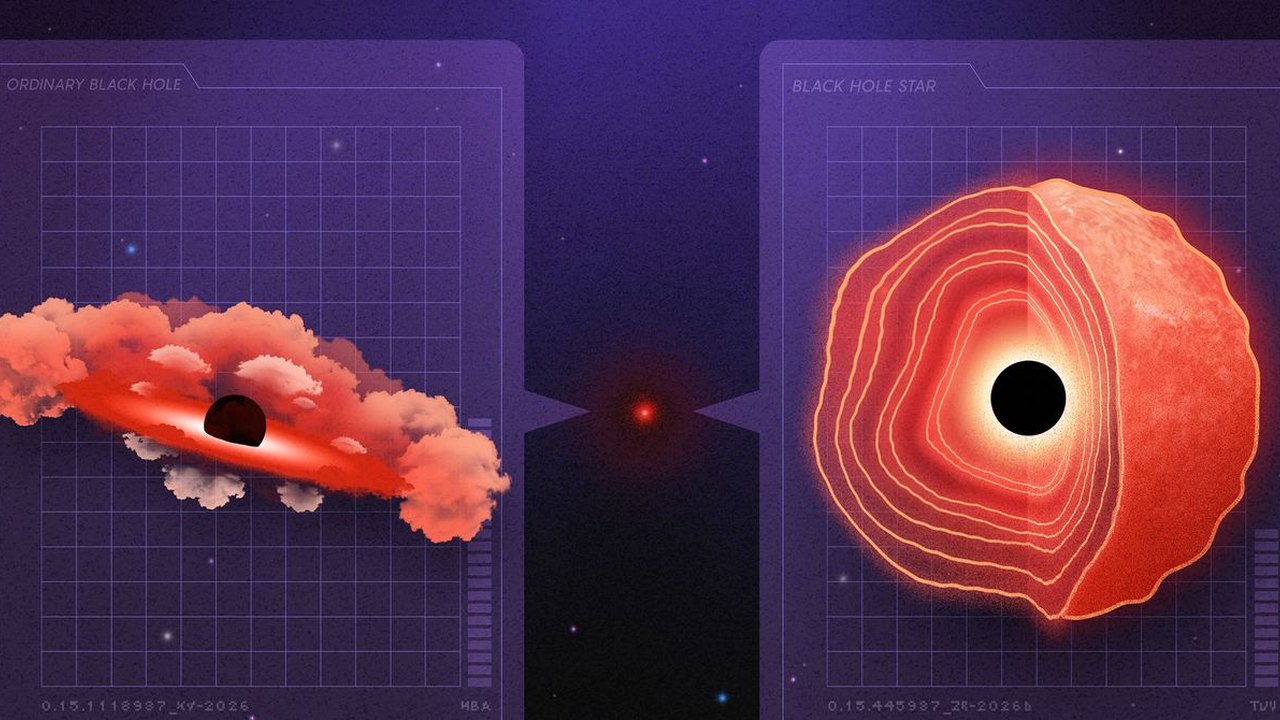
Image: Charlie Wood — Creative Commons
A Cosmic Enigma in the Early Universe
Since the launch of the James Webb Space Telescope (JWST), astronomers have been baffled by a recurring feature in its deep-space imagery: tiny, intensely bright objects dubbed "little red dots." Appearing in almost every field captured by the telescope, these objects emit long-wavelength red light and defy easy classification. Initially, researchers speculated they were distant galaxies, but their extreme brightness suggested they might actually be supermassive black holes.
The 'Black Hole Star' Hypothesis
In the spring of 2025, two research teams led by Anna de Graaff and Rohan Naidu identified a pair of these dots that were fundamentally different from previous sightings. Unlike standard black holes, which typically exhibit x-ray emissions and flickering brightness, these objects displayed a spectral "Balmer break"—a feature indicative of a hot, uniform stellar surface.
This led to the proposal of a new astronomical object: a "black hole star." In this model, a supermassive black hole sits at the core of a massive, unstable shell of hydrogen gas. The black hole acts as an engine, providing energy that keeps the hydrogen shell puffed out and obscuring the typical high-energy signatures of a feeding black hole. This "cocoon" could explain why these objects appear both starlike and suspiciously bright.
A Polarized Scientific Community
Not all astronomers agree with the black hole star theory. Critics, including astrophysicist Roberto Maiolino, argue that standard supermassive black holes—viewed from specific angles and obscured by surrounding rings of gas and dust—can explain the observed data without invoking new physics. For skeptics, the lack of expected black hole signals is simply a result of the unique, "messier" environment of the early universe.
The Search for Answers
Researchers are now searching for evolutionary patterns to resolve the debate. Preliminary data suggests that the prevalence of these red dots decreases as the universe ages, potentially indicating that they represent a transient "puberty-like" growth phase for supermassive black holes before they shed their gas shells. As teams refine their spectral analysis and models, they hope to determine whether these dots are the "seeds" of the universe’s most massive structures or merely common black holes appearing strange due to their orientation.
For more information on the ongoing research and findings, visit the official coverage at [Wired](https://www.wired.com/story/inside-the-supermassive-debate-over-the-james-webb-telescopes-little-red-dots/).
AI-assisted reporting; source claims are attributed and have not been independently verified.
More to read
 Boston Dynamics Employees Push Back Against ICE Robot Dog Contract
 Telehealth Platform Hims Expands Into Testosterone Replacement Therapy
 NASA’s Aging Mars Orbiters Defy Expectations Through Engineering and Adaptation
 US Intelligence Captures Clear Imagery of Secretive Chinese Spaceplane
Trending on GlobeWire Daily
Selected from recent coverage and related topics; not live search rankings.
 Hyundai Set to Expand Indian SUV Lineup with Upcoming Bayon Launch
 Campaigners Warn Government Over Cumulative Climate Impact of Pending Policy Decisions
 Barcelona Fined Following Atletico Madrid Complaint Over Julian Alvarez Approach
 UK Government Divided Over Rosebank Oilfield Approval
 Dune: Part Three Trailer Reveals Significant Departures From Frank Herbert’s Messiah
 Neil Young Files Copyright Infringement Lawsuit Against Trump Campaign Over Song Usage