Chandrayaan-3 Data Reveals Three Distinct Layers in Lunar Soil at Shiv Shakti Point
· GlobeWire Daily Science Desk · Source: timesofindia.indiatimes.com
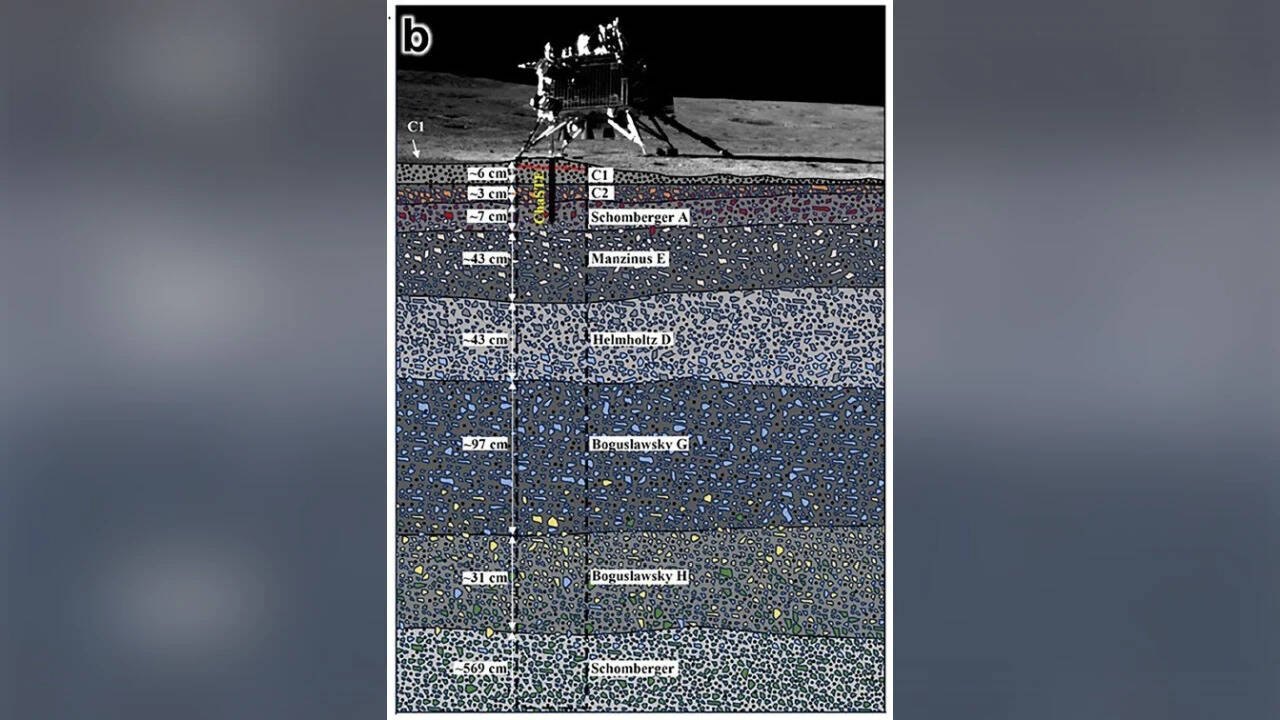
Image: The Times of India · Photo source · Resized and letterboxed to 16:9; no AI generation
Analysis of data gathered by India's Chandrayaan-3 mission indicates that the lunar soil at Shiv Shakti Point contains three distinct layers within its top 10 centimeters, according to a study published in the journal npj Space Exploration. The research, led by K Durga Prasad of the Physical Research Laboratory in Ahmedabad, examines measurements recorded by the Chandra's Surface Thermophysical Experiment (ChaSTE) instrument aboard the Vikram lander.
Key Findings from ChaSTE Data
- Upper Layer (0–3 cm): Described as highly porous, with an estimated porosity of around 80% and a bulk density of roughly 600 kilograms per cubic meter.
- Middle Layer (3–6 cm): Exhibits higher thermal conductivity compared to the surface layer.
- Bottom Layer (6–10 cm): Identified as denser, with an intermediate thermal conductivity and a soil cohesion reaching approximately 1,350 pascals at the 10-centimeter depth.
Researchers reported observing a temperature gradient of approximately 73 kelvin across the top 10 centimeters during local noon, with each layer responding differently to solar heating. This fine-scale stratification provides direct thermophysical profiling of the Moon's southern high-latitude region.
Geological Context and Implications
Scientists propose that successive impact events from nearby craters, such as Schomberger A, C2, and C1, may have deposited materials with varying properties over time, resulting in the observed layering.
Understanding these shallow subsurface properties has several practical implications for future lunar exploration:
- Water Retention: The porosity and thermal conductivity of shallow soil can influence whether migrating subsurface water is retained or lost through sublimation.
- Habitat Design: Temperature variations a few centimeters below the surface differ significantly from top layer readings, which could potentially assist engineers in planning thermal management for future habitats and equipment.
- Mission Planning: The study offers ground-truth data to help scientists constrain models of the Moon's shallow subsurface and evaluate other prospective landing sites.
Readers can review the published research paper in the Nature Portfolio journal npj Space Exploration for detailed technical parameters and methodology.
AI-assisted reporting; source claims are attributed and have not been independently verified.
More to read
 Massive Kik Data Breach Exposes Over 150 Million Profile Images, Security Researcher Reveals
 REO Trucks Reveals Three Planned Budget Models Starting Under $30,000
 Study Reveals Hyperscale Data Centers Carbon Footprint Rivals Denmark
 Data Reveals India as the Leading Source of Professionals Moving to MENA Jobs