Japan Launches $578 Million MMX Mission to Retrieve Samples From Martian Moon Phobos
· GlobeWire Daily Science Desk · Source: arstechnica.com
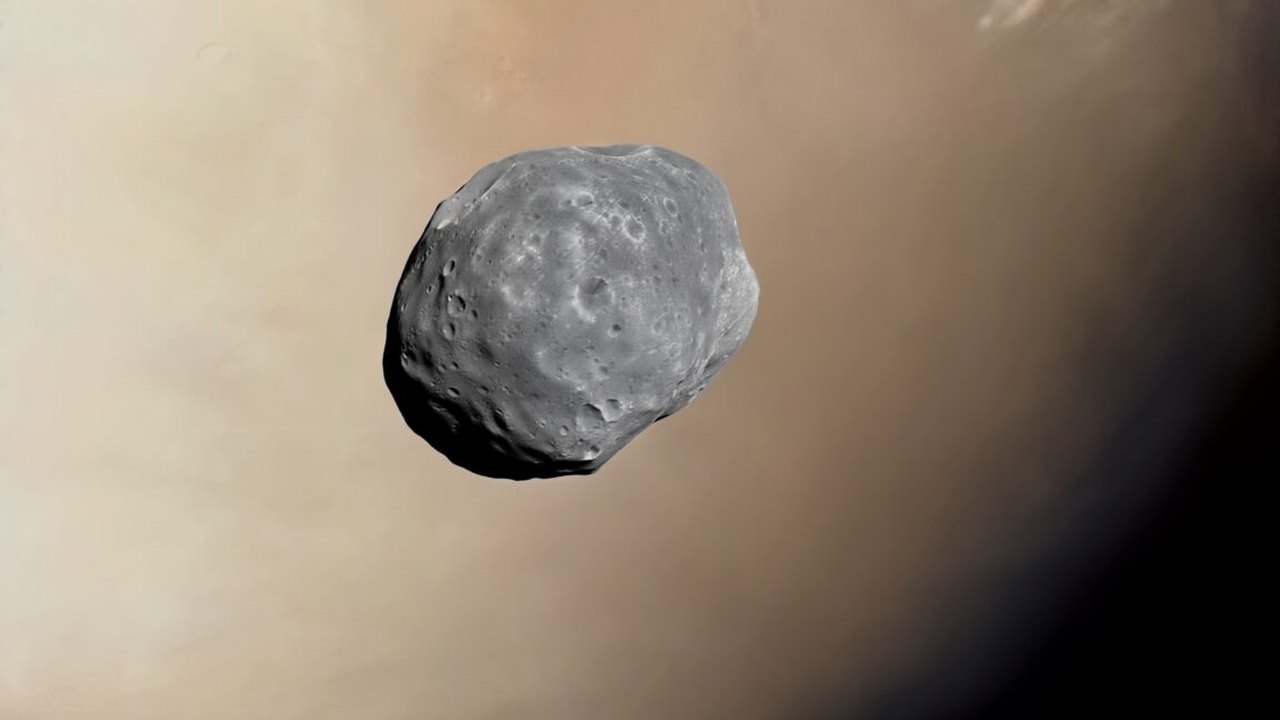
Image: arstechnica.com — Creative Commons
Japan has successfully launched the Martian Moons eXploration (MMX) mission, a $578 million interplanetary project aimed at landing on the Martian moon Phobos and returning samples to Earth. Liftoff occurred at 3:41 pm EDT Monday (4:41 am Japan Standard Time Tuesday) from the Tanegashima Space Center using Japan's flagship H3 rocket in a new, upgraded configuration featuring four strap-on solid rocket boosters.
Following a successful separation roughly 71 minutes after launch, mission controllers at the Japan Aerospace Exploration Agency (JAXA) confirmed that the nearly 9,900-pound spacecraft had deployed its solar panels and was operating in a stable condition. The probe is now embarked on a 10-month voyage toward Mars, utilizing a top speed exceeding 24,000 mph achieved by the H3 rocket's upper stage.
Mission Timeline and Scientific Goals
Upon arriving at Mars in August, MMX will spend approximately three years conducting encounters with both Martian moons, Phobos and Deimos. Because Phobos possesses very weak gravity and sits close to the strong gravitational pull of Mars, the spacecraft will operate in a quasi-satellite orbit rather than a traditional orbit around the moon.
In late 2028 or early 2029, the mothership will deploy a shoebox-sized four-wheeled rover named Idefix—contributed by the French and German space agencies—to navigate the rugged surface of Phobos for up to 100 days. Later in 2029, the main spacecraft will execute up to two landings, remaining on the surface for several hours to collect at least 10 grams of material using a coring drill and a NASA-provided pneumatic sampler.
The spacecraft will depart Mars in 2030 and is scheduled to guide a sample return capsule to a remote landing zone in South Australia in 2031. Laboratories in Japan will analyze the primary specimens, while US researchers will receive 15 percent of the returned material in exchange for NASA's hardware contributions, which include the pneumatic sampler and a gamma-ray and neutron spectrometer.
Practical Implications and Context
Scientists hope the mission will resolve long-standing questions regarding whether Phobos and Deimos are captured asteroids from the outer asteroid belt or debris generated by a giant impact early in Martian history. Additionally, because Phobos sits in close proximity to Mars, the collected samples could potentially include traces of the red planet itself.
Japan brings a proven track record to the project, having previously led the Hayabusa and Hayabusa 2 missions, which successfully retrieved pristine specimens from asteroids. International collaboration includes contributions from NASA and space agencies across Europe.
Readers can verify the original announcement and follow mission updates through the official [Ars Technica coverage](https://arstechnica.com/space/2026/10/japan-launches-mission-to-bring-home-a-piece-of-the-martian-moon-phobos/).
AI-assisted reporting; source claims are attributed and have not been independently verified.
More to read
 Vice-President C.P. Radhakrishnan Urges Universities to Prioritize Medical Research
 Behind the Scenes of the Secret Nathan Fielder Interview and Recent Tech Pledges
 UNEP admits 1.5 °C target is now unattainable and outlines a new “overshoot‑minimisation” pathway
 NASA's NEO Surveyor Mission Reaches Key Milestone With Sunshade and Solar Array Integration
Trending on GlobeWire Daily
Selected from recent coverage and related topics; not live search rankings.
 UK Government Approves Jackdaw North Sea Gasfield, Prompting Broad Climate‑Policy Criticism
 Tamil Nadu Government Plans Industry Integration and Skill-Based Higher Education Framework
 UK AI minister urges state‑led capability after AI uncovers 500 new government system vulnerabilities
 Tamil Nadu School Closures Declared in Several Districts Amid Heavy Rainfall
 French Student Leaders Urge Continued School Barricades Despite Government Concessions
 Oriel College Faces Calls to Cancel Student Reform Group Event Featuring Nathan Cofnas