Revisiting a 1960 Physicist's Prediction of Humanity's End
· GlobeWire Daily Science Desk · Source: arstechnica.com
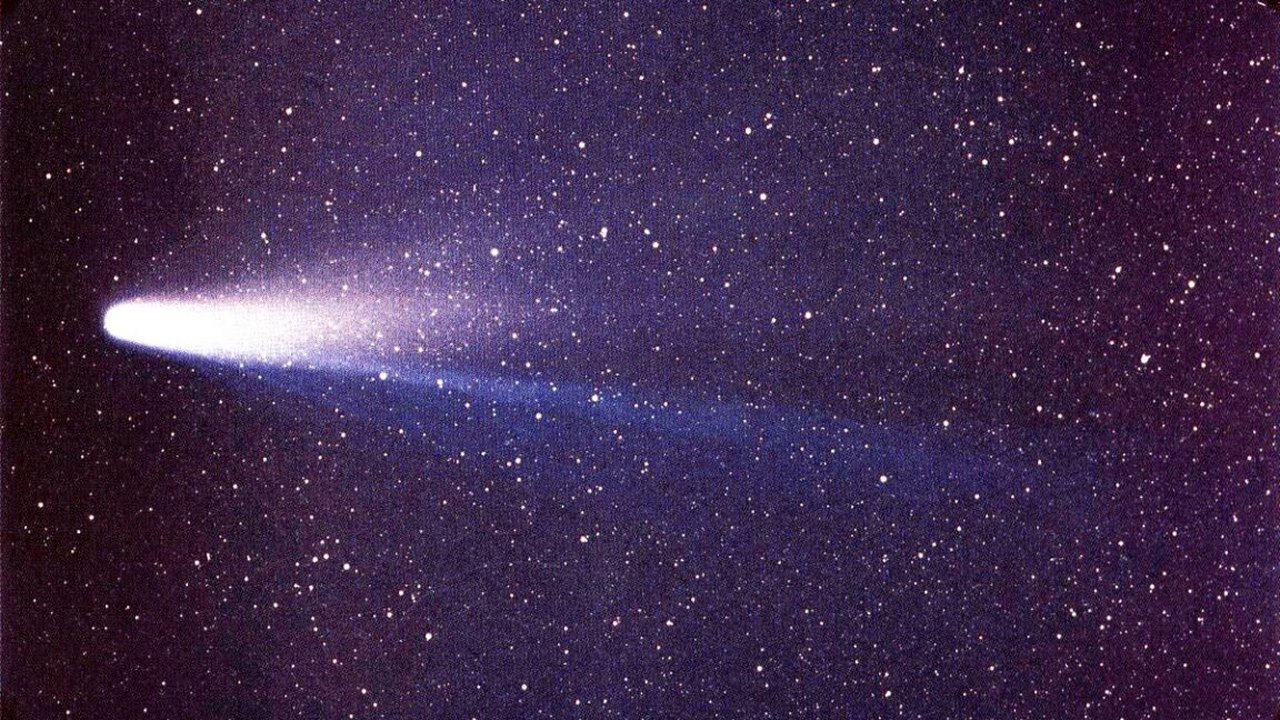
Image: Ars Technica · Photo source · Resized and letterboxed to 16:9; no AI generation
A 1960 paper published in the journal Science by physicist Heinz von Foerster projected that global population growth would reach a breaking point on November 13, 2026. While the date matches a recent day of global tech disruptions affecting Microsoft services, experts note that such doomsday forecasts have historically failed to account for changing demographic trends and falling birth rates.
Von Foerster's model relied on the assumption of exponential population growth, predicting that humanity would be overwhelmed by overpopulation rather than starvation. However, mathematical biologist Joel Cohen noted that population growth rates shifted shortly after the paper was published, and global birth rates today are significantly lower than 1960 levels.
Historical Context of Doomsday Predictions
Predictions regarding the end of the world have a long history across various fields:
- Early Models: Economist Thomas Malthus predicted in 1798 that food supplies would fail to keep pace with population growth.
- Scientific Forecasts: Figures such as mathematician Jacob Bernoulli and astrophysicist John Gribbin previously made catastrophic predictions tied to comets or planetary alignments, though these hypotheses were later distanced from or disproven.
- Religious and Cultural Projections: Historical figures including Martin Luther, Cotton Mather, and Isaac Newton offered various dates for the end times, none of which materialized.
Practical Implications and Verification
- Verify Claims: Readers can review the original 1960 study in the journal Science (DOI: 10.1126/science.132.3436.1291) to examine the primary methodology and mathematical assumptions.
- Demographic Realities: Modern demographers analyze multiple variables—such as shifting life expectancies, economic factors, and declining fertility—rather than assuming permanent exponential growth.
AI-assisted reporting; source claims are attributed and have not been independently verified.
More to read
 Quentin Tarantino's West End Play 'The Popinjay Cavalier' Extends Run and Announces Full Cast
 Harvard Academic Workers End Strike Without Final Contract, Leaving Graduate Strikers Isolated
 New UNEP Report Outlines Humanity's Options for Containing Climate Change
 Air India Crash Investigation at 'Fag End', Centre Tells Supreme Court