Why Naming Your Emotions Is Harder Than You Think and How to Improve
· GlobeWire Daily Lifestyle Desk · Source: www.theguardian.com
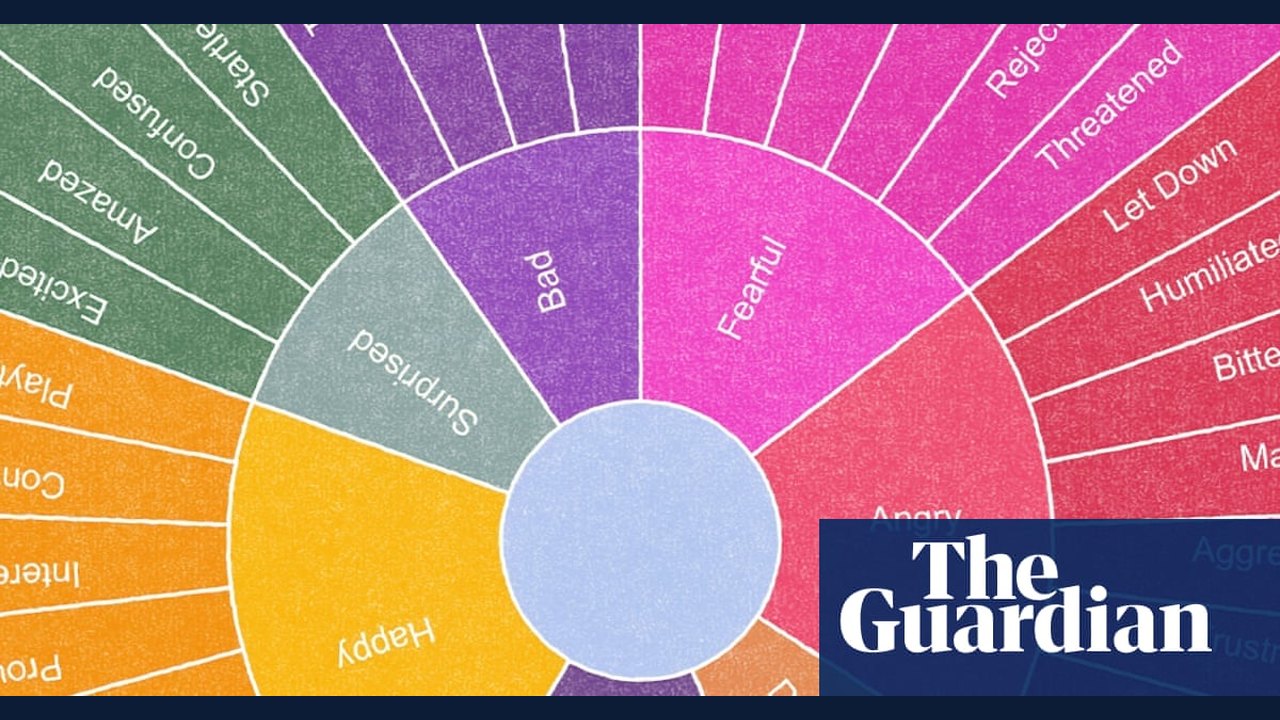
Image: the Guardian · Photo source · Resized and letterboxed to 16:9; no AI generation
Identifying emotions is a skill many believe is intuitive, yet research suggests about 10% of the population struggles significantly to label their internal states. Psychologists point to 'emotional granularity'—the ability to distinguish between specific feelings—as a key factor in mental well-being.
Understanding Emotional Granularity
Emotional granularity, a concept identified by neuroscientist Lisa Feldman Barrett, is the practice of moving beyond broad labels like 'sad' or 'bad' to identify nuanced, context-specific emotions.
- The Benefit: Precise labels act as an internal feedback system, helping individuals choose appropriate coping strategies.
- The Risk: Those with low granularity may rely on generic coping mechanisms like avoidance, aggression, or self-medication because they cannot pinpoint the specific need behind their discomfort.
- Alexithymia: Representing the extreme opposite of granularity, this trait involves an inability to identify emotions and is often associated with autism, depression, or PTSD.
The Feelings Wheel
Developed by Dr. Gloria Willcox in the 1980s, the feelings wheel has gained popularity as a tool for increasing emotional vocabulary. It organizes emotions in concentric circles, starting with core feelings and branching out into more descriptive terms.
How to Build the Skill
Experts emphasize that emotional granularity is a learnable skill, not a fixed trait.
- Practice: Use the feelings wheel alongside journaling to reflect on specific experiences.
- Therapy: Cognitive Behavioral Therapy (CBT) can help distinguish between thoughts, physical sensations, behaviors, and emotions.
- Caution: If you struggle significantly with labeling, consult a mental health professional. Avoid ruminating over finding the 'perfect' word; the goal is to make sense of a moment and move forward.
For further information, verify these concepts through reputable mental health organizations or by discussing them with a licensed therapist.
AI-assisted reporting; source claims are attributed and have not been independently verified.
More to read
 You Will Die. That’s Why Your Life Is Worth Living
 How Overpaying Your Mortgage Can Help You Clear Debt Early
 Can Red Light Improve Your Sleep? What Experts Say About the Wellness Trend
 Why Your Nose Gets Raw When You're Sick, and How Doctors Recommend Preventing It