NASA's NEO Surveyor Mission Reaches Key Milestone With Sunshade and Solar Array Integration
· GlobeWire Daily Editorial Desk · Source: science.nasa.gov
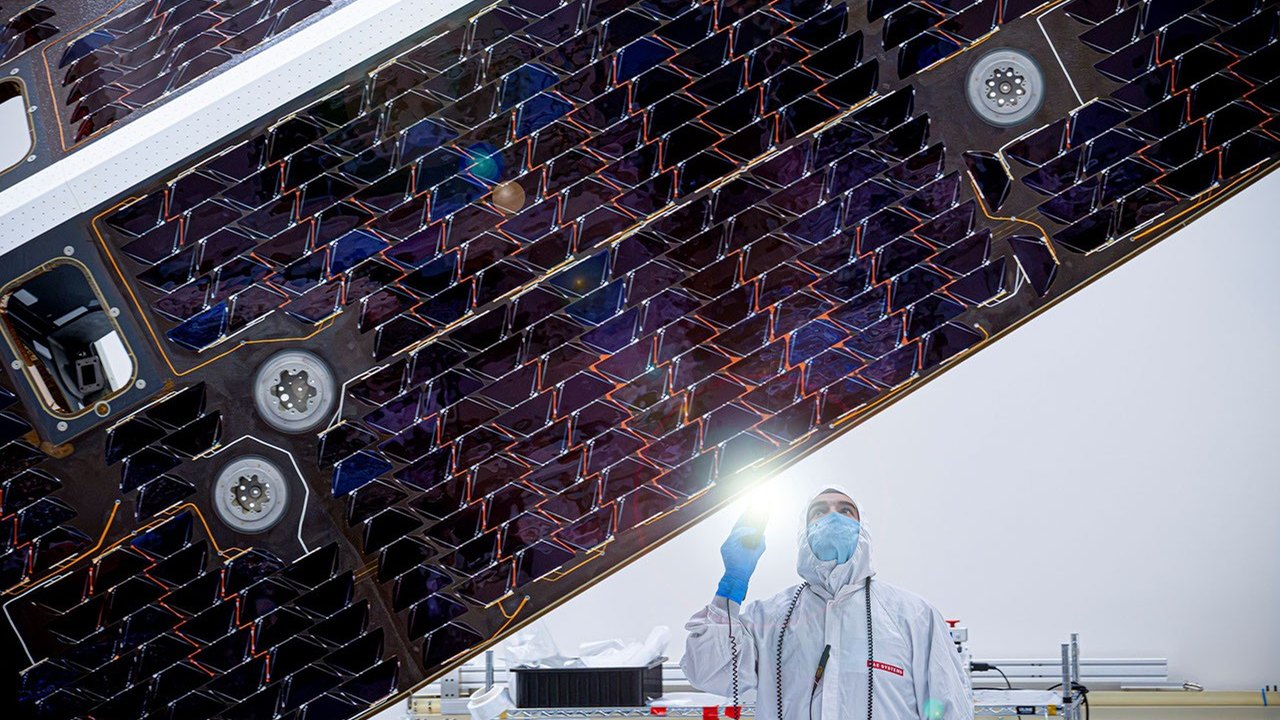
Image: science.nasa.gov · Photo source · Cropped to 16:9; original source image
Progress on NASA's Asteroid-Hunting Spacecraft
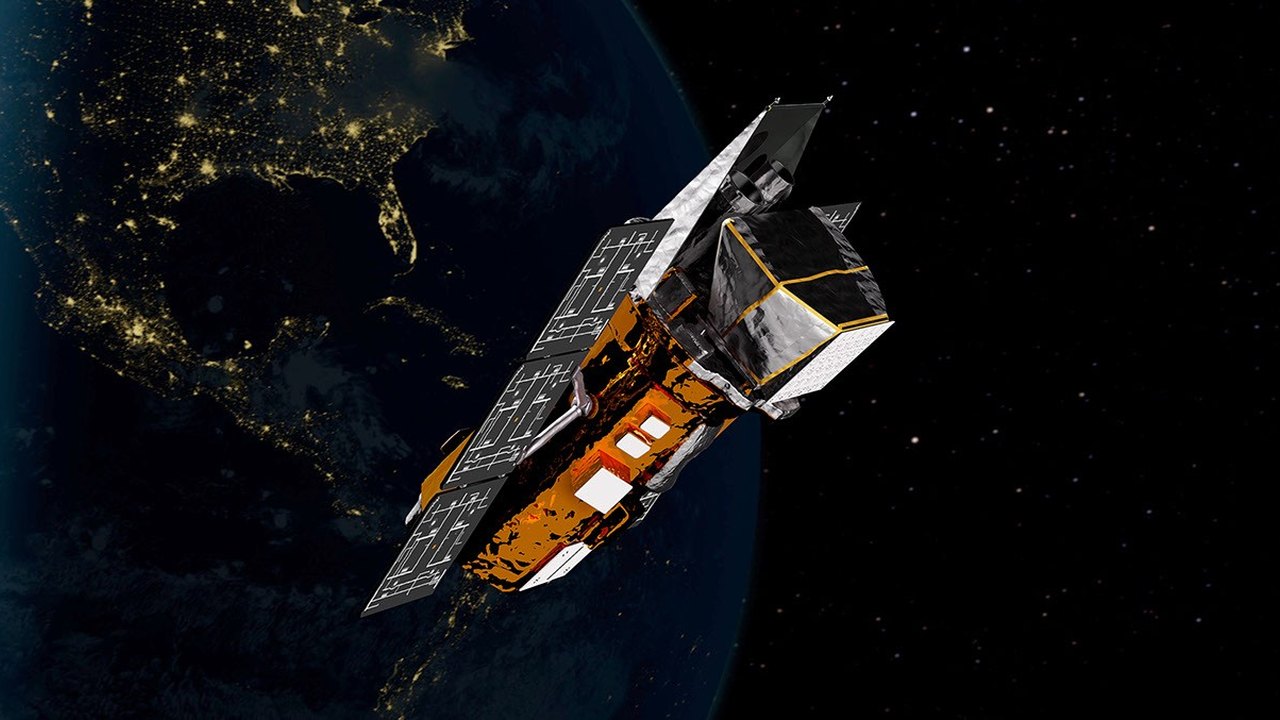
Development on NASA's Near-Earth Object (NEO) Surveyor mission has reached a significant milestone as engineering teams complete the integration of solar arrays onto the spacecraft's massive sunshade. The work, recently inspected at BAE Systems Space & Mission Systems in Boulder, Colorado, brings the mission's largest physical component closer to its flight-ready configuration.
The NEO Surveyor mission is designed to search for near-Earth asteroids and comets that pose potential hazards to our planet. Because ground-based optical telescopes face limitations when scanning regions of the sky in the direction of the Sun, space-based infrared observation is critical for locating hard-to-find objects.
Dual-Purpose Sunshade and Power Generation
The spacecraft's sunshade serves a critical dual function: protecting the telescope from intense solar glare and generating electrical power. The structure stands 20 feet (6 meters) tall and measures 8 feet (2.4 meters) wide at its base, featuring two flat panels joined at a 23.5-degree angle.
Earlier this year, the sunshade was outfitted with 864 interconnected solar cells. This specialized array is capable of producing up to 2 kilowatts of power, serving as the sole source of electricity to charge the spacecraft's onboard batteries and run its systems. In addition to the solar cells, teams have recently integrated coarse Sun sensors for attitude determination and temperature sensors onto the structure.
Infrared Capabilities and Mission Goals
To detect objects effectively, the spacecraft relies on a 20-inch-wide (50-centimeter-wide) aperture protected by the sunshade. The design prevents direct sunlight from entering and blinding the telescope as it tracks the infrared emissions radiated by asteroids and comets heated by the Sun.
The telescope utilizes a pair of infrared detector arrays, each generating a 16-megapixel mosaic of the sky across two infrared bands. By imaging the same region in both bands simultaneously, scientists can calculate the temperature of an asteroid or comet, which allows them to estimate its size—a vital metric for assessing potential impact hazards.
Practical Implications and Verification
The advancement of the NEO Surveyor hardware highlights steady progress toward the mission's operational goals in planetary defense. By improving our understanding of the population, locations, and trajectories of near-Earth objects, the mission aims to expand NASA's cataloging capabilities for potentially hazardous space rocks.
Readers seeking to verify these developments or review further technical updates can consult the official NASA announcement directly through the NASA Science Blogs.
AI-assisted reporting; source claims are attributed and have not been independently verified.
More to read
 NASA’s Aging Mars Orbiters Defy Expectations Through Engineering and Adaptation
 NASA Adopt a Pixel: Official Signup & Roman Certificate
 NASA Advances Nuclear-Powered 'SR-1 Freedom' Spacecraft Ahead of 2028 Launch
 NASA’s Neil Gehrels Swift Observatory Ceases Operations Ahead of Imminent Re-entry
Related coverage
Related reporting available at publication.
NASA’s Aging Mars Orbiters Defy Expectations Through Engineering and AdaptationNASA Adopt a Pixel: Official Signup & Roman CertificateNASA Advances Nuclear-Powered 'SR-1 Freedom' Spacecraft Ahead of 2028 LaunchNASA’s Neil Gehrels Swift Observatory Ceases Operations Ahead of Imminent Re-entry NASA Launches Commercial Satellite Communication Tests to Modernize Space Data Relays