Sports
AB de Villiers alleges Australia’s ball‑tampering began in Durban Test of 2018
· GlobeWire Daily Editorial Desk · Source: www.theguardian.com
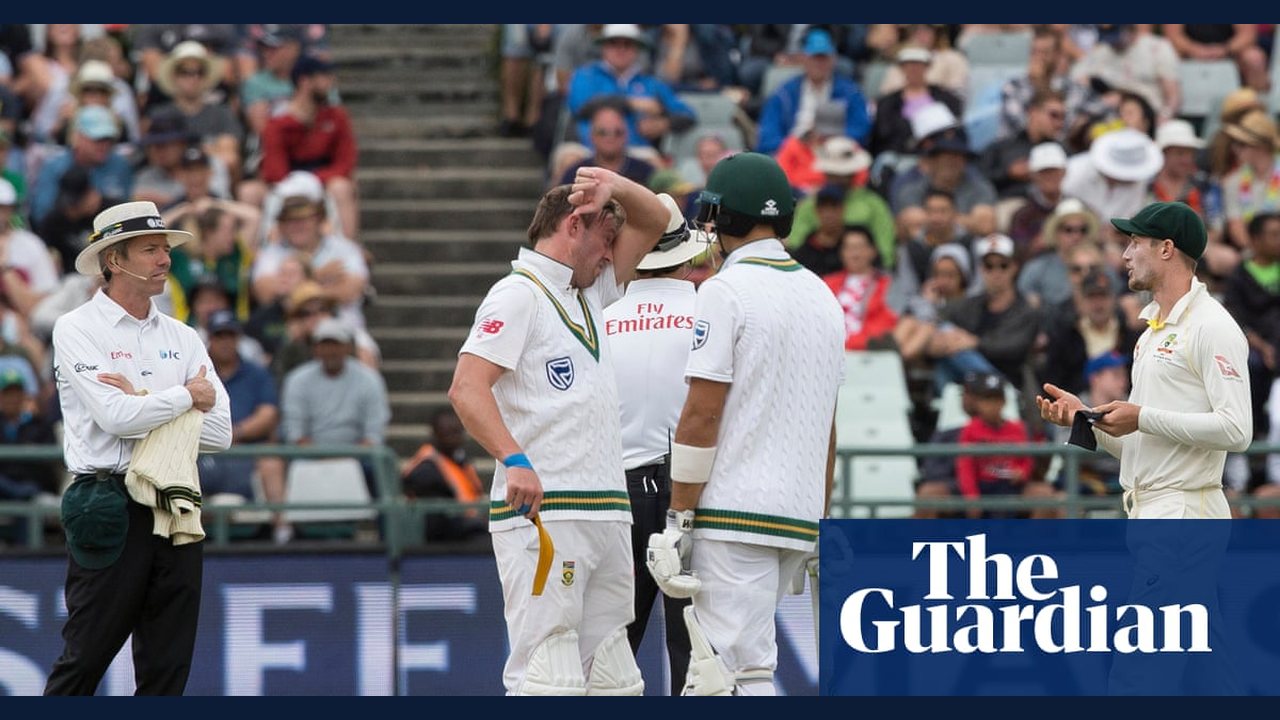
Summary
Former South Africa star AB de Villiers has publicly claimed that Australia’s 2018 ball‑tampering scheme started in the first Test at Kingsmead, Durban, not in the later match at Port Elizabeth. He repeated the allegation on his YouTube channel, citing the unusual reverse swing observed in that game.
Confirmed facts
- The 2018 series between Australia and South Africa featured a notorious sand‑paper scandal that erupted after video showed Cameron Bancroft using sandpaper in the third Test at Newlands, Cape Town.
- De Villiers was a player in the Durban Test, scoring an unbeaten century and helping South Africa win by six wickets to level the series 1‑1.
- In a YouTube interview on 23 Nov 2026, the 42‑year‑old said, “It started in Durban, by the way, not in PE,” and added that the ball began to reverse swing “at a very, very interesting time.”
- He suggested the tampering could have involved sandpaper, nails or another object, but did not provide physical evidence.
- Cricket Australia declined to comment when approached by *The Guardian*.
Reported claims
- De Villiers asserted that “every single person” in the Australian camp knew about the plan and that there was “zero per cent doubt” about pre‑meditated cheating.
- He criticised Cricket Australia’s handling of the fallout, saying the blame was unfairly placed on players such as Warner, Bancroft and former captain Steve Smith, and that the issue became a political matter involving the prime minister.
- He referenced earlier ball‑tampering controversies (England’s Michael Atherton in the 1990s, South Africa’s Hansie Cronje, and Faf du Plessis’s ICC fines) as examples of more transparent handling.
Unverified or uncertain points
- No independent investigation has confirmed tampering in the Durban Test; the claim rests solely on de Villiers’s personal recollection.
- The specific method (sandpaper, nails, or another object) remains speculative.
- No official statements from Australian players or staff corroborate the Durban allegation.
Practical implications
- If the claim gains traction, it could prompt a re‑examination of match footage from the Durban Test by cricket authorities or independent analysts.
- Fans and journalists may look for unusual swing patterns, ball‑tracking data, or whistle‑blower testimony to substantiate or refute the allegation.
- The controversy may revive calls for stricter ball‑handling protocols and more transparent disciplinary processes.
How to verify the original announcement
- Watch the full YouTube video posted by AB de Villiers on 23 Nov 2026 (the link is provided in the article’s description).
- Check *The Guardian* article dated 23 Nov 2026 for direct quotes and context.
- Monitor statements from Cricket Australia, the International Cricket Council (ICC), and any forthcoming investigations.
Keywords
- AB de Villiers ball tampering claim
- 2018 Australia South Africa Durban Test
- Sandpaper scandal
- Cricket Australia response
- Reverse swing controversy
Share this article
Read the original source ‘No doubt’: AB de Villiers makes fresh Australian ball-tampering claim