GitHub Actions Workflow Dependency Lockfiles Reach General Availability
· GlobeWire Daily Tech Desk · Source: github.blog
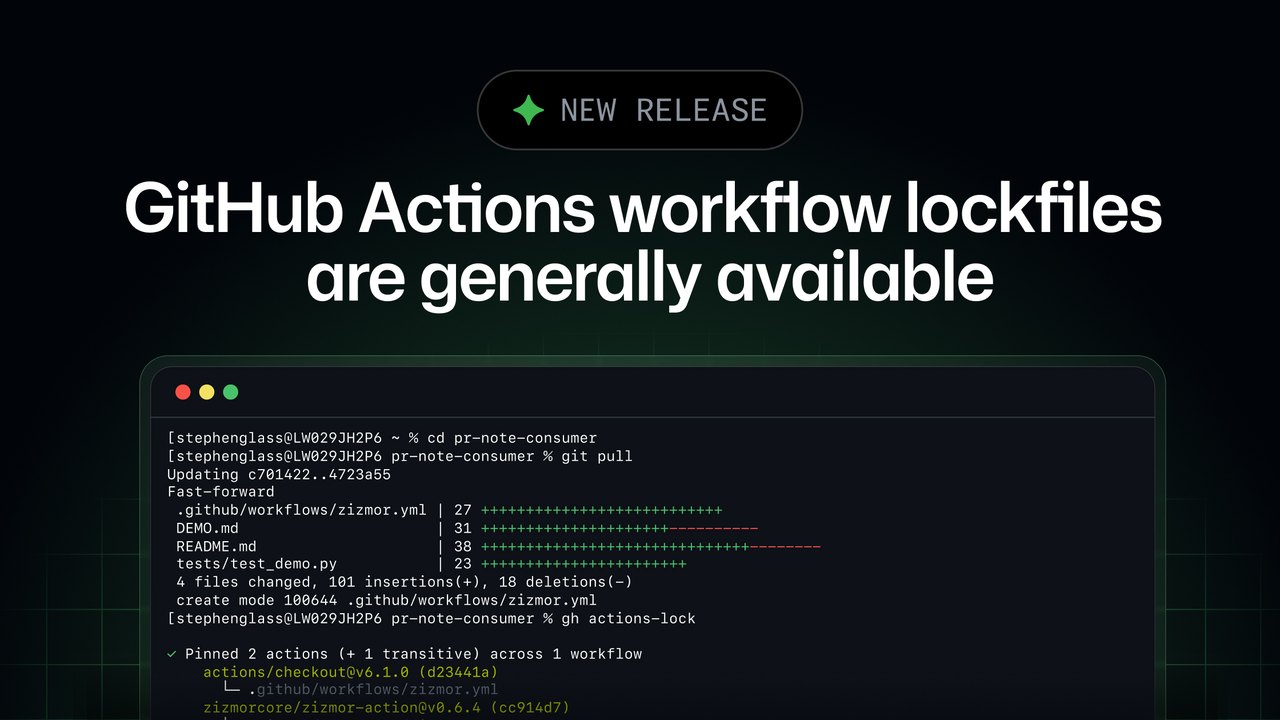
Image: github.blog — Creative Commons
General Availability Release
GitHub has announced the general availability of workflow dependency lockfiles for GitHub Actions. The feature is now accessible across GitHub Enterprise Cloud, GitHub Enterprise Cloud with data residency, Team, and Free plans. Initially introduced as a public preview, the release allows development teams to maintain readable tag and branch references within their workflow configurations while ensuring that pipelines execute the exact, immutable commits specified in the lockfile, regardless of whether upstream tags or branches subsequently move.
Core Functionality and Adoption
To implement the feature, developers utilize the `gh actions-lock` extension for the GitHub CLI to generate an `actions.lock` file inside the `.github/workflows` directory for actions and their transitive dependencies.
The rollout is designed for flexible adoption:
- Gradual Onboarding: Teams can onboard workflows individually. Once a workflow is onboarded, GitHub Actions requires every dependency to be present in the lockfile and executes the recorded commit.
- Dependabot Integration: When Dependabot creates a version update pull request for an action in an onboarded workflow, it automatically regenerates the corresponding lockfile entry within the same pull request without requiring extra configuration.
- Policy Enforcement: Enterprise, organization, and repository administrators can enforce adoption using a dedicated "Require lockfile" policy.
- Stale Verification: Users can run a continuous integration check to verify whether a lockfile is current without modifying any local files.
Practical Implications and Security Context
While workflow lockfiles provide protection against unexpected dependency modifications by pinning exact commits, GitHub emphasizes that locking a dependency does not inherently verify its safety. Developers remain responsible for reviewing dependencies before generating and committing lockfiles.
To begin using the feature, teams can install the extension from the official `gh-actions-lock` repository, review the generated artifacts, and commit both the lockfile and the updated workflow configurations to their repositories.
What Is Confirmed Versus Unknown
- Confirmed: The feature is generally available on GitHub Enterprise Cloud, Enterprise Cloud with data residency, Team, and Free plans. It utilizes the `gh actions-lock` CLI extension, supports Dependabot automated updates, and offers administrative policy enforcement alongside stale-lock checks.
- Unknown: Specific future extensions to other GitHub product tiers or additional automated tooling integrations beyond the documented CLI extension and Dependabot behavior were not detailed in the release.
How to Verify
Readers can review the official documentation, setup instructions, and community discussion links provided directly in the official GitHub announcement.
[GitHub Actions Workflow Lockfiles General Availability Announcement](https://github.blog/changelog/2026-10-28-github-actions-workflow-lockfiles-are-generally-available/)
AI-assisted reporting; source claims are attributed and have not been independently verified.
More to read
 Archival Review Highlights Past Samsung Announcements in India from June 2016
 PHP Issues Emergency Patches for Critical 'PHP2Shell' RCE Flaws
 GitHub Details August 17 Outage and Steps to Prevent Future Downtime
 Hackers Compromise Shared Analytics Script on E-commerce Platform Convertr to Steal Card Data
Trending on GlobeWire Daily
Selected from recent coverage and related topics; not live search rankings.
 Fintech Firm FatakPay Announces Search for Compliance Manager in Mumbai
 Exploring Private Sector Job Listings in India: Recent Openings and Roles
 Assam Announces VFA Recruitment 2026 for 200 Veterinary Field Assistant Posts: What You Need to KnowArchival Review Highlights Past Samsung Announcements in India from June 2016
 India’s Record Asian Para Games Finish and New Rail Infrastructure Highlight Key October 24 Developments
 Yeastar Announces Yeahs Awards 2026 Winners Highlighting AI and Partner Innovations