Google and Ignite Energy Access Report 160,000 Tonnes of Emissions Reductions Through AI-Powered Rural Solar Logistics in Sub-Saharan Africa
· GlobeWire Daily Tech Desk · Source: blog.google
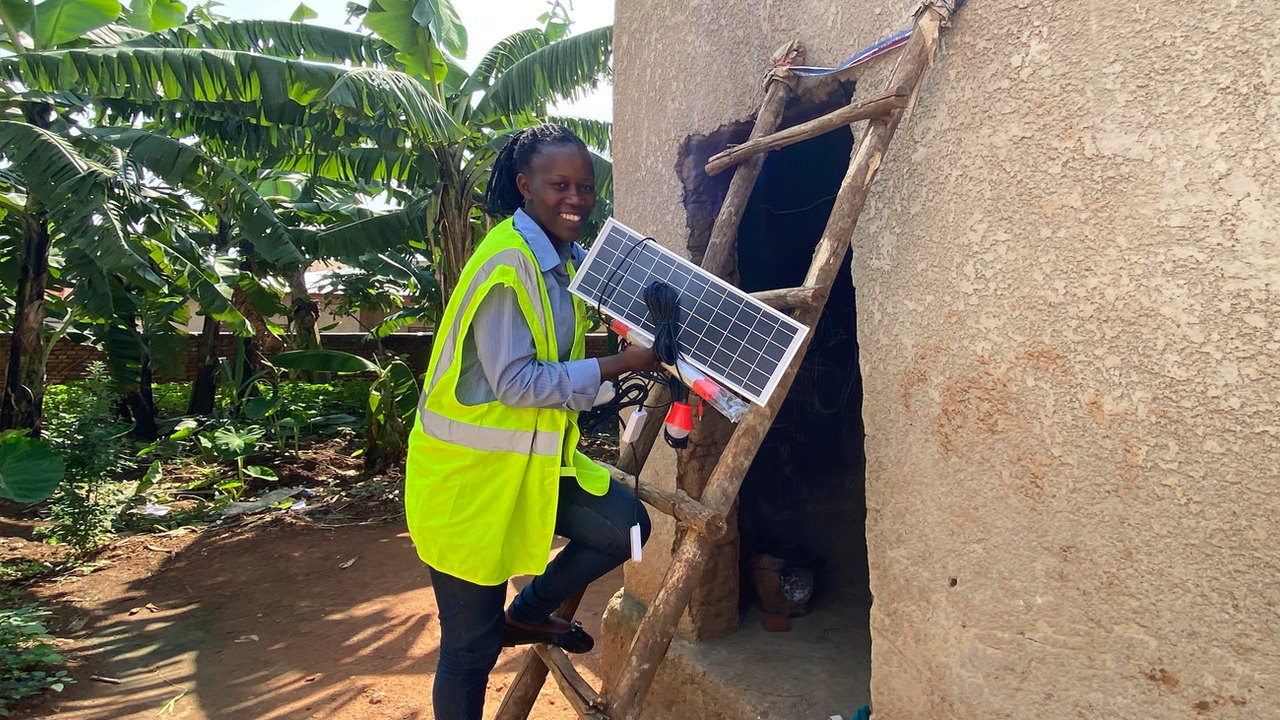
Image: blog.google — Creative Commons
Google has announced new milestones from its multi-year collaboration with Ignite Energy Access, a clean energy provider working to expand electricity infrastructure in sub-Saharan Africa. According to the data released by Google, the partnership has enabled an estimated 160 kilotons of carbon dioxide equivalent (kT CO2e) in emissions reductions during the first half of 2026 alone.
The initiative addresses severe infrastructure gaps in a region where more than 600 million people—representing nearly half the population—live without reliable access to electricity. Lacking formal power grids, many rural households have historically depended on expensive, hazardous fuels such as kerosene, wood, and charcoal for basic daily needs like lighting and cooking.
Solving Complex Logistical and Mapping Challenges
Expanding off-grid solar power across sub-Saharan Africa involves navigating significant logistical hurdles. Rural homes frequently lack formal addresses and appear only as unmapped locations connected by dirt paths across rugged terrain. Traditional mapping applications and standard satellite imagery have historically struggled to pinpoint these dispersed settlements or detect small, single-panel rooftop solar installations at scale.
To overcome these data and operational bottlenecks, Google researchers and engineers worked alongside Ignite Energy Access through more than 100 dedicated advisory sessions as part of Google’s Startups for Sustainable Development program. The joint initiative leveraged Google's Open Buildings dataset combined with advanced geospatial and routing algorithms to optimize supply chains, plan warehouse locations, and schedule delivery routes across difficult rural landscapes.
Additionally, the engineering teams developed computer vision tools using Gemini for Science, fine-tuned with ground-truth drone imagery provided by Ignite. This technology enables operators to identify small solar setups from orbit, helping teams track deployment progress and target underserved villages more strategically.
Expanding Toward Clean Electric Cooking
Building on the deployment of 3.7 million solar devices across the region since 2023, the partnership is now expanding its technical scope to address clean cooking. Millions of families in rural areas rely on wood and charcoal, which creates indoor air pollution and requires hours of daily fuel gathering—a burden that disproportionately affects women and children.
While modern electric cookstoves eliminate these indoor toxins, they demand significantly more power than a standard single rooftop solar kit can provide. To address this limitation, the partnership is currently modeling community-level micro-grids designed to supply the higher electrical loads required for clean electric cooking.
Practical Implications and Verification
The technological framework deployed in this partnership illustrates how artificial intelligence and geospatial data can optimize supply chains in emerging markets. Organizations and climate-focused founders interested in similar initiatives can explore Google's Startups for Sustainable Development program or access open-source resources such as the Open Buildings dataset.
However, readers and analysts should note several stated limitations regarding the reported impact data. Google's calculation of the 160 kT CO2e emissions reductions for the first half of 2026 relies on the number of solar lamps reported sold by Ignite Energy Access and its subsidiaries between July 2023 and June 2026. Applying the UN Framework Convention on Climate Change (UNFCCC) methodology for substituting fossil fuel-based lighting, the model estimates a 0.092 tCO2e reduction per year per solar lamp, adjusted for installation timelines.
Google explicitly notes that these enabled emissions reduction estimates contain inherent uncertainties due to a lack of primary data and precise information regarding real-world end-user actions and long-term effects. Furthermore, the underlying data and corporate claims have not been independently verified by a third-party auditor.
Readers can verify the original announcement and review the methodology details directly through the official [Google Blog](https://blog.google/company-news/outreach-and-initiatives/sustainability/sub-saharan-africa-ignite/).
AI-assisted reporting; source claims are attributed and have not been independently verified.
More to read
 UK AI minister urges state‑led capability after AI uncovers 500 new government system vulnerabilities
 iFixit Teardown Points to Potential Cause Behind Early iPhone Duo Screen Cracks
 NIST, CISA, and NSA Release Guidance on AI Agent Incident Readiness
 Grok Releases First Seven Minutes of AI-Generated Adaptation of 'The Odyssey'
Trending on GlobeWire Daily
Selected from recent coverage and related topics; not live search rankings.
 Tamil Nadu Government Plans Industry Integration and Skill-Based Higher Education FrameworkUK AI minister urges state‑led capability after AI uncovers 500 new government system vulnerabilities
 Tamil Nadu School Closures Declared in Several Districts Amid Heavy Rainfall
 Mass Effect 5 Canceled Amid BioWare Studio Shuttering, Sparking Major Industry Backlash
 French Student Leaders Urge Continued School Barricades Despite Government Concessions
 Oriel College Faces Calls to Cancel Student Reform Group Event Featuring Nathan Cofnas