Industrial Intelligence Emerges as Growth Engine for Manufacturing, Early Trials Show Faster Decisions and Fewer Defects
· GlobeWire Daily Tech Desk · Source: www.technologyreview.com
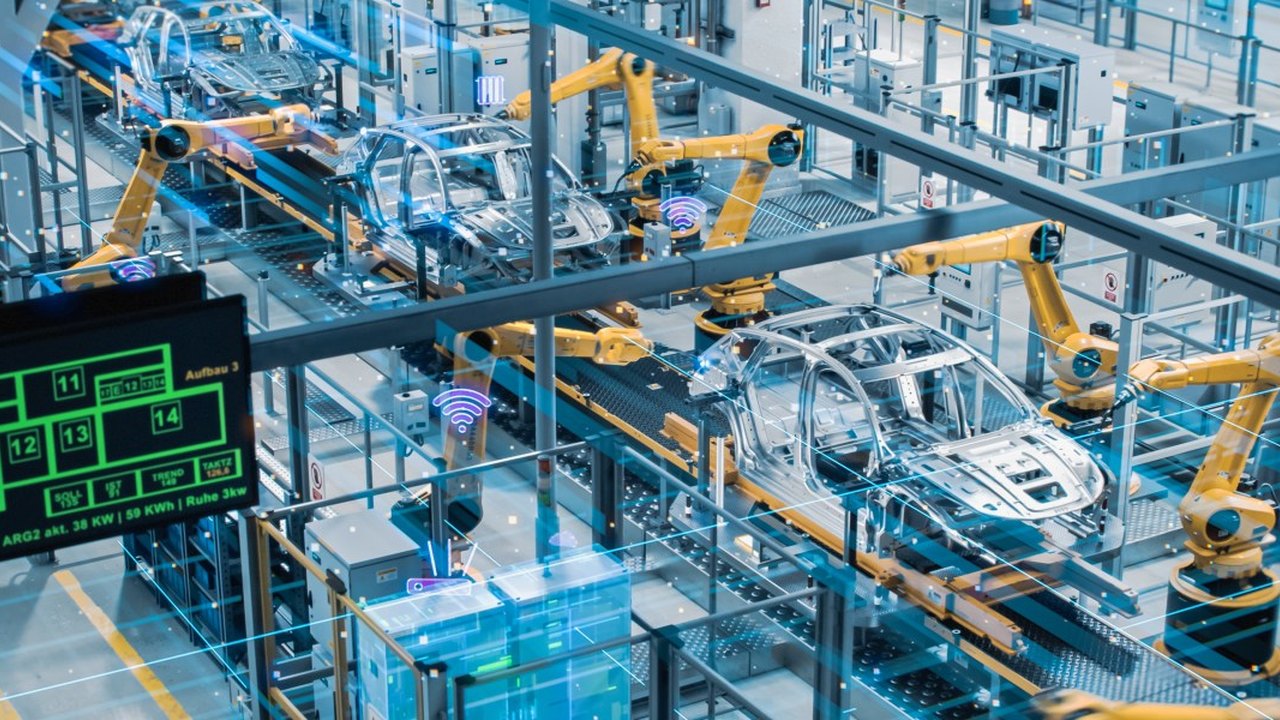
Image: www.technologyreview.com — Creative Commons
Defining industrial intelligence
Manufacturers have long relied on a blend of documented procedures, sensor data, and the tacit knowledge of seasoned operators. The term industrial intelligence captures this blend: a company’s accumulated know‑how, operating practices, production data, and business context. The promise, outlined in a recent Microsoft‑produced feature for MIT Technology Review (27 Oct 2026), is to make that intelligence portable across the organization and to link it directly to the physical processes on the factory floor.
From data to action – the role of physical AI
The article distinguishes physical AI from traditional analytics. Physical AI systems can perceive conditions (e.g., via vision sensors), reason about them, and execute actions on machines within validated safety limits. By feeding real‑time operational data into models that also incorporate human expertise, manufacturers can move from merely seeing a variation to responding appropriately. A concrete illustration is a robotic‑handling cell that adjusts its grip based on visual assessment of part position and material characteristics, rather than stopping for manual re‑setup.
Early pilots demonstrate measurable gains
Two pilots cited in the source provide the only publicly disclosed performance figures:
- Toyota Industries integrated previously siloed paint‑shop data into a unified platform. The integration gave engineers and operators the context needed to trace defect drivers. As a result, analysis cycles dropped from five days to under four hours, and a pilot run cut relevant paint defects by about 25 %.
- Rockwell Automation deployed a “maintenance copilot” at its Singapore plant. The system aggregates machine manuals, sensor streams, and captured expertise from veteran technicians. New maintenance staff now reach troubleshooting proficiency in three months instead of nine, freeing senior staff for higher‑value work and enabling engineers to explore more process alternatives before committing to physical changes.
These examples illustrate the article’s central claim: when knowledge is digitised and coupled with physical AI, decision‑making accelerates and error rates fall.
Practical implications for manufacturers
1. Knowledge capture becomes a strategic asset
Companies must invest in tools that extract tacit expertise—such as structured interview workflows, voice‑to‑text transcription of shift handovers, and annotation of sensor data with operator comments. The goal is to create searchable knowledge graphs that can be queried by engineers, planners, or AI agents.
2. Safety and governance remain paramount
The source stresses that “responsible deployment” starts with clear authority over which systems may change machine parameters, reliable connectivity, defined safety boundaries, and an audit trail of decisions. Trust in AI‑driven actions hinges on these operational disciplines, not on model confidence alone.
3. Simulation as a low‑risk testbed
Digital twins allow manufacturers to evaluate proposed changes in a virtual environment before touching live equipment. While physical validation is still required, simulation reduces the number of costly trial‑and‑error runs on the shop floor.
4. Workforce upskilling
The Rockwell Automation case shows that AI‑assisted tools can compress learning curves for new technicians. However, the article notes that the benefit depends on parallel investment in training and time for workers to shape the system’s responses.
What remains uncertain
The feature does not provide industry‑wide adoption rates, cost‑benefit analyses beyond the two pilots, or detailed technical specifications of the AI models used. It also stops short of quantifying the long‑term impact on overall productivity, energy use, or supply‑chain resilience. Readers should treat the reported improvements as early‑stage evidence rather than proof of universal outcomes.
How to verify the information
All quoted figures and case descriptions come from the Microsoft‑produced article titled “Industrial Intelligence: The next growth opportunity for manufacturing” published on MIT Technology Review on 27 October 2026. The full text is available at:
[https://www.technologyreview.com/2026/10/27/1147142/industrial-intelligence-the-next-growth-opportunity-for-manufacturing/](https://www.technologyreview.com/2026/10/27/1147142/industrial-intelligence-the-next-growth-opportunity-for-manufacturing/)
Readers can cross‑check the Toyota Industries and Rockwell Automation examples by consulting the companies’ own press releases or case‑study pages, which typically reference the same pilot results.
--- This article is based solely on the verified source linked above and does not contain original reporting or interviews.
AI-assisted reporting; source claims are attributed and have not been independently verified.
More to read
 NASA's Curiosity Rover Prepares to Drill at 'Nazca' Site to Investigate Martian Crystal Forms
 CNET Releases Essential AI Glossary to Decode the Jargon
 Meta Announces $95 billion Stock Offering to Finance Expanding AI Infrastructure
 Why Enterprise AI Struggles to Deliver Transformative Value, According to New Insights Data
Trending on GlobeWire Daily
Selected from recent coverage and related topics; not live search rankings.
 France Pledges to Replace Parcoursup Admissions System by 2028 Amid Student Protests
 Paris Jackson Sues Michael Jackson Estate Over Executor Compensation, Seeks Reduction Amid Disclosure Dispute
 BioWare Studio Closure Marks the End of an Era After More Than 30 Years in Gaming
 Stigmatized 'Jiko Bukken' Properties Draw Bargain Hunters in Japan Amid Rising Costs
 Nintendo Switch Software Landscape Highlights Timeless Classics Amid Upcoming Hardware Transition
 Liverpool Extends Penalty Dominance Over Chelsea to Reach Carabao Cup Quarter-Finals