Natural Resources Canada Issues Voluntary Guidelines for Virtual Home Labelling
· GlobeWire Daily Editorial Desk · Source: www.canada.ca
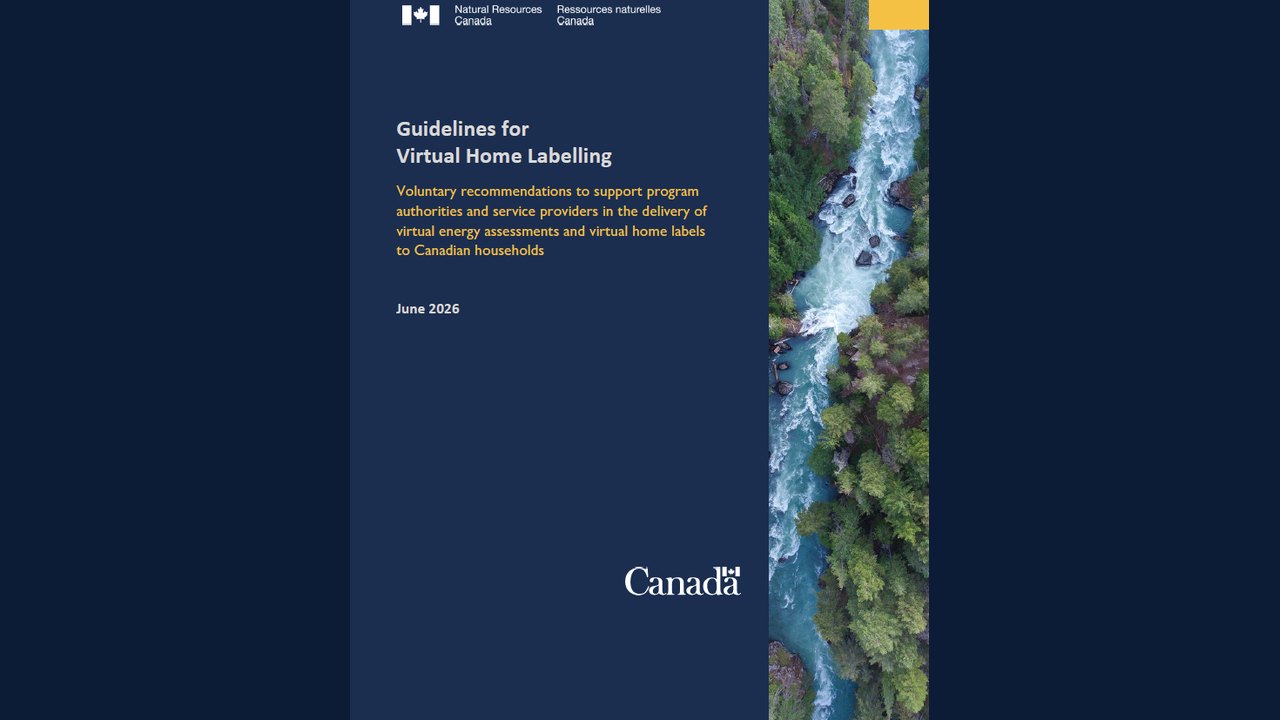
Image: Environment and Climate Change Canada · Photo source · Resized and letterboxed to 16:9; no AI generation
Overview of Virtual Home Labelling Guidelines
Natural Resources Canada (NRCan) has released a voluntary framework known as the Guidelines for Virtual Home Labelling. Developed under the National Approach to Home Labelling (NAHL), these guidelines aim to assist provincial, territorial, and municipal governments, as well as third-party providers, in delivering virtual energy assessments and labels to Canadian households.
NRCan states that the guidance is purely voluntary and informational. Implementing the recommendations does not constitute official certification, endorsement, or approval by the Government of Canada or NRCan. Organizations and service providers assume full responsibility for ensuring their practices comply with all applicable laws and regulations.
Key Distinctions and Scope
Virtual energy assessments rely heavily on pre-existing data, predictive techniques, artificial intelligence, and statistical methods rather than traditional on-site visits by energy advisors. Key elements include:
- Asset-Based Assessments: Evaluations focus strictly on the physical dwelling characteristics rather than occupant behavior.
- Exclusion of EnerGuide Branding: Virtual assessments are distinct from NRCan's on-site EnerGuide Rating System. The official EnerGuide name, mark, or brand cannot be used in association with virtual home labelling.
- Building Criteria: Guidelines apply primarily to low-rise residential buildings, such as those with no more than three storeys fully above ground and up to 30 attached dwelling units.
Data Practices and Privacy
Service providers are advised to clearly disclose all data sources used for model training and calibration. Furthermore, providers must secure appropriate intellectual property rights and comply with federal privacy legislation, such as the Personal Information Protection and Electronic Documents Act (PIPEDA).
How to Verify Official Information
To review the original announcement and access supplementary datasets, stakeholders should consult official federal channels directly at Canada.ca.
AI-assisted reporting; source claims are attributed and have not been independently verified.
More to read
 Canada Greener Homes Grant Closure: Reviewing Northern and Off-Grid Retrofit Guidelines
 A Full Renovation – Home Improvement Lists Virtual Assistant Opening in the United States
 Evaluation of Canada's Federal High-Skilled Economic Immigration Programs and Express Entry
 Canada Greener Homes Grant Ends Dec 31 2025; Up to $5,600 Grants and $40,000 Interest‑Free Loans Available
Trending on GlobeWire Daily
Selected from recent coverage and related topics; not live search rankings.