Can the Moon Sustain Millions? New Study Challenges Lunar Colonization Estimates
· GlobeWire Daily World Desk · Source: www.cbc.ca
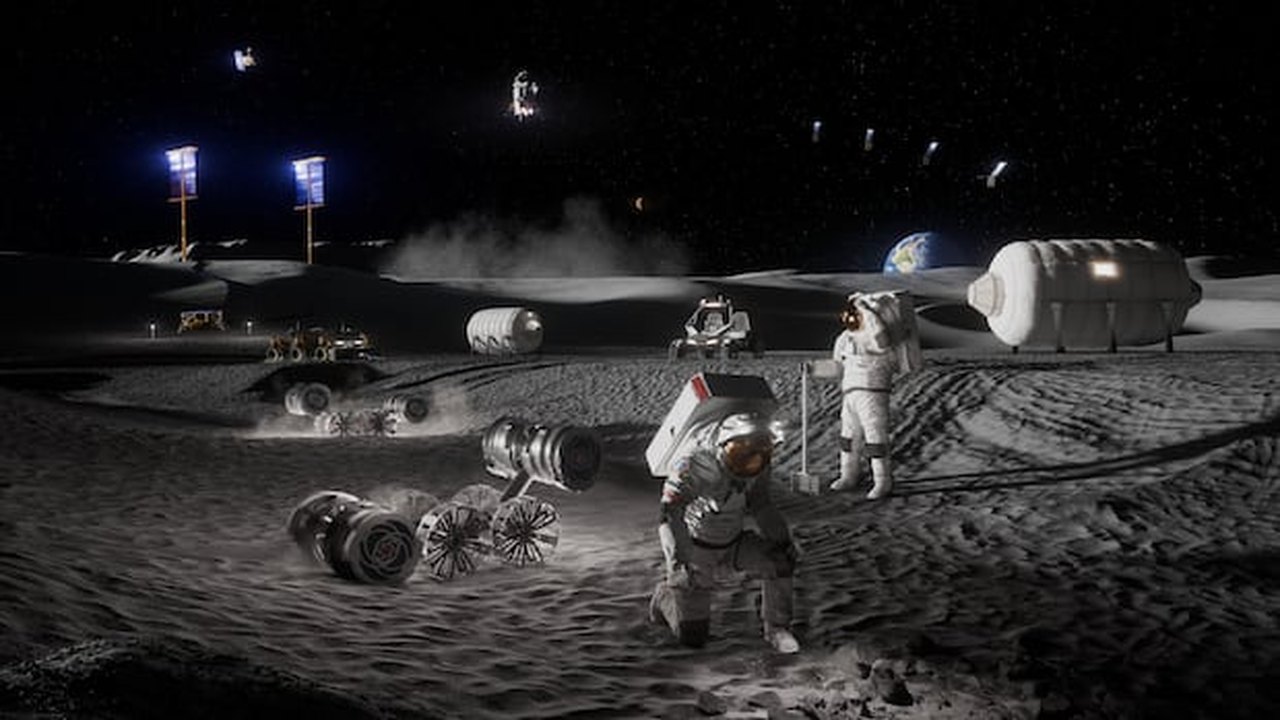
Image: www.cbc.ca — Creative Commons
Assessing the Viability of Lunar Cities
For decades, space enthusiasts and industry leaders have envisioned sprawling human settlements on the lunar surface. However, a new study published in the journal *Frontiers in Space Technologies* suggests that the natural resources available on the Moon may be insufficient to support large-scale civilizations.
Astrophysicists Martin Elvis of the Harvard-Smithsonian Center for Astrophysics and Jonathan McDowell of the Durham University Space Research Centre evaluated the two critical requirements for a lunar society: sustainable power and water. While their research confirms that existing solar and nuclear technology could generate enough power for one million residents, the availability of water presents a significant hurdle.
The Problem of Water Scarcity
Water on the Moon is believed to exist primarily as ice trapped in permanently shadowed regions (PSR) at the lunar poles. Current estimates suggest these regions contain roughly one billion tonnes of water. The researchers calculated that if one million people were to reside on the Moon, this supply would be exhausted in approximately 100 years, assuming a 98% water-recycling rate—a efficiency standard currently maintained on the International Space Station.
"If you want to have an Antarctic base on the moon for the next few hundred years, no problem. If you want to have a small town, that's doable," McDowell explained. "If you want to cover the face of the moon with cities, like in the best science fiction, then you have to find a way to get the water there."
Significant Uncertainties in Current Data
Beyond the limited supply, experts warn that the current estimates of lunar water may be overly optimistic. Elvis noted that the actual extractable water could be 20 to 30 times lower than the billion-tonne estimate, potentially reducing the sustainability of a large population to as little as one year.
Furthermore, the physical state of the lunar water remains a mystery. Gordon Osinski, a professor of planetary geology at Western University, emphasized the need for "ground-truthing." Researchers are uncertain if the water exists as accessible ice blocks or as microscopic ice crystals embedded in soil, similar to Arctic permafrost, which would be significantly more difficult to process.
Future Implications
While the findings cast doubt on visions of massive lunar cities, they do not preclude smaller, sustainable outposts. The study underscores the necessity of precise scientific data before committing to long-term colonization efforts. As NASA continues to work toward a lunar base, the scientific community remains focused on confirming both the quantity and the accessibility of water at the poles.
For more information on the study, readers can consult the official report published via the source provided below.
Official Source: https://www.cbc.ca/news/science/moon-civilization-water-9.7393267
AI-assisted reporting; source claims are attributed and have not been independently verified.
More to read
 UN Inquiry Finds Israel Continued Genocide in Gaza Post-Ceasefire
 Amazon CEO Andy Jassy Advises Youth to Embrace AI While Guarding Human Judgment
 Anthropic IPO Filing Reveals AI Now Writes 90% of Internal Code
 Chinese Markets Lose Trillions Amid AI Race With US, Raising Economic Concerns
Trending on GlobeWire Daily
Selected from recent coverage and related topics; not live search rankings.
 Campaigners Warn Government Over Cumulative Climate Impact of Pending Policy Decisions
 India’s Oscar Entry ‘Gondhal’ Debuts Global Trailer as Awards Campaign Intensifies
 Discord Public Server Messages to Appear in Google Search Results
 Discord to Index Public Server Conversations on Google Search
 UK Government Divided Over Rosebank Oilfield Approval
 Anthropic IPO Highlights Risks of AI Data Center Natural Gas Reliance