Gender and Social Rank Shape Seed Exchange Networks in a Bassari Village, Senegal
· GlobeWire Daily Editorial Desk
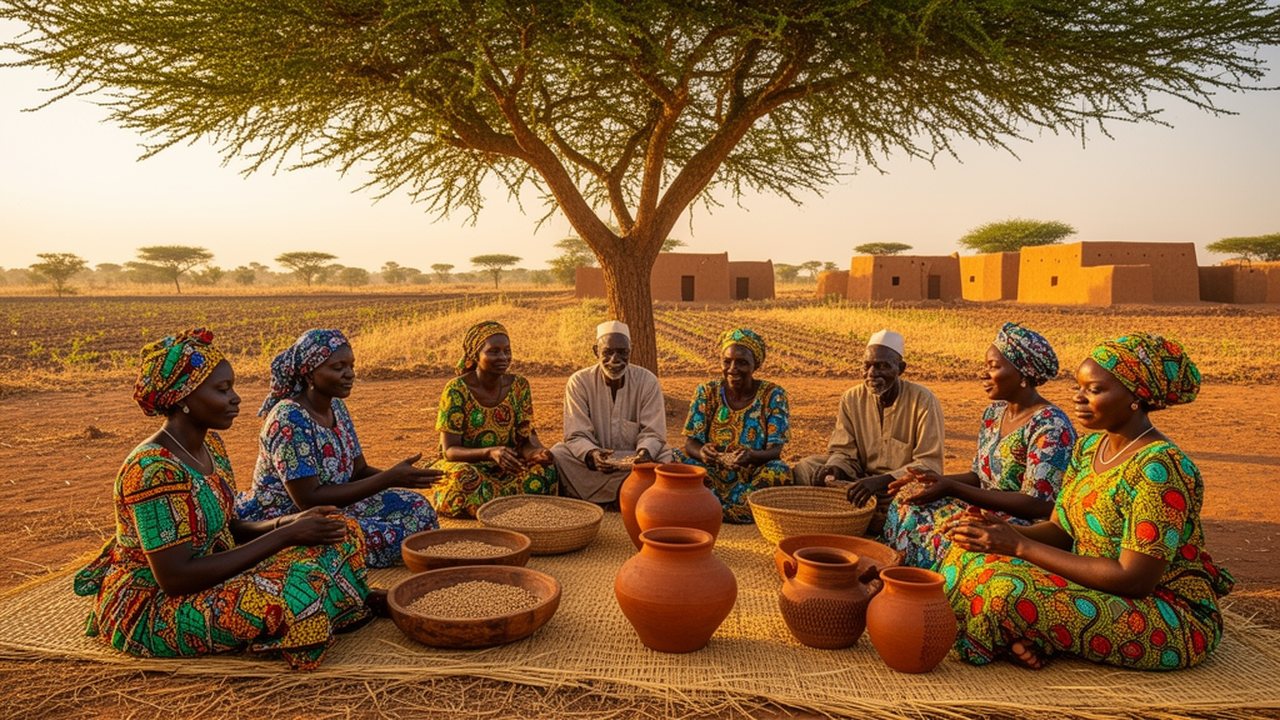
A recent ethnographic and network study of a Bassari community in southeastern Senegal reveals that women dominate most seed‑exchange networks, while men retain control over a few cash‑oriented crops.
Key Findings
- Women as primary custodians: In six staple crops examined, women accounted for over 80 % of participants in Bambara groundnut, fonio, rice and peanut systems, and held higher indegree centrality for sorghum, a traditionally male crop.
- Men’s control of maize: Outdegree centrality for maize was significantly higher among senior male farmers, linked to larger landholdings and collective labor organization.
- Intersectional influences: Wealth, age, marital status and household size shaped both access maintenance (indegree) and access control (outdegree). Less‑wealthy women relied on reciprocal gifts, while wealthier women and middle‑aged women acted as key seed providers.
- Spatial patterns: About half of all seed flows occurred within a 1 km radius. Men exchanged seeds more locally, whereas women’s exchanges spanned longer distances, especially for Bambara groundnut during clan gatherings.
- Development interventions: Projects distributing maize, rice and fertilizer reached a higher proportion of men (66 %) than women (26 %), reinforcing gendered access gaps.
Methodology
The research team surveyed 117 of 123 households (95 % coverage) and interviewed 315 cultivators (63 % women) between 2015 and 2020. They recorded 465 farmer‑to‑farmer seed transactions across sorghum, fonio, Bambara groundnut, maize, rice and peanut. Social‑network metrics—indegree (seed acquisition) and outdegree (seed provision)—were analyzed with Poisson generalized linear models and LASSO regression to identify significant socio‑demographic predictors.
Practical Implications
- Policy makers should design seed‑distribution programs that target women’s networks, especially for staple crops like sorghum and fonio, to improve agrobiodiversity resilience.
- Development agencies can partner with high‑outdegree women (wealthier, middle‑aged) to disseminate improved varieties while ensuring equitable access for poorer women.
- Researchers are encouraged to extend network analyses beyond village boundaries to include landless or isolated households, and to incorporate external market actors as network nodes.
How to Verify
The full study, *When seeds change hands: gender, intersectionality, and access to seed in rural Senegal*, is published in *Agriculture and Human Values* (2026, vol. 43, no. 4, article 191) and can be accessed via DOI 10.1007/s10460-026-10979-2. The summary was reported by Alan Morgan in Scienmag on 23 November 2026.