Hardy Cattle Herd Plays Vital Role in Lake District Conservation
· GlobeWire Daily World Desk · Source: www.bbc.co.uk
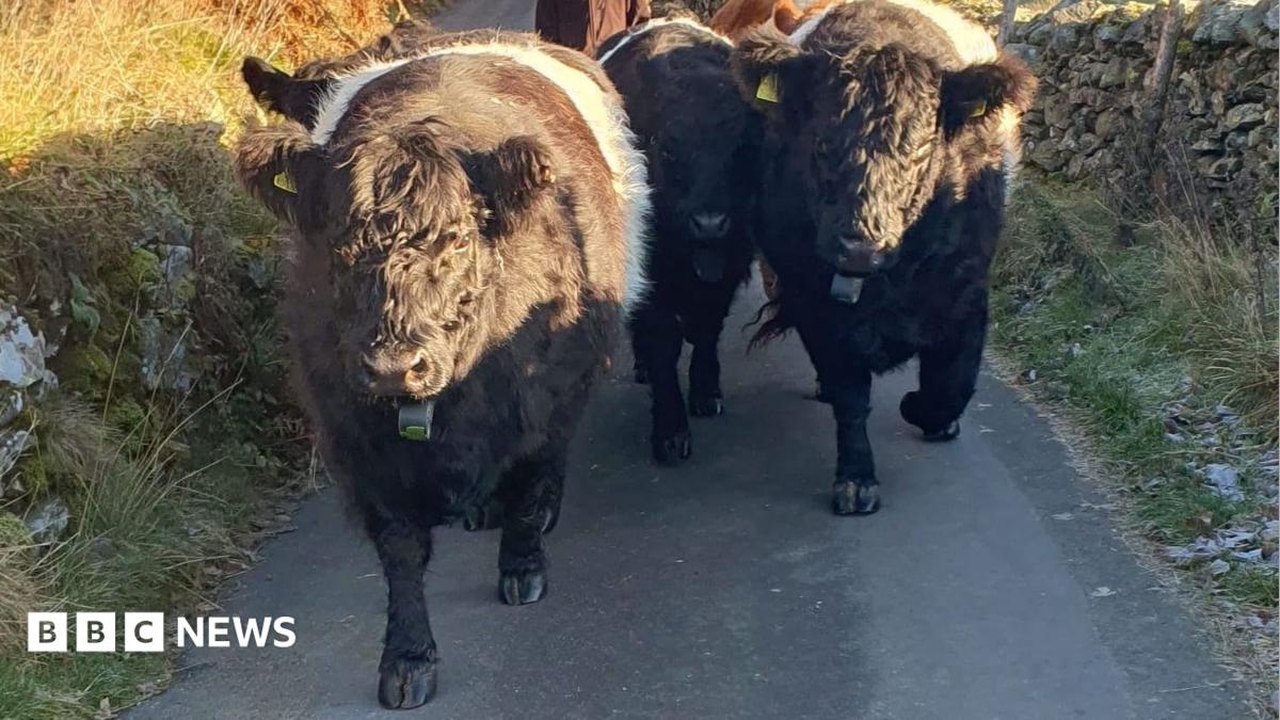
Image: BBC News · Photo source · Resized and letterboxed to 16:9; no AI generation
Conservation Grazing in Haweswater
A herd of 53 Belted Galloways and Luings is currently helping maintain the ecological landscape at the RSPB’s Wild Haweswater site in Cumbria. These Scottish-bred cattle are part of a conservation project designed to mimic the behavior of wild herbivores that roamed the region before the Bronze Age.
Ecological Impact
Site manager Glen Swainson explains that these animals provide essential environmental benefits through their grazing and trampling habits:
- Vegetation Management: Their heavy-footed movement helps trample dominant plant species like rushes and bracken, which creates space for delicate native flora and young trees to flourish.
- Flood and Drought Mitigation: Increased tree growth helps regulate water flow, reducing local flood and drought risks.
- Biodiversity Support: The cattle use their agile tongues to create varied grass heights, providing habitats for insects, reptiles, small mammals, and birds.
Winter Survival and Sustainability
Selected for their physical traits, the cattle possess thick double coats and wide builds, allowing them to withstand the harsh Cumbrian winter. The herd is managed through a strategic rotation system to prevent overgrazing. During the deepest winter months, they are fed wildflower hay harvested from local meadows, which encourages the animals to trample and clear specific areas where the feed is placed.
Similar conservation schemes utilizing these breeds are also active in parts of Berkshire and southern Scotland. Updates on local environmental projects can be verified through RSPB Wild Haweswater or BBC Cumbria’s official channels.
AI-assisted reporting; source claims are attributed and have not been independently verified.
More to read
 Conservation Group Raises Almost $20m to Protect Critical Far North Queensland Cattle Station
 Brother of Kriss Donald Killers Jailed for Role in £600,000 Fraud Plot
 Former Quarry Lake in Tidenham Set to Train Future Deep-Sea Divers in January
 Deoria District Reports Increase of 27,192 Voters Across Seven Assembly Constituencies