Holy See Submits Working Paper on Lethal Autonomous Weapons Systems to Geneva Conference
· GlobeWire Daily Editorial Desk · Source: www.vaticannews.va
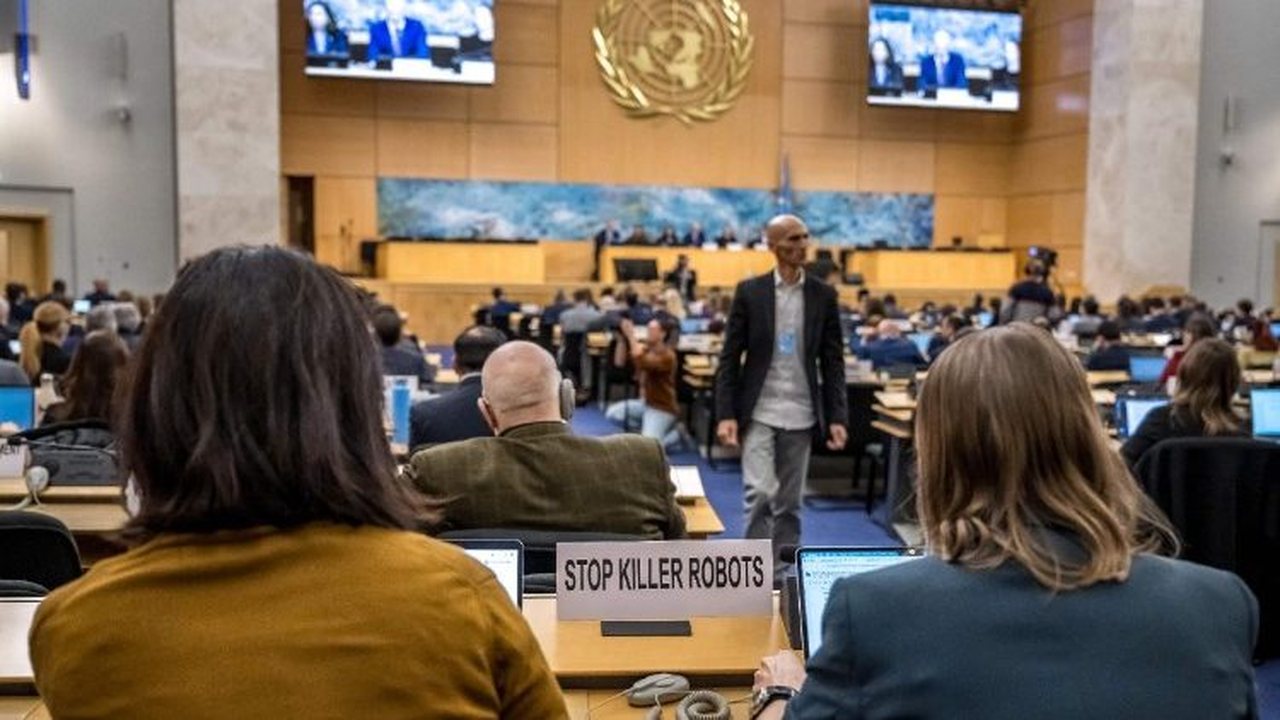
The Holy See submitted a working paper on Lethal Autonomous Weapons Systems (LAWS) to the Seventh Review Conference of the CCW, scheduled in Geneva on November 16-20, according to Vatican News reporting published on November 16, 2026. The document highlights that questions regarding LAWS have been examined for over a decade, citing the final report of the Group of Governmental Experts adopted on September 4 as evidence of a broad convergence. The paper states that the time has come to translate shared knowledge into an operational framework, echoing an invitation by Pope Leo XIV in the encyclical Magnifica humanitas to curb the technological arms race and protect civilians.
Core Anthropological and Ethical Arguments
At the center of the Vatican document is the argument that machines are limited to calculations, whereas moral judgment requires human conscience and recognizing others as persons. Consequently, the Holy See maintains that irreversible life-and-death decisions must not be delegated to artificial systems.
- Beyond Humanitarian Law: Compliance with international humanitarian law is described as indispensable yet insufficient, as adherence does not resolve the prior question of whether lethal force can be delegated.
- Human Virtues Required: Concepts like proportionality and unnecessary suffering depend on interpretation, good faith, and prudent judgment, which the paper calls uniquely irreplaceable human virtues.
- Unpredictability Risks: The document warns that self-learning systems, programming errors, biased data, cyberattacks, or unexpected algorithmic interactions could cause rapid and uncontrollable escalation.
Practical Control and Recommendations
According to the reporting, the Holy See insists that human control must be effective, self-aware, and responsible, factoring in context, limitations, and foreseeable consequences. Key recommendations include:
- Ensuring limits remain enforceable even during degraded communications.
- Prioritizing deliberation over speed, ensuring human authorities can question recommendations and withhold force.
- Rejecting nominal oversight when operational pace prevents genuine intervention.
- Maintaining human accountability for designers, trainers, authorizers, and users through documented roles and operational logs.
The paper reiterates a call for a moratorium on developing and using LAWS, along with a strict prohibition on systems targeting humans or likely to cause accidental casualties. Furthermore, it suggests exploring an International Organization for Artificial Intelligence to monitor peaceful AI use, akin to outer space oversight bodies.
Verification and Implications
Readers can verify the original announcement through official Holy See communications and documentation from the Seventh Review Conference of the CCW in Geneva. Practical implications involve ongoing international discussions regarding arms control, military AI governance, and ethical standards in defense technology.
More to read
 Barnham Village Holds Symbolic Vote to ‘Leave the UK’ Over Planned Migrant Hostel
 Thousands Take to Streets Across Europe to Protest Rising Living Costs and Unaffordable Housing
 Iran Reports Talks with Qatari Mediators and Urges US to Accept Conditions
 Former Brazilian President Jair Bolsonaro Hospitalised in Intensive Care with Acute Bowel Obstruction