Local Habitats Drive Butterfly Communities More Than Broad Regional Landscapes in Agroecosystems
· GlobeWire Daily World Desk · Source: bioengineer.org
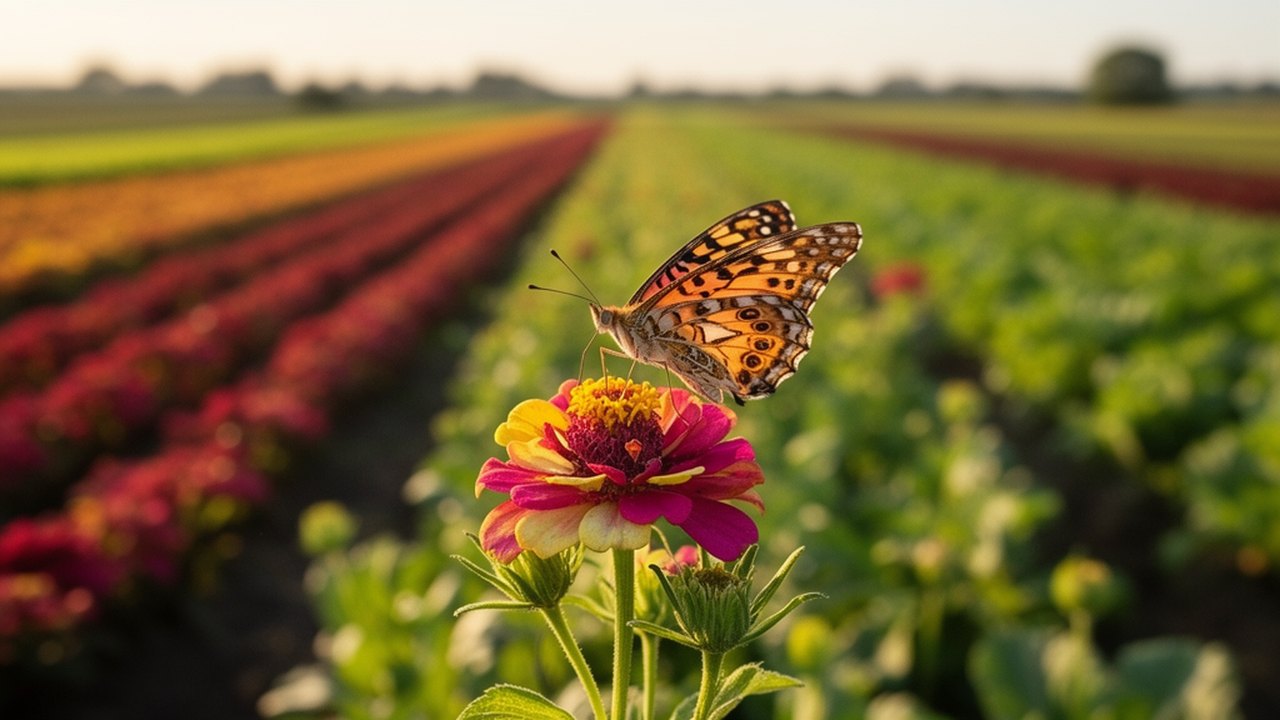
Image: BIOENGINEER.ORG · Photo source · Resized and letterboxed to 16:9; no AI generation
A twenty-year ecological study conducted in southwestern Finland indicates that fine-scale habitat conditions, such as floral nectar availability, shape agricultural butterfly communities more strongly than broader surrounding landscapes. Researchers examining monitoring records from the Åland islands found that immediate environmental variables accounted for the largest share of variation in butterfly presence and abundance across thirty-two focal species.
Insights from the Åland Archipelago
Investigators analyzed long-term butterfly monitoring data gathered across ten designated study areas in the Åland archipelago, an agricultural region characterized by a high proportion of low-intensity farmland. Within these areas, surveys were conducted using the standardized Pollard walk protocol during four discrete years spanning two decades: 2002, 2011, 2017, and 2022. The research documented forty-six butterfly species, utilizing thirty-two focal species for detailed statistical evaluation through Hierarchical Modelling of Species Communities.
Key Findings on Local Drivers
Variance partitioning revealed that local habitat covariates explained the largest overall fraction of variation in both species occurrence and population abundance. Specifically:
- Nectar Availability: Nectar plant abundance exhibited a strong, consistent positive association with butterfly diversity and served as the only predictor demonstrating consistent positive effects across all studied taxa.
- Meadow Classifications: Dry meadows significantly elevated species diversity, whereas wet meadow sections showed substantially diminished diversity.
- Spatial Boundaries: Field-forest transition borders enhanced diversity, while boundaries positioned directly between two cultivated agricultural fields reduced diversity.
Scale-Dependent Responses and Limitations
The study also noted that different species exhibit divergent sensitivities depending on life-history traits, such as overwintering stage and voltinism. Furthermore, researchers acknowledged limitations, including that observations relied on adult counts and did not measure larval host plant distribution, and that the spatial restriction to the Åland archipelago limits broader landscape contrast. The authors emphasized that conservation strategies should prioritize the quality of immediate field margins and open meadows.
AI-assisted reporting; source claims are attributed and have not been independently verified.
More to read
 Building Coastal Resilience for Local Communities in Honduras
 Visiting Boater Rescues Exhausted Wallaby Swimming More Than 100 Metres Off Portland Coast
 BioWare Shuttered by EA After More Than Three Decades of Role-Playing Game History
 Manchester United's Deep Cultural Issues Need More Than Just a New Manager