UNFC Framework Classifies Serbia’s Old Bor Mine Tailings as Potentially Viable Resource
· GlobeWire Daily Editorial Desk · Source: bioengineer.org
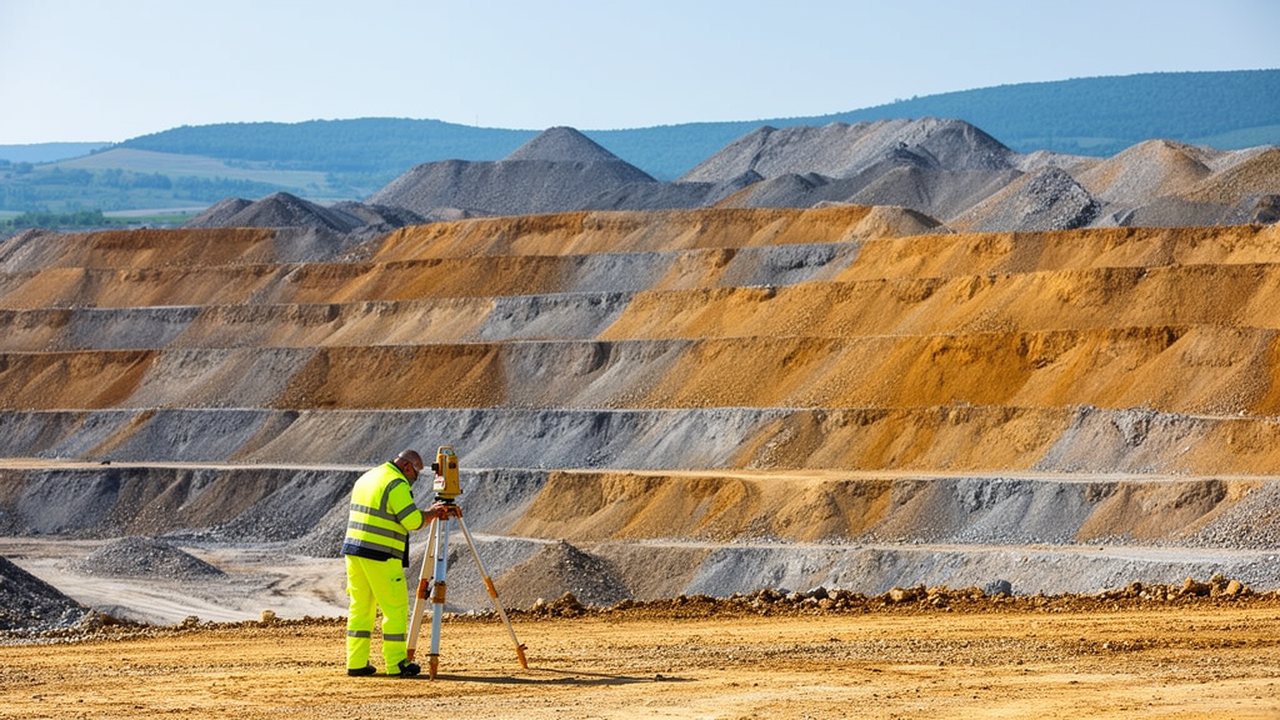
A comprehensive study conducted as part of the FutuRaM research project has applied the United Nations Framework Classification (UNFC) for resources to the historical Old Bor flotation tailings in eastern Serbia. Researchers evaluated whether the massive volumes of mining waste accumulated over a century of copper exploitation can be classified as a viable secondary source of critical metals.
Study Overview and Location
The site spans 1.24 square kilometers in the former Borski Potok valley within the Bor mining district. Decades of unmanaged industrial deposition have created a tailings deposit reaching depths of up to 65 meters, presenting environmental concerns such as airborne dust and potential acid mine drainage into regional waterways.
- Volume and Depth: The total deposit volume is calculated at 15.03 million cubic meters, with tailings extending up to 65 meters deep.
- Drilling Campaign: In July 2023, researchers executed a deep core drilling campaign using a rotary rig to penetrate lower stratigraphic horizons.
Geochemical and Mineralogical Findings
Investigators collected 115 representative composite samples from core drills and analyzed them using inductively coupled plasma mass spectrometry. The analysis revealed a fundamental vertical subdivision:
- Field 2 (Upper Stratum): The top 10 meters exhibit significantly depleted metal concentrations.
- Field 1 (Basal Horizon): Extending down to the geological basement, this layer contains elevated metal concentrations. Median grades in Field 1 were established at 2,300 milligrams per kilogram of copper (0.23 percent), 0.36 milligrams per kilogram of gold, and 1.40 milligrams per kilogram of silver.
Mineralogical evaluations showed a matrix dominated by quartz (56.0 to 67.9 weight percent), kaolinite group clay minerals (22.1 to 31.0 weight percent), and pyrite (6.3 to 10.0 weight percent).
UNFC Classification and Next Steps
The project was assigned an aggregate UNFC classification of E2 F3 G1:
- E Axis (E2): Favorable socio-economic and environmental conditions, supported by existing local infrastructure, potential remediation benefits, and a positive net present value expected after 6.55 years under state ownership managed by the Mining and Metallurgy Institute Bor.
- F Axis (F3): Technical feasibility remains constrained because extraction methods have only been tested at the bench scale.
- G Axis (G1): High geological confidence based on deep boreholes and historical data harmonization.
Researchers concluded that advancing the project to a commercially viable classification requires removing the low-grade overburden and conducting semi-industrial pilot-scale extraction trials.
More to read
 New Orleans Catholic Clergy Abuse Survivors Begin Receiving $305m Settlement Payments
 Christian Workers Union and Port of Belize Finalize Stevedores' Collective Bargaining Agreement
 Magnitude 6.8 Earthquake Strikes Banda Sea Near Timor-Leste, Shaking Felt in Australia
 Stranded Tourists Return from St. Martin's on Risky Trawlers While Others Await Official Clearance