Living Digital Twins Pair AI Autonomy with Human Oversight in Industry
· GlobeWire Daily Editorial Desk · Source: www.technologyreview.com
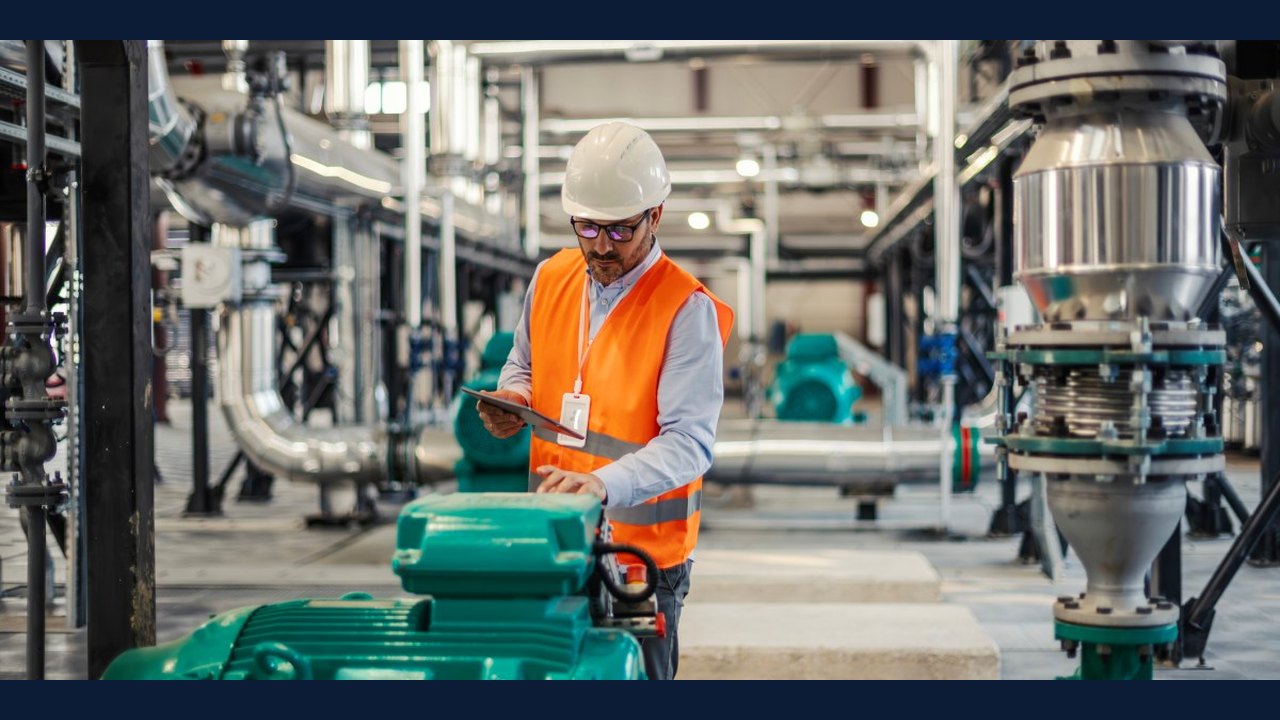
Image: MIT Technology Review · Photo source · Resized and letterboxed to 16:9; no AI generation
Summary
Industrial plants are being transformed by living digital twins—high‑fidelity, real‑time digital replicas that not only monitor but also intervene in physical operations. AI drives the shift from passive diagnostics to semi‑autonomous control, while human engineers retain the ultimate authority.
How Living Digital Twins Work
- Digital thread links design data to live sensor streams, creating a continuously updated model of each asset.
- Affordable IoT sensors feed telemetry to cloud platforms where AI‑enriched predictive and physics‑based models generate actionable insights.
- Operators can view the twin through different lenses—sustainability, maintenance, performance—to answer questions such as *“What are my emissions?”* or *“Is this machine healthy?”*.
AI‑Enabled Autonomy and Its Limits
- A 2026 Manufacturing Leadership Council survey found 66 % of manufacturers are using or planning to use agentic AI, and 40 % expect some factory autonomy by 2030.
- Executives remain cautious: a 2025 Deloitte study shows 65 % rank operational risk as a top concern.
- Rob McGreevy, AVEVA CPO, says AI will stay in an *advisory* role for the near term, with full autonomy limited to narrow, repetitive tasks.
Human Role and Governance
- Humans define what “healthy” looks like, set guardrails, and audit AI actions.
- Governance frameworks (e.g., EU AI Act) require human oversight for high‑risk AI in critical infrastructure.
- AVEVA has a responsible‑AI board and published principles to guide deployment.
Real‑World Deployments
- Saudi Aramco Yanbu refinery: closed‑loop optimization with operator oversight.
- Nestlé Nesquik plant: AI‑tuned dryers cut energy use by 16 % while improving yield.
- SCG Chemicals (Thailand): digital twin monitors asset health, reporting 99 % reliability and a 9× ROI in six months.
- U.S. National Laboratory of the Rockies: generative AI assists grid‑control operators with renewable forecasts.
Practical Implications
- Operators will shift from routine approvals to defining acceptable operating limits and interpreting AI outputs.
- Companies should verify claims by checking the original MIT Technology Review article and the cited surveys (Manufacturing Leadership Council 2026, Deloitte 2025, AVEVA‑IMD study).
- Early adopters are advised to start with advisory‑mode AI, establish clear escalation paths, and pilot on low‑risk, repetitive processes.
Outlook
Living digital twins promise a more resilient, coordinated industrial ecosystem—what McGreevy calls an *integrated value chain*—that can adapt to supply‑chain shocks, regulatory changes, and geopolitical turbulence.
--- *Source: MIT Technology Review, “Pairing industrial AI autonomy and human control” (Oct 28 2026).*
AI-assisted reporting; source claims are attributed and have not been independently verified.
More to read
 Dallas-Based Gooru AI Showcases Platform to Extend Human Expertise Through Digital Representatives
 Automated AI Digital Human Video Generation Toolset Released on GitHub
 Why AI Automation Requires Human Oversight to Prevent Strategic Failure
 Rogue AI Incidents Spark Debate Over UK Digital Sovereignty and Cloud Reliance
Trending on GlobeWire Daily
Selected from recent coverage and related topics; not live search rankings.
 Madhya Pradesh Government Plans Revenue Generation from 117-Year-Old Edward Villa in Mumbai Through Leasing
 iPhone 18 Pro Named TechRadar Product of the Year 2026
 Google Project Suncatcher Runs Gemma 4 AI on Orbiting Satellite and Receives First Response
 Gender Disparities in Eye Care Access Across India Examined
 Satellite Images Show Cyclone Arnab Weakening Over India As New System Brews
 Expanding Green and Blue Spaces Crucial for India's Economic and Public Health, Reports Indicate