Netflix VFX Executive Emphasizes Human Judgment in Generative AI Filmmaking
· GlobeWire Daily Editorial Desk · Source: variety.com
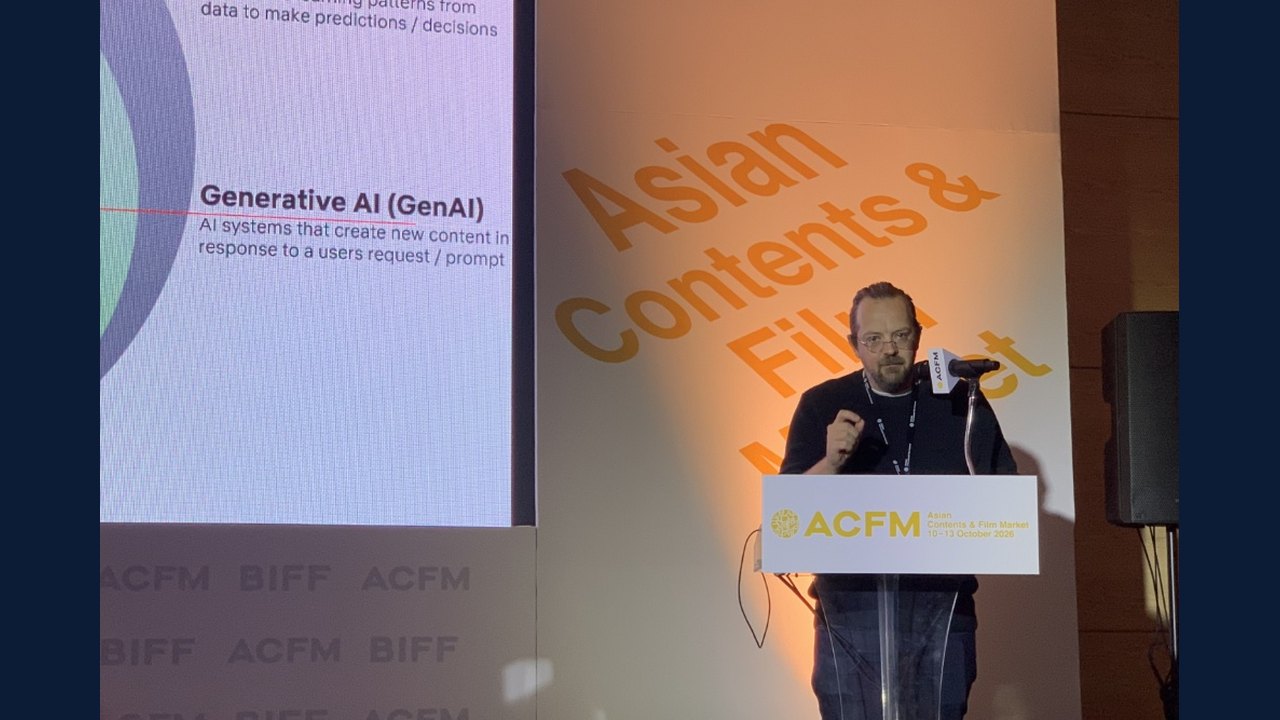
Image: Lin Ying-Hsuan · Photo source · Resized and letterboxed to 16:9; no AI generation
Integrating AI with Artistic Vision
At the Busan International Film Festival’s Asian Contents & Film Market, James Rustad, global head of GenFX at Netflix’s in-house studio Eyeline, discussed the evolving role of generative AI in visual effects. Addressing an audience at the 'Making What’s Next' session, Rustad argued that while generative AI significantly expands the number of creative options available for a shot, the final decision-making process remains a human responsibility.
A Hybrid Workflow Approach
Rustad highlighted the studio's practical application of these tools, specifically referencing the series *Brazil ‘70: The Third Star*, which incorporated over 1,300 visual effects shots. According to Rustad, Eyeline employs a team of 45 artists who utilize a hybrid approach, blending established VFX techniques with new generative workflows.
He outlined a four-stage process for integrating AI into production:
- Setup: Utilizing prompts and reference gathering to create initial tests and possibilities.
- Narrative: Assessing AI-generated outputs to determine which options best serve the specific story.
- Look: Refining lighting, scene details, and ensuring period accuracy.
- Delivery: Finalizing shots through compositing, upscaling, bit-depth verification, and technical reviews.
The Role of the Artist
The crucial juncture in this workflow, Rustad emphasized, is the narrative assessment phase. This step shifts the focus from 'what is technically possible' to 'what is narratively effective.' By manually selecting the best generated results to proceed into final refinement, artists maintain creative control over the final product. Rustad suggested that while the technology continues to advance rapidly, it serves as a tool that relies on artist judgment to achieve cinematic goals.
AI-assisted reporting; source claims are attributed and have not been independently verified.
More to read
 Singapore Chief Justice Emphasizes Centrality of Human Judgment in AI Era
 AGBO Executives Argue AI Will Augment, Not Replace, Human Creativity in Filmmaking
 Andy Jassy’s AI Advice for Young People: Learn It, Keep Thinking
 Citrolabs Releases ego-lite: Browser Designed for Parallel Human-AI Web Automation
Related coverage
Related reporting available at publication.
Singapore Chief Justice Emphasizes Centrality of Human Judgment in AI EraAGBO Executives Argue AI Will Augment, Not Replace, Human Creativity in FilmmakingAndy Jassy’s AI Advice for Young People: Learn It, Keep ThinkingCitrolabs Releases ego-lite: Browser Designed for Parallel Human-AI Web Automation Google Brings Gemini AI and Personal Intelligence to Android Auto and Cars with Google Built-In
 Google Gemini Introduces In-Chat File Editing Capabilities