Singapore Chief Justice Emphasizes Centrality of Human Judgment in AI Era
· GlobeWire Daily Editorial Desk · Source: www.prnewswire.com
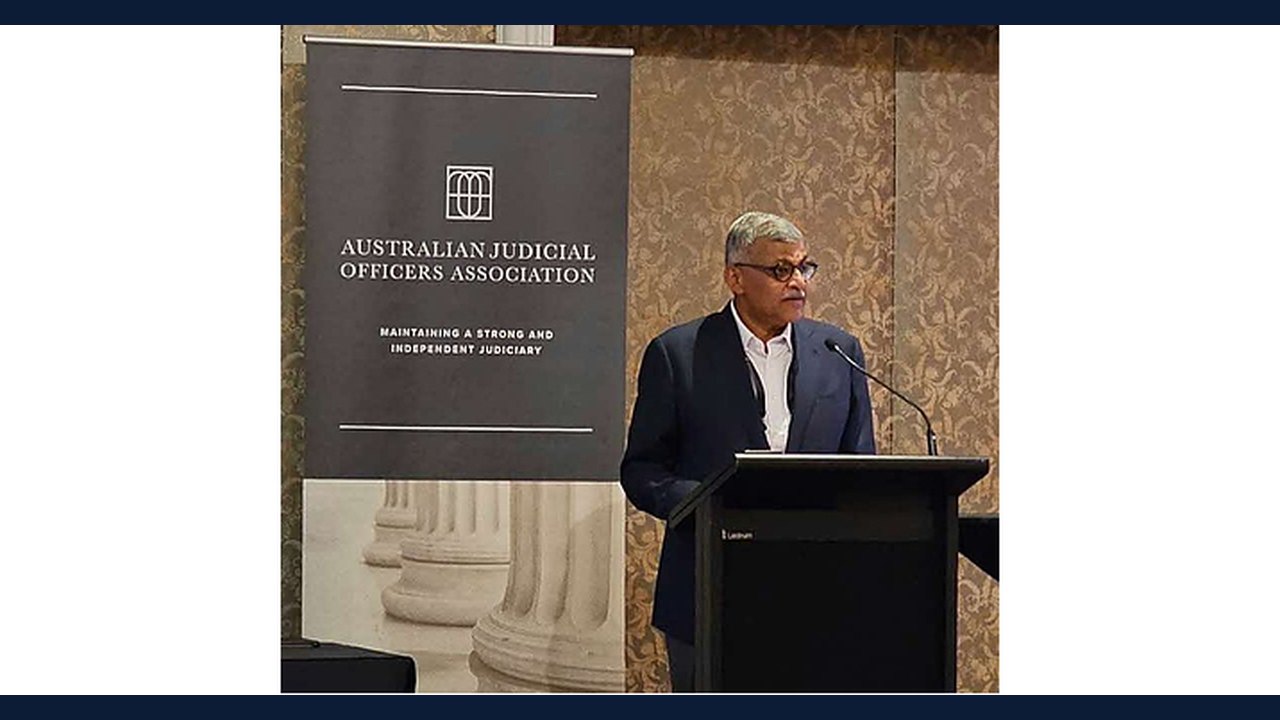
Image: Supreme Court of Singapore · Photo source · Resized and letterboxed to 16:9; no AI generation
Chief Justice Sundaresh Menon Addresses AI in Judicial Systems
Speaking at the 28th Annual Australian Judicial Officers Association Colloquium 2026 in Brisbane, Australia, Chief Justice Sundaresh Menon of the Supreme Court of Singapore discussed the growing integration of Artificial Intelligence within the legal sector. While acknowledging that AI presents notable opportunities to enhance judicial efficiency and broaden access to justice, he emphasized that human judgment must remain at the core of judicial administration.
During his address, titled *“AI and the Judicial Function: The Limits of Artificial Judgment,”* Chief Justice Menon raised critical questions regarding the extent to which judges should utilize AI, the appropriate purposes for its application, and the terms of engagement.
Core Principles of Sound Adjudication
Chief Justice Menon anchored his evaluation on three foundational requirements of proper adjudication:
- Judicial Integrity: Maintaining the moral and ethical authority of the court.
- Procedural Fairness: Ensuring all parties receive an unbiased and equitable hearing.
- Institutional Effectiveness: Managing resources and timelines efficiently to serve court users.
He noted that while institutional effectiveness drives much of the interest in AI due to its speed, scale, and baseline reliability, efficiency alone cannot justify unchecked technological adoption.
Disaggregating the Adjudicative Process
To better understand where AI might safely fit, the Chief Justice suggested breaking down the judicial process into distinct components:
- Information Acquisition: Where the case for AI integration is considered most compelling.
- Material Analysis and Outcome Proposals: Where application is more qualified and subject to caution.
- Formulation of Judicial Reasons: Where AI use is deemed most limited, as reasoning requires accountability.
Risks of Human-Machine Collaboration
Beyond theoretical boundaries, Chief Justice Menon highlighted practical governance challenges and design risks associated with AI deployment:
- Over-Reliance: Depending too heavily on machine-generated outputs.
- Skills Fade: The gradual erosion of core human legal and analytical capabilities.
- Hidden Institutional Delegation: Unintentionally transferring decision-making authority to algorithms.
He concluded that artificial intelligence, despite its advanced capabilities, remains artificial and cannot bear the moral responsibility of judicial decisions or replicate the human encounter essential to a fair trial.
How to Verify
Interested readers and legal professionals can review the original speech and related announcements by visiting the official Supreme Court of Singapore publications or checking records from the Australian Judicial Officers Association Colloquium 2026.
AI-assisted reporting; source claims are attributed and have not been independently verified.
More to read
 Andy Jassy’s AI Advice for Young People: Learn It, Keep Thinking
 Buyers Edge Platform Appoints Sam Peterson as Chief Technology Officer to Advance AI-Driven Innovation
 AI Genealogy Tool Tackles Soviet-Era Family Histories with Evidence‑First Approach
 Citrolabs Releases ego-lite: Browser Designed for Parallel Human-AI Web Automation
Related coverage
Related reporting available at publication.
Andy Jassy’s AI Advice for Young People: Learn It, Keep ThinkingBuyers Edge Platform Appoints Sam Peterson as Chief Technology Officer to Advance AI-Driven InnovationAI Genealogy Tool Tackles Soviet-Era Family Histories with Evidence‑First ApproachCitrolabs Releases ego-lite: Browser Designed for Parallel Human-AI Web Automation CELUS Introduces AI Agent Workflow for Electronics Design Architecture
 Check Point Launches Maestro Hyperscale Orchestrator 200 to Secure AI-Scale Traffic