SSSTC Announces PQ2 Series PCIe Gen4 QLC SSDs for AI PCs and Industrial Systems
· GlobeWire Daily Editorial Desk · Source: www.prnewswire.com
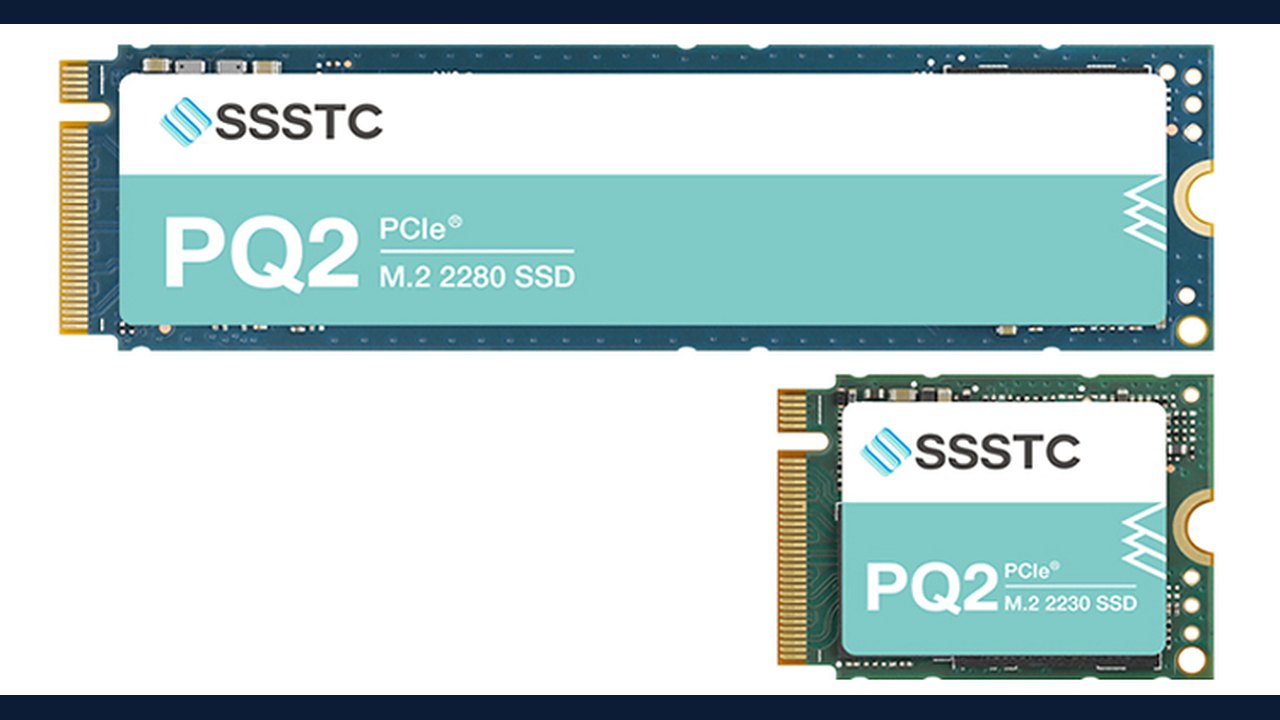
Image: SSSTC · Photo source · Resized and letterboxed to 16:9; no AI generation
Solid State Storage Technology Corporation (SSSTC), a subsidiary of Kioxia Corporation, announced the PQ2 series, marking the company's first industrial-grade QLC solid-state drive. According to the announcement issued on November 16, 2026, the new drives are designed to support read-intensive workloads, including AI PC tasks and industrial applications.
Readers can verify the official announcement and explore configuration options by visiting the official SSSTC website at www.ssstc.com or by contacting the company directly.
Designed for AI PCs and Industrial Use
The PQ2 series is built to handle read-intensive workloads such as loading locally stored AI models, accessing application data, running point-of-sale (POS) terminals, thin clients, networking devices, and serving as boot storage in embedded systems.
Hardware Specifications and Performance
The drives utilize Kioxia 4-bit-per-cell QLC NAND flash memory combined with generation 8 BiCS FLASH and CMOS directly Bonded to Array (CBA) technology. Key hardware features include:
- Interface: PCIe Gen4 x4, supporting NVMe 2.0d
- Form Factors: M.2 2280 and M.2 2230
- Capacities: 512 GB, 1 TB, and 2 TB
- Architecture: DRAM-less design with Host Memory Buffer (HMB) technology
- Speeds: Sequential read up to 7,000 MB/s; sequential write up to 6,200 MB/s
- Random Performance: Up to 1,000 KIOPS for both 4 KiB random read and write
Reliability and Security
Engineered for demanding industrial environments, the PQ2 series offers vibration and shock resistance, an operating temperature range of 0 °C to 85 °C, and a rated mean time between failures (MTBF) of 3 million hours. For data security, the drives include AES 256-bit hardware encryption alongside optional support for TCG Opal and TCG Pyrite security requirements.
AI-assisted reporting; source claims are attributed and have not been independently verified.
More to read
 Cohere Announces Record-Breaking Series E Funding Round to Scale Sovereign AI
 FADU Proposes Moving File Systems Inside SSDs to Bypass AI Storage CPUs
 Cohere Announces Series E Fundraise Targeting CAD $7 Billion for Sovereign AI
 Clarius Announces 30 Integrated AI Models for Handheld Ultrasound Systems