Trump Pushes Ban on Chinese AI Data Center Gear Despite Tech Pushback
· GlobeWire Daily Editorial Desk · Source: timesofindia.indiatimes.com
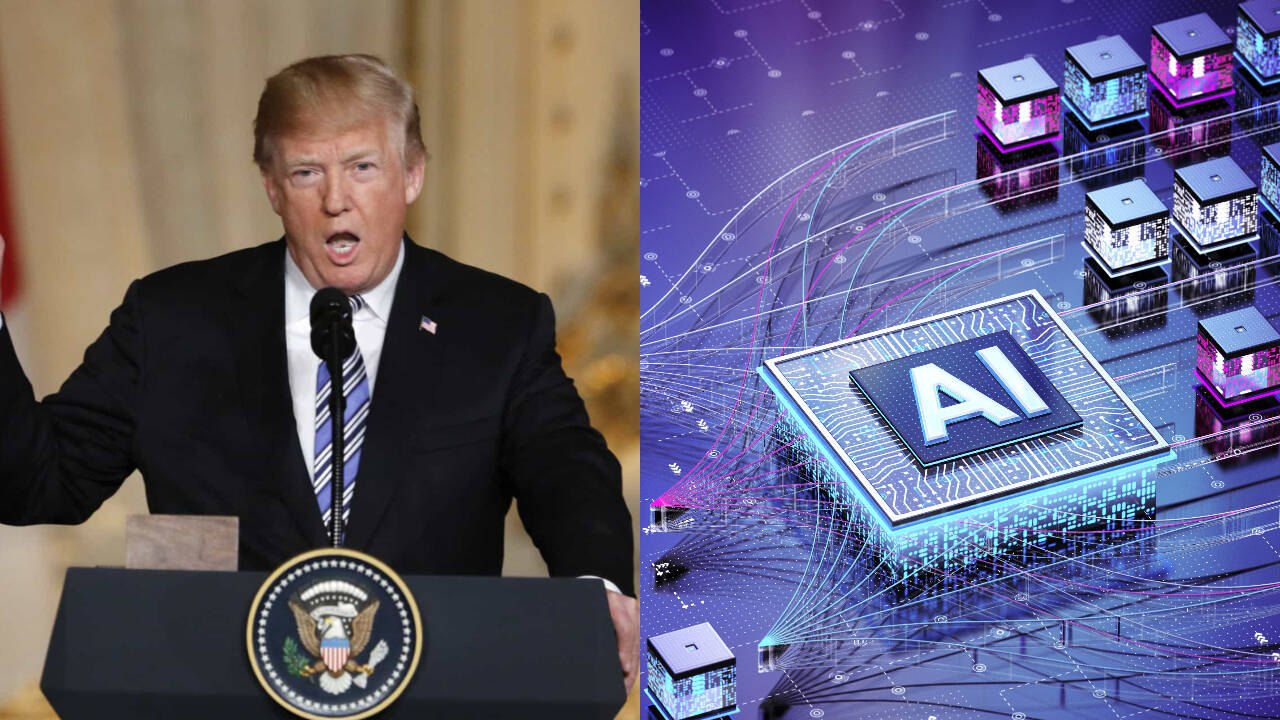
Image: The Times of India · Photo source · Resized and letterboxed to 16:9; no AI generation
The US administration is reportedly pressing forward with plans to restrict imports of Chinese optical transceivers used in artificial intelligence data centers, according to reports by Reuters and WION. Major technology companies have raised concerns regarding the proposed restrictions, warning of potential supply chain challenges.
Washington and Silicon Valley Clash Over Hardware
According to Reuters, federal regulators are advancing restrictions on Chinese optical transceivers over national security concerns. These components transmit data across fiber-optic cables inside AI data centers.
- Industry Warnings: During a prior meeting with White House officials, tech executives from firms such as Amazon, Google, Meta, and Microsoft cautioned that replacing Chinese-made transceivers could take up to a decade.
- Market Share: Reports indicate that Chinese suppliers like Eoptolink and Zhongji Innolight control roughly two-thirds of global production, while US alternatives currently lack equivalent manufacturing scale.
- Retaliation Risks: Industry leaders have noted potential risks of Beijing halting exports of critical minerals such as indium phosphide.
Semiconductor Demands and Smuggling Scrutiny
Concurrently, WION reported that Chinese trade negotiators have urged the US to relax export controls on high-bandwidth memory (HBM) chips ahead of a potential summit between President Donald Trump and Chinese President Xi Jinping. US national security analysts warn that easing these curbs could benefit Chinese firms like Huawei and SMIC.
Additionally, momentum for tighter hardware controls has been influenced by political scrutiny surrounding enforcement gaps at the Commerce Department and concerns over the unauthorized transfer of advanced processors, as covered by Reuters and WION.
Practical Implications and Verification
Stakeholders and observers can monitor official regulatory updates through the Federal Communications Commission (FCC) and the Department of Commerce to verify policy changes. Companies navigating these potential restrictions face complex adjustments to their hardware sourcing and compliance frameworks.
AI-assisted reporting; source claims are attributed and have not been independently verified.
More to read
 Trump Floats Potential Ban on US Firms Building AI Data Centres Overseas
 Woolpert Expands Global Data Center Practice with Acquisition of B-Global Tech
 Panduit Unveils AI Cooling Lab to Advance Data Center Infrastructure
 US Cannabis Farms Evaluated for Potential Data Center Conversions