OBR Warns UK Living Standards to Stagnate as Middle‑East Conflict Fuels Energy Shock
· GlobeWire Daily Business Desk · Source: www.theguardian.com

Image: www.theguardian.com — Creative Commons
OBR’s latest outlook paints a bleak picture for household incomes
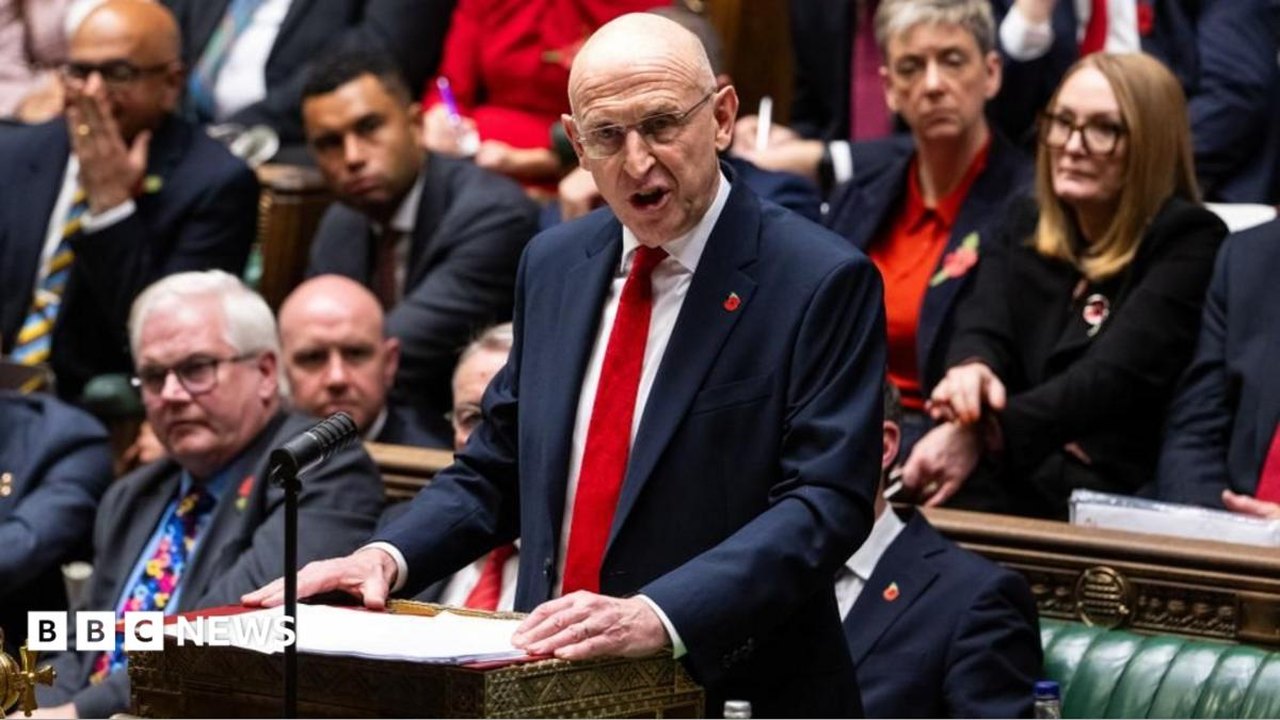
The Office for Budget Responsibility (OBR) released its October 2026 forecast on the same day Chancellor John Healey delivered his first budget. While the budget introduced a £100 one‑off payment for 20 million households and a plan to remove standing charges on gas bills, the OBR warned that those measures are unlikely to offset a broader downturn.
The watchdog now expects real disposable income for households to fall by 0.6 % next year, a reversal from the 0.6 % rise it had projected in March. The downgrade is driven primarily by higher energy costs linked to the war in the Middle East. Over the longer term, the OBR says disposable income in 2029 will be only 1 % higher than in 2019, the year before the Covid‑19 pandemic began.
> “It’s a pretty grim picture,” said David Miles, senior economist at the OBR. “If you go back to just before Covid … seven years later, is virtually no growth in per‑person real household disposable income. That’s pretty unusual in the history of the UK.”
Growth forecasts trimmed amid geopolitical turbulence
The OBR upgraded its 2026 growth estimate to 1.2 % (from 1.1 %) after an unexpectedly resilient first half of the year, which the report attributes in part to a surge in AI‑related business activity. However, the outlook for 2027 has been cut to 1 % from the 1.5 % forecast made in March.
The downgrade reflects the impact of the US‑Israeli‑led invasion of Iran that began at the end of February 2026. Oil prices have risen from roughly $70 per barrel to over $115, while gas prices have almost tripled. The OBR now projects inflation of 3.5 % for this year, well above the 2 % it expected in March.
Fiscal headroom shrinks as debt‑interest costs rise
Healey’s budget announced a temporary tax increase on banks and left £15 billion of fiscal headroom under the main spending rule – down from the £23.6 billion surplus left by his predecessor, Rachel Reeves. The OBR estimates that the government will spend £14 billion more on debt interest as global borrowing costs climb.
Despite the tighter budget, the OBR still expects borrowing to fall to about 2 % of GDP in the medium term, but the pace of reduction will be slower than previously planned.
Practical implications for households and businesses
- £100 payment – The blanket payment reaches roughly one‑third of UK households and will be paid out of the Treasury’s £2.6 billion allocation. It provides short‑term relief but does not compensate for the projected 0.6 % dip in real disposable income.
- Energy bill reforms – Abolishing standing charges on gas could lower monthly bills for many, yet the underlying surge in wholesale gas prices means overall energy costs are likely to remain high.
- Bank tax – The temporary levy on banks is intended to fund the energy‑support package, but its impact on credit conditions is uncertain.
- Borrowing outlook – If energy prices stay elevated, the OBR warns that government borrowing could be £17 billion higher than its central forecast for next year. Conversely, a quicker‑than‑expected easing of energy prices could shave £12 billion off borrowing.
How this compares with recent history
The OBR notes that the current trajectory would mark the weakest decade for real household disposable income since the 1960s. By contrast, the UK recorded the strongest growth among G7 economies in the first half of 2026, largely thanks to AI‑driven investment. The divergence underscores how quickly external shocks can reverse short‑term gains.
What remains uncertain
- Energy price path – The report describes the future of oil and gas markets as “significantly better or worse outcomes of broadly equal probability.” The exact trajectory will depend on the duration and intensity of the Middle‑East conflict and on global monetary policy responses.
- Inflation persistence – While the OBR now expects 3.5 % inflation this year, it cautions that further spikes are possible if energy costs remain high.
- Fiscal rule flexibility – Healey has signalled willingness to let the fiscal buffer fall, but the precise timing and magnitude of any rule‑breaches are not yet fixed.
How to verify the figures
All numbers quoted in this article come from the OBR’s October 2026 forecast, published alongside the Chancellor’s budget statement. The full report and accompanying data tables are available on the OBR website and can be accessed directly via the Guardian’s coverage at:
[https://www.theguardian.com/business/2026/oct/28/obr-slashes-uk-growth-forecast-for-2027-despite-healey-budget-measures](https://www.theguardian.com/business/2026/oct/28/obr-slashes-uk-growth-forecast-for-2027-despite-healey-budget-measures)
Readers can cross‑check the headline figures (growth forecasts, disposable‑income projections, inflation expectations, and fiscal headroom) against the OBR’s PDF release and the UK Treasury’s budget documents.
--- This article was compiled from publicly released statements by the Office for Budget Responsibility and the UK Treasury. No original reporting or interviews were conducted.
AI-assisted reporting; source claims are attributed and have not been independently verified.
More to read
 UK Income Tax Threshold Freeze Extended to 2031: What It Means for Pay and Pensions
 Chancellor John Healey Unveils £100 Energy Bill Support and Bank Tax Hike in First Budget
 Government to Overhaul Labour Survey to Track Gig Workers and Unpaid Care Work
 Business Today Honors Over 150 Women Leaders at 23rd Most Powerful Women Awards
Trending on GlobeWire Daily
Selected from recent coverage and related topics; not live search rankings.
 Stay Humble: Gautam Gambhir's Message to India After Record T20I Series Win in New ZealandChancellor John Healey Unveils £100 Energy Bill Support and Bank Tax Hike in First Budget
 Amanda Plummer, Christopher Chung and T’Nia Miller Cast in Alfonso Cuarón’s Apple TV Series ‘Ascension’
 NLC India Opens Applications for 1,067 ITI and Graduate Apprentice Positions
 India Women Secure ODI Series Against Zimbabwe After Record-Breaking Win
 Sony Pictures Releases Trailer for 'Jumanji: Open World' Ahead of December Release