Tiny Transparent Fish Yields First Whole-Body Single-Cell Atlas of an Adult Vertebrate
· GlobeWire Daily Business Desk · Source: www.prnewswire.com
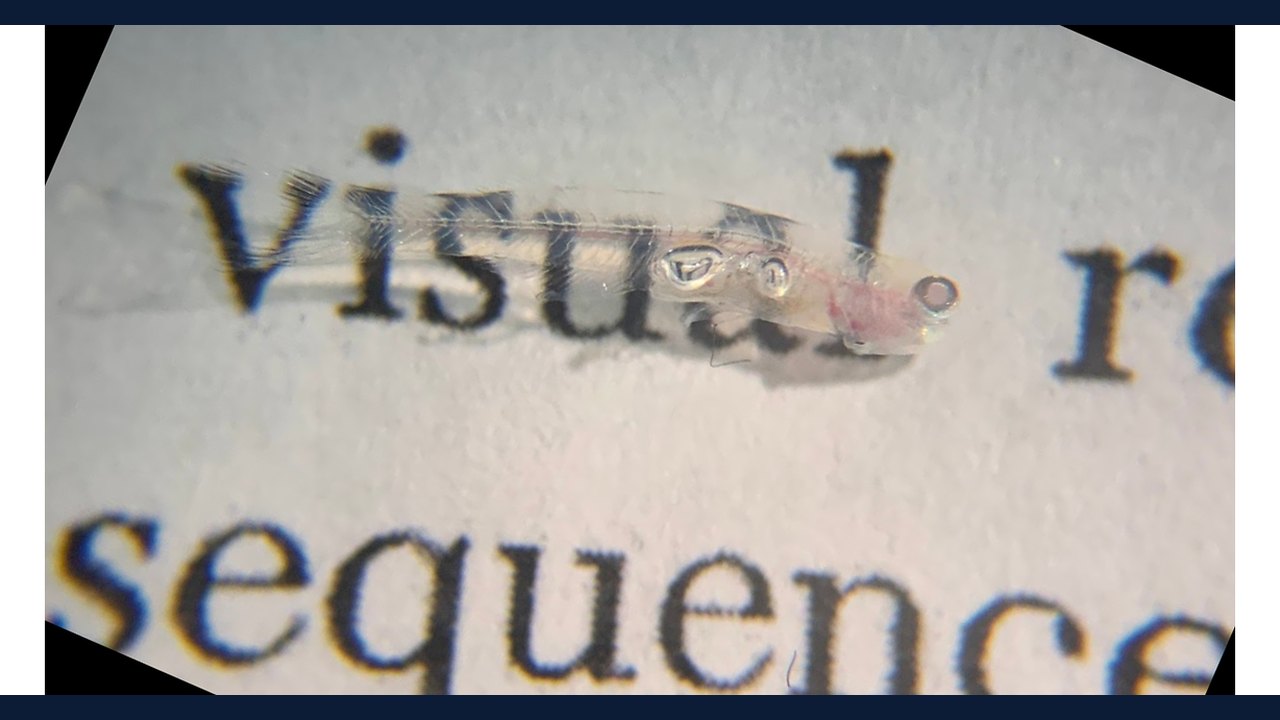
Image: Whitehead Institute · Photo source · Resized and letterboxed to 16:9; no AI generation
Whitehead Institute researchers have published a comprehensive whole-body single-cell atlas of an adult vertebrate, utilizing a tiny, transparent fish species known as Danionella cerebrum. Reported in the journal Science on October 29, 2026, the resource maps gene activity across more than 600,000 cells, offering new insights into cellular diversity, tissue coordination, and brain regeneration.
Unlocking Vertebrate Biology at a Micro Scale
Studying the cellular makeup of larger adult vertebrates comprehensively has historically presented significant technical and financial challenges due to their size. However, Danionella cerebrum—measuring barely one centimeter long with a visible brain through the top of its head—provides a unique workaround. Adopted for neuroscience research in 2018 and formally described in 2021, the miniature fish shares a close evolutionary relationship with zebrafish, allowing scientists to leverage established genetic tools.
- Comprehensive Profiling: Researchers used single-cell RNA sequencing to measure gene activity across the brain, spinal cord, eyes, internal organs, fins, head, and trunk.
- Spatial Mapping: Data were paired with spatial methods to map cell types and gene activity patterns back to their original tissue locations.
- Rare Populations: The extensive atlas successfully captured exceptionally rare cell populations within the organism.
Key Findings and Regional Patterns
By examining the whole animal simultaneously, the research team identified patterns that are often obscured when tissues are analyzed in isolation. For instance, neurons originating from the same anatomical region frequently exhibited more similar gene activity patterns than neurons sharing the same neurotransmitter located in different regions.
Additionally, the atlas indicated that adult cells retain a molecular memory of their developmental origins. Fibroblasts in connective tissues—including those in the pectoral and pelvic fins—maintained region-specific gene activities associated with limb development. While the precise function of these persistent signals in adult fish remains unknown, researchers suggest they could assist in maintaining or rebuilding bodily structures.
The team also utilized the atlas to study the species' regenerative capabilities, observing the step-by-step progression of neural regeneration following forebrain injuries, moving from initial immune responses to neural stem-cell activity and new neuron maturation.
Practical Implications and Access
The resulting transcriptome atlas serves as a foundational molecular reference, establishing a baseline for exploring how injuries, aging, and pharmacological agents affect cells across an entire animal. The research team has made the data publicly accessible via an interactive online resource named DigiFish.
Readers interested in verifying these findings can review the published study in Science or explore the DigiFish platform. As noted by the researchers, this whole-body cellular map provides a multi-level perspective spanning molecular, cellular, and systemic levels of biological complexity.
AI-assisted reporting; source claims are attributed and have not been independently verified.
More to read
 Jiiva's 'Thagappan' Makers Release First Single 'Thangapulla'
 HOPPR Unveils Whole-Body Musculoskeletal AI Narrative Model for Radiology Developers
 Centrus Energy Ships First New Centrifuge from Tennessee to Ohio to Expand Nuclear Fuel Production
 Centre's Fiscal Deficit Reaches 42% of FY27 Target in First Half
Trending on GlobeWire Daily
Selected from recent coverage and related topics; not live search rankings.
 Madhya Pradesh Government Plans Revenue Generation from 117-Year-Old Edward Villa in Mumbai Through Leasing
 iPhone 18 Pro Named TechRadar Product of the Year 2026
 Google Project Suncatcher Runs Gemma 4 AI on Orbiting Satellite and Receives First Response
 Gender Disparities in Eye Care Access Across India Examined
 Satellite Images Show Cyclone Arnab Weakening Over India As New System Brews
 Expanding Green and Blue Spaces Crucial for India's Economic and Public Health, Reports Indicate