Union Cabinet Approves Rs 10,000 Crore Container Manufacturing Scheme to Reduce Import Dependence
· GlobeWire Daily Business Desk · Source: www.business-standard.com
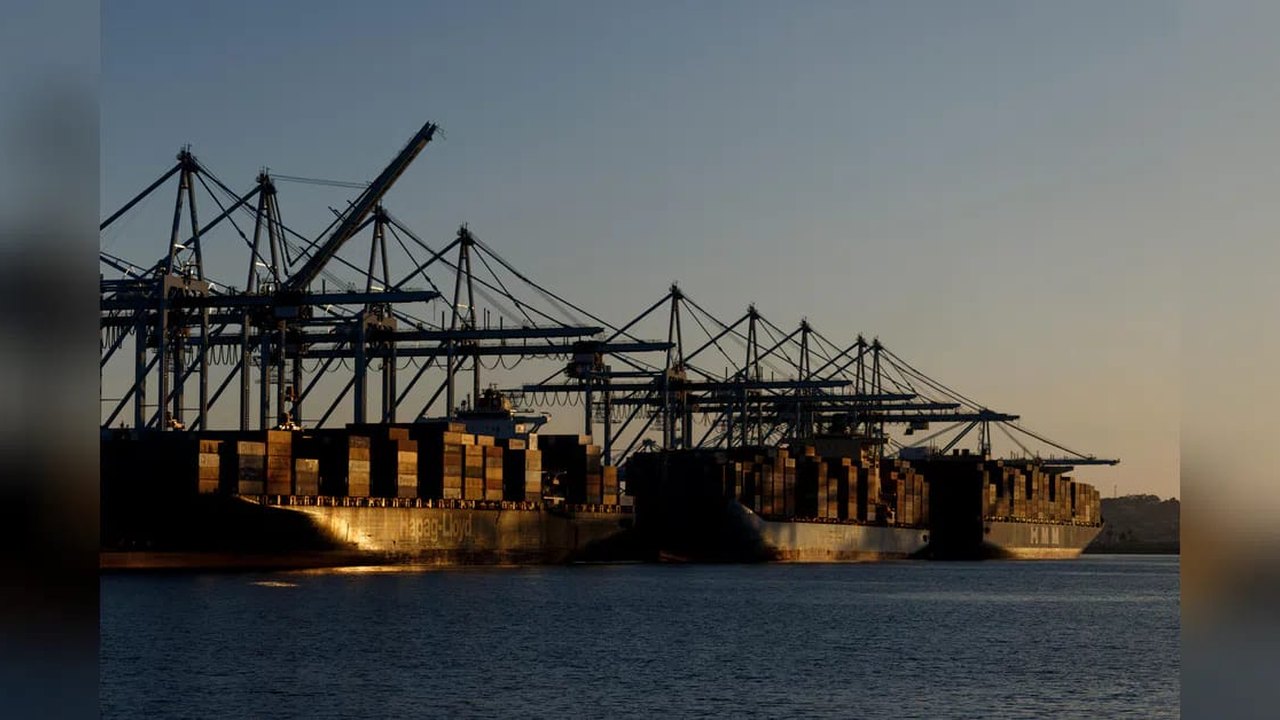
Image: Business Standard — Creative Commons
The Union Cabinet has approved the ₹10,000 crore Container Manufacturing Promotion Scheme (CMPS) aimed at boosting domestic production of shipping containers and decreasing the country's reliance on overseas suppliers. The initiative seeks to scale up India's annual container manufacturing capacity nearly tenfold, moving from approximately 70,000 twenty-foot equivalent units (TEUs) to 750,000 TEUs. Financial assistance under the scheme will remain active until the 2040 financial year to support production expansion, enhance cost competitiveness, and foster a domestic manufacturing ecosystem.
Background and Import Reliance
Shipping containers serve as standardised steel boxes utilized for transporting goods seamlessly across ships, trains, and trucks without requiring cargo to be unloaded and repacked at transfer points. Capacity is measured in TEUs, where one TEU equals a standard 20-foot container and a 40-foot container counts as two TEUs.
Maritime transport forms a vital backbone of India's international commerce. Government data from February 2026 indicates that maritime transport accounted for approximately 95 per cent of India's merchandise trade by volume and 70 per cent by value. Despite this heavy dependence, India historically maintained limited domestic manufacturing capacity, forcing reliance on overseas suppliers—predominantly China—which commands global production due to massive scale and lower costs. Industry reports note that a Chinese-manufactured container typically costs around $1,700 per TEU, while competing markets face higher production costs between $2,200 and $2,400. This heavy foreign dependence exposed Indian traders to severe supply fluctuations, leasing rate volatility, and freight cost disruptions during global supply chain shifts.
Structure of the Financial Scheme
The newly approved CMPS allocates funds across four primary financial components:
- Operational assistance (₹8,891 crore): Manufacturers will receive direct payouts of ₹49,500 for every eligible standard 20-foot container produced and sold, and ₹86,625 for a 40-foot container.
- Interest subsidy (₹859 crore): Qualified manufacturers will secure an annual interest subsidy of three per cent on qualifying term loans. To qualify, new facilities must commit to a minimum annual capacity of 100,000 TEUs, while existing operations must expand capacity by at least 25,000 TEUs.
- Testing and certification (₹150 crore): Dedicated funds will support common testing facilities, ensuring local production meets stringent international shipping standards.
To drive local value addition, the scheme mandates that manufacturers maintain at least 70 per cent domestic content through the 2032 financial year, increasing to 90 per cent from FY33 onward.
Economic Implications and Industry Expert Insights
Government estimates project the creation of roughly 3,000 direct jobs and over 50,000 indirect roles through the expanded manufacturing ecosystem. Industry observers note that the initiative could stimulate domestic demand for specialized steel, corner castings, and industrial paints.
However, logistics experts caution that the scheme may not instantly lower shipping freight costs for exporters. Pushpank Kaushik of Jassper Shipping and Capt Ritesh Kumar of Broadside Marine observed that freight rates are governed heavily by global fuel prices, vessel capacity, route dynamics, port tariffs, and trade imbalances that necessitate the repositioning of empty containers. Furthermore, domestic manufacturing must overcome challenges related to component sourcing, scattered standalone factory units, and achieving economies of scale to effectively compete with established international supply chains.
Practical Implications and Verification
Readers and industry stakeholders tracking the rollout of the Container Manufacturing Promotion Scheme should review official announcements and Ministry of Commerce or Union Cabinet press releases for specific application guidelines, eligibility timelines, and operational rules as they are published. While the scheme reduces structural import risks and incentivizes local fabrication, businesses should continue to evaluate logistics expenditures based on broader variables such as port efficiency, domestic rail links, and global shipping line capacity.
For more detailed information and to review the official context of this policy decision, readers can consult the original report on Business Standard at https://www.business-standard.com/economy/news/india-container-manufacturing-scheme-maritime-trade-shipping-imports-126103000871_1.html.
AI-assisted reporting; source claims are attributed and have not been independently verified.
More to read
 Duolingo Faces Securities Class Action Lawsuit: What Investors Should Know
 Corra Group Highlights Layered Screening as AI-Driven Identity Fraud Challenges Remote Hiring
 New Clinical and Real-World Evidence for Alzheimer's Treatment Lecanemab Scheduled for CTAD 2026
 Eightpoint Launches Reel Drops to Bring Social Features and Rewards to Short-Form Mobile Drama
Trending on GlobeWire Daily
Selected from recent coverage and related topics; not live search rankings.
 Remote Tribal Village in Singrauli Connects to Mobile Network for the First Time Through Private Initiative
 Uttar Pradesh Police Suspend Badhapur SHO After Obscene Video Shared in Official WhatsApp Group
 What Canadians Can Expect from the Developing 'Super' El Niño This Winter
 Bijli Vibhag Vacancy 2026: What is Confirmed About Proposed Power Sector Openings
 Bihar Museum Ranks Ninth Globally, Sparking Praise From Anand Mahindra and an Official Invitation From State Leadership
 ISRO Employee Associations Seek Official Clarification Amid Space Sector Privatisation Push