Italy Tightens Security as Nationwide Protests and General Strike Erupt Over Cost of Living and Middle East Wars
· GlobeWire Daily Editorial Desk · Source: www.aljazeera.com
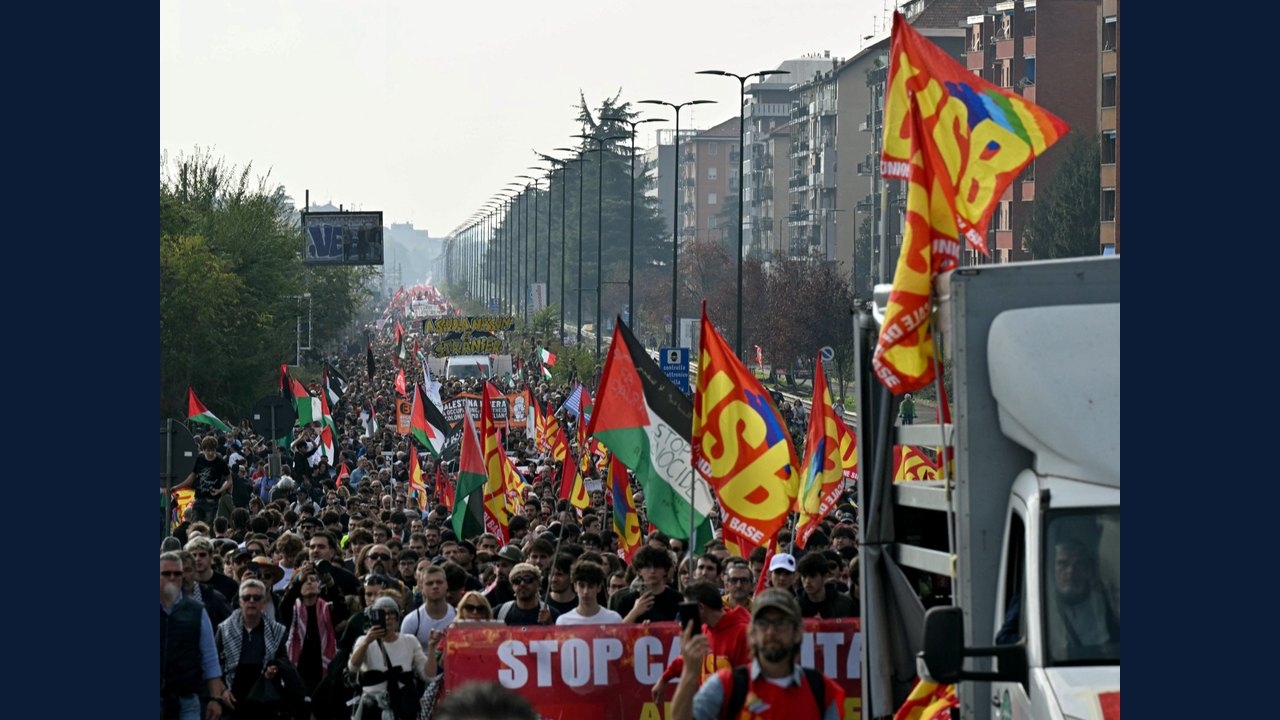
Image: Al Jazeera Staff · Photo source · Resized and letterboxed to 16:9; no AI generation
Nationwide Demonstrations and Security Response
On Friday, October 30, 2026, tens of thousands of students and union members participated in marches across dozens of Italian cities, including Rome, Milan, Naples, Turin, Bologna, and Genoa. The demonstrations prompted the hard-right government to deploy a large police presence and tighten security nationwide to manage potential unrest.
In the capital, security was increased around the Colosseum, while Milan's cathedral received special protection. Minor skirmishes were reported between protesters and riot police in Turin at the start of a demonstration.
Core Grievances and Union Demands
The protests were organized following a general strike called by the USB trade union, which drew truck drivers, taxi drivers, and farmers. Key grievances included:
- Soaring living costs and inflation, with prices for food, energy, transport, and bills reportedly rising by 68 percent since 2000 against a nearly 5 percent drop in average wages.
- Demands for increased investment in education.
- Opposition to higher fuel prices and rising defense spending.
- Joint calls with labor groups in France, Greece, Spain, Turkiye, and Morocco demanding an end to Middle East conflicts, including the war in Gaza.
- Demands to end the militarisation of ports, with union statements declaring that ports should not transport weapons or military equipment.
Government Response and Budget Measures
Official reports indicate that the government responded to economic pressures by agreeing on a 175 million euro ($195 million) aid package last week for truck drivers, farmers, and fishermen affected by fuel price increases linked to Middle East conflicts.
Additionally, Prime Minister Giorgia Meloni announced that draft budget discussions for 2027 include support measures for families and young workers, such as an annual bonus of 2,500 euros for workers under 30. Speaking at a news conference on Wednesday, Meloni stated her hope that these provisions would address concerns from youth feeling ignored by the state, while clarifying that measures were not intended for individuals engaging in property destruction.
Prime Minister Meloni previously tightened laws on public gatherings and eased restrictions on minor detentions following clashes and looting in Milan over the weekend of October 17-18.
AI-assisted reporting; source claims are attributed and have not been independently verified.
More to read
 Clashes Erupt in French Cities After Largely Peaceful Cost-of-Living Protests
 German Cost-of-Living Protests Escalate into Violent Riots Across Major Cities
 German Cost of Living Protests Turn Violent in Multiple Cities, Prompting Arrests and Property Damage
 OBR Warns UK Living Standards to Stagnate as Middle‑East Conflict Fuels Energy Shock
Related coverage
Related reporting available at publication.
Clashes Erupt in French Cities After Largely Peaceful Cost-of-Living ProtestsGerman Cost-of-Living Protests Escalate into Violent Riots Across Major CitiesGerman Cost of Living Protests Turn Violent in Multiple Cities, Prompting Arrests and Property DamageOBR Warns UK Living Standards to Stagnate as Middle‑East Conflict Fuels Energy Shock Israeli Forces Demolish Homes in Hebron Amid Ongoing West Bank Military Offensive
 Irish Government Plans Body to Assess Potential for United Ireland