US Air Force Explores AI to Spot Errors in Mid‑Air Refuelling
· GlobeWire Daily Editorial Desk · Source: www.techradar.com
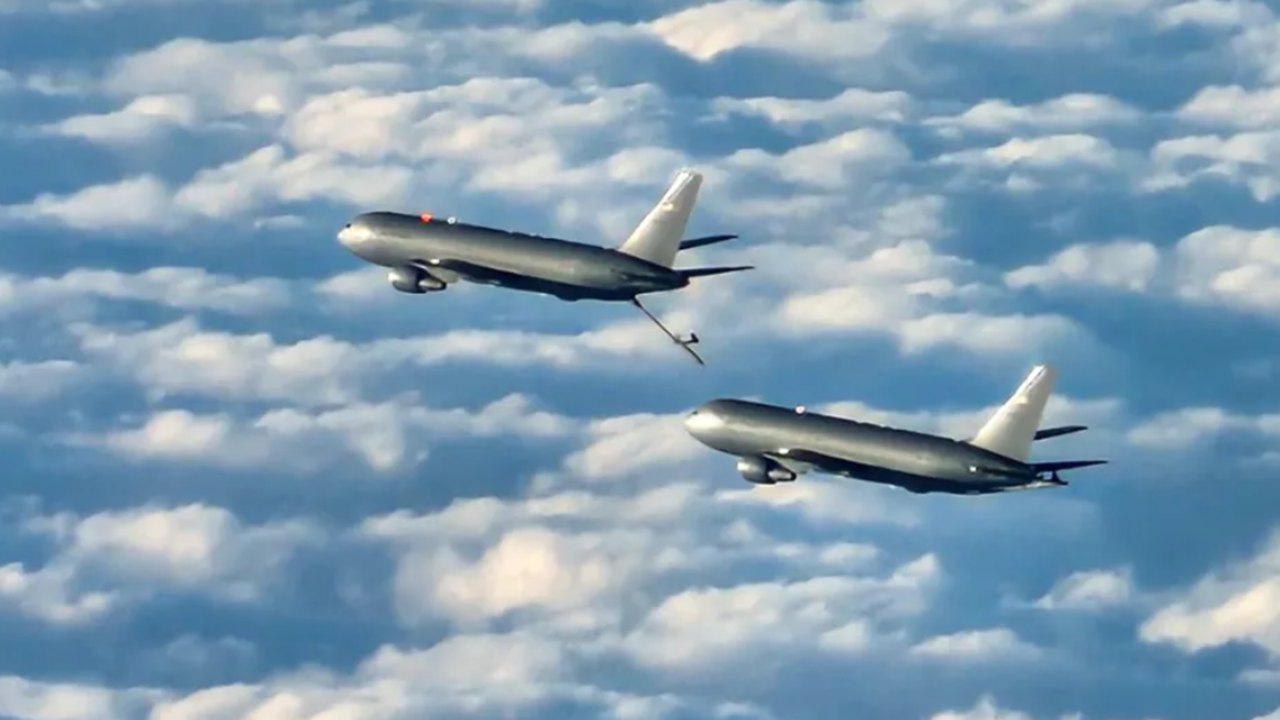
Image: TechRadar · Photo source · Resized and letterboxed to 16:9; no AI generation
The United States Air Force (USAF) is investigating the use of artificial intelligence (AI) to detect mistakes during aerial refuelling missions and to improve the feedback given to crews.
How the system would work
- Video capture – Cameras on KC‑46 Pegasus tankers would record the entire refuelling operation.
- Computer vision – AI would analyse the footage in real time, tracking aircraft speed, alignment, separation and boom movement.
- Performance reports – The software would generate graphical overlays, colour‑coded maps and a chronological log of key events, allowing instructors to pinpoint specific errors.
Current assessment challenges
Presently, evaluations rely heavily on instructor observations, crew self‑reports and manual review of recorded footage. These methods can lead to inconsistent judgments, especially when brief errors are missed or interpreted differently by different observers.
Expected benefits
- Consistent metrics – Automated measurements reduce human bias.
- Detailed feedback – Pilots and instructors can see exactly where a manoeuvre deviated from the ideal.
- Training integration – The system could be linked to flight simulators, virtual reality (VR) and augmented reality (AR) platforms already used in aviation training.
Development timeline
The project is part of the Small Business Innovation Research (SBIR) programme. Companies interested in developing the technology have until 25 November 2026 to submit proposals.
Scope beyond refuelling
While the initial focus is on the KC‑46 Pegasus, the solicitation also invites solutions that could be applied to other aviation activities within the Department of Defense.
How to verify the announcement
The information comes from a USAF research solicitation released on the Department of Defense’s official website. Interested developers can review the full solicitation document and submit proposals through the SBIR portal.
Practical implications
If successful, the AI system could:
- Reduce the time required for post‑mission debriefs.
- Lower the risk of human error during one of aviation’s most demanding procedures.
- Provide a scalable model for automated performance assessment across the military.
The initiative reflects the USAF’s broader push to incorporate advanced analytics and machine learning into training and operational processes.
AI-assisted reporting; source claims are attributed and have not been independently verified.
More to read
 Air Force Enlisted Village Featured in New Educational Series on Military Senior Living
 Jordanian Air Force Strikes Militant Hideouts in Syria Following Church Attack Arrests
 Bangladesh: Jamaat Calls for Independent Probe into Former Air Force Officer’s Death, Questions Link to Sheikh Hasina’s Exit
 Air Marshal Inderpal Singh Walia Appointed Vice‑Chief of the Indian Air Force
Trending on GlobeWire Daily
Selected from recent coverage and related topics; not live search rankings.
 Madhya Pradesh Government Plans Revenue Generation from 117-Year-Old Edward Villa in Mumbai Through Leasing
 iPhone 18 Pro Named TechRadar Product of the Year 2026
 Google Project Suncatcher Runs Gemma 4 AI on Orbiting Satellite and Receives First Response
 Gender Disparities in Eye Care Access Across India Examined
 Satellite Images Show Cyclone Arnab Weakening Over India As New System Brews
 Expanding Green and Blue Spaces Crucial for India's Economic and Public Health, Reports Indicate