Cali Biodiversity Fund Still Empty as Pharma Companies Hold Back Contributions
· GlobeWire Daily Climate Desk · Source: www.theguardian.com
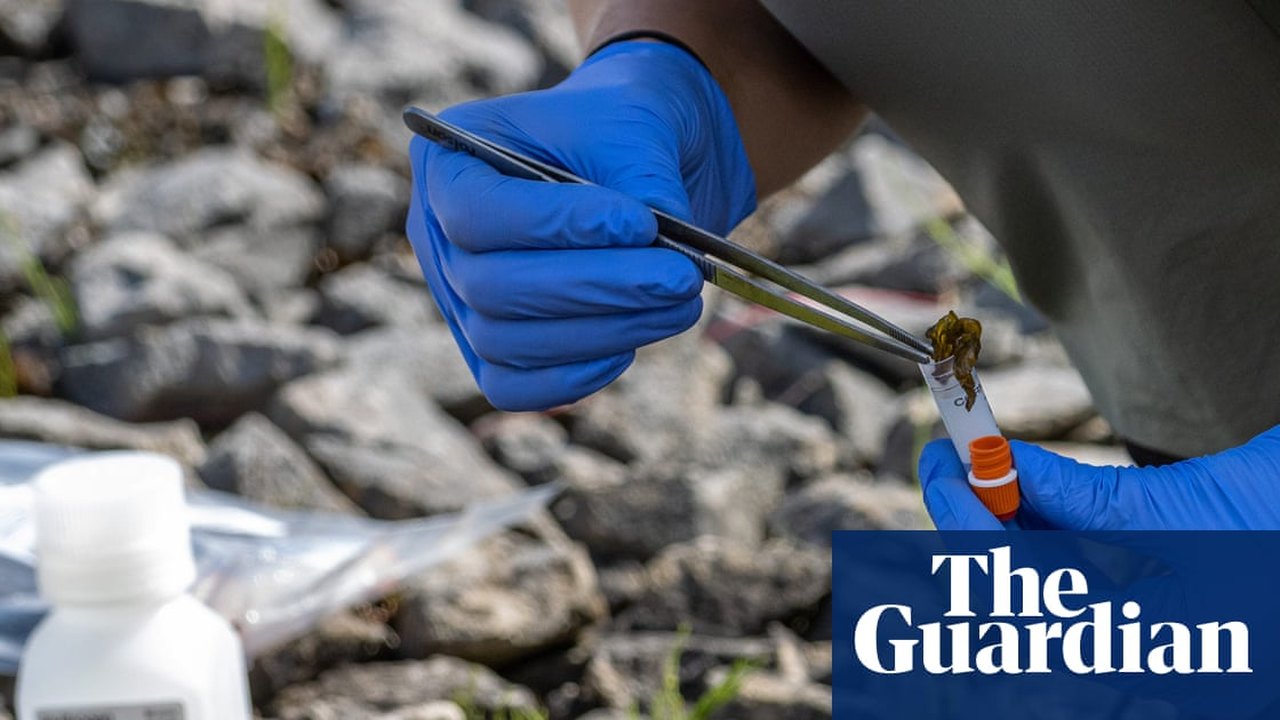
Image: www.theguardian.com — Creative Commons
A landmark fund for nature‑based drug research has raised just $7,000 in its first 18 months
The Cali Fund, launched in February 2025 to collect $1 billion a year from pharmaceutical firms that profit from genetic resources, has so far attracted only $10,656 in pledged commitments – of which $7,085 has actually been deposited. The figure was confirmed on Monday, the opening day of the UN COP17 biodiversity summit in Yerevan, Armenia.
How the fund was meant to work
The mechanism was designed to plug a $700 billion global shortfall in financing for biodiversity conservation. It asks companies that use digital sequence information (DSI) – genetic data stored in public databases – to contribute either 1 % of their profits or 0.1 % of revenue. The target audience is the top 15 pharmaceutical companies, which together generated about $161 billion in profit in 2025 (Zero Carbon Analytics, 2026). If those firms had followed the guideline, they could have contributed $756 million in a single year.
What has actually been contributed
To date, only three small private‑sector firms have made payments:
- Prozomix (UK) – $5,000
- TierraViva AI (UK) – $1,000
- E‑Biom (Belgium) – $1,085
No major pharmaceutical company has yet deposited money, despite the industry’s reliance on biodiversity for drug discovery. A Zero Carbon Analytics analysis notes that shareholder payouts by the top 15 firms in 2025 were 175 times larger than the amount the fund suggests they should contribute.
Industry response
Pharma representatives argue that the “blanket amount” is inappropriate because not every medicine is derived from DSI and the fund may overlap with existing legal frameworks. Guilherme Cintra, director of innovation policy at the International Federation of Pharmaceutical Manufacturers and Associations, said the design “relies on inaccurate assumptions about how data is used in the discovery of medicines” and that contributions based on total revenue would be unfair.
Conversely, June Rubis, an Indigenous peoples and local communities representative on the fund’s steering committee, called the lack of contributions “free‑riding on nature”, emphasizing that the fund would direct at least half of its resources to priorities identified by Indigenous peoples and local communities.
What COP17 hopes to achieve
The Cali Fund is a central agenda item at COP17, where negotiators will discuss how to scale voluntary contributions and whether mandatory mechanisms should be introduced. A spokesperson for the fund described the current balance as “disappointing but not entirely surprising,” noting that similar financial instruments often take two to three years before contributions begin to rise.
Practical implications for conservation and health
- Funding gap: If the fund reaches its $1 bn target, it could cover roughly 0.14 % of the $700 bn biodiversity financing gap, still a modest share but enough to support pilot projects in low‑income countries.
- Indigenous leadership: With half of the money earmarked for Indigenous‑identified priorities, the fund could strengthen community‑led conservation, which research shows improves both ecological outcomes and local livelihoods.
- Pharma risk: Victoria Kalyvas of Zero Carbon Analytics warned that “the future of health is written in nature’s DNA.” Continued degradation of ecosystems could limit the genetic resources needed for future medicines, creating a long‑term risk for the industry itself.
- Regulatory landscape: The debate highlights a broader challenge: digital sequence information is now easily shared worldwide, making it harder to link specific genetic resources to downstream profits. Without a clear legal framework, voluntary contributions may remain limited.
What remains uncertain
- Exact calculation method: The fund’s guideline (1 % profit or 0.1 % revenue) does not differentiate between products that used DSI and those that did not, a point the industry says needs clarification.
- Mandatory enforcement: It is unclear whether COP17 will adopt any binding obligations or keep the mechanism voluntary.
- Scale‑up timeline: While the fund’s spokesperson expects contributions to grow as the operational infrastructure matures, no concrete timetable has been provided.
How readers can verify the information
All figures and quotations are taken from the Guardian report dated 22 October 2026. The original article can be accessed at:
[https://www.theguardian.com/environment/2026/oct/22/cop17-cali-conservation-fund-pharmaceutical-freeriding-nature-aoe](https://www.theguardian.com/environment/2026/oct/22/cop17-cali-conservation-fund-pharmaceutical-freeriding-nature-aoe)
Readers can also consult the Zero Carbon Analytics analysis referenced in the piece for the profit‑based contribution calculations.
--- This article was compiled from publicly available statements and data released by the Cali Fund, pharmaceutical industry representatives, and independent analysts. No original reporting or interviews were conducted.
AI-assisted reporting; source claims are attributed and have not been independently verified.
More to read
 Public Debate Intensifies Over UK Gasfield Approval, Climate Adaptation, and Net-Zero Strategy
 New Study Attributes Record 50,000 Summer Heat Deaths in European Cities to Climate Breakdown
 Warming Faster Than the Planet: How Climate Change is Reshaping the Arctic Village of Longyearbyen
 California Hit by Historic High Tides as State Enters 'Extreme Territory'
Trending on GlobeWire Daily
Selected from recent coverage and related topics; not live search rankings.
 RRB Releases 2026 Station Master Recruitment Notification for 1,265 Posts
 GSSSB Work Assistant Recruitment 2026: 1,663 Vacancies, Online Applications Close October 29
 Mulugu District Recruitment 2026: Offline Applications Open for 7 AYUSH and Health Posts
 SKAU Non-Teaching Recruitment 2026: Application Deadline Extended to November 2
 GSSSB Opens Recruitment for 84 Food Safety Officer Posts in Gujarat
 BHEL Artisan Recruitment 2026: Official Notification Released for 660 Vacancies Across Seven Trades