London to Close Oxford Street to Traffic as Part of Mayor’s Long‑Term Pedestrianisation Plan
· GlobeWire Daily Climate Desk · Source: www.theguardian.com
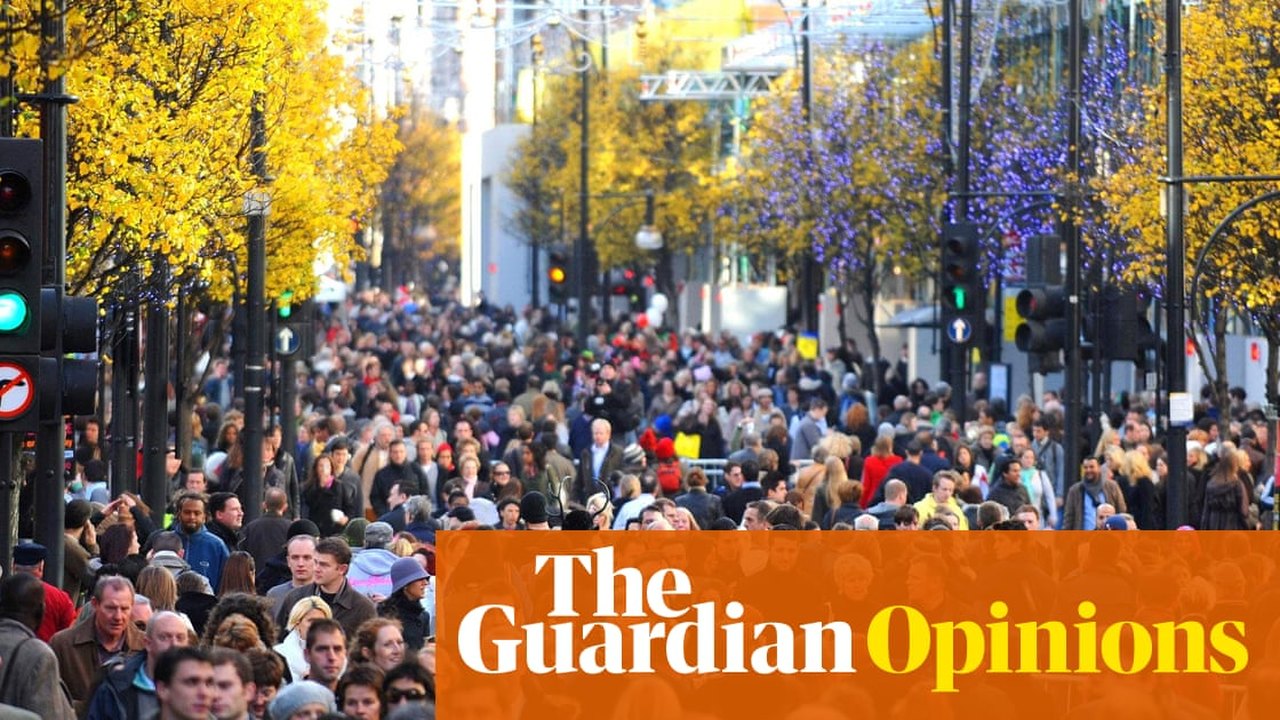
Image: www.theguardian.com — Creative Commons
London’s busiest shopping thoroughfare to go car‑free
London Mayor Sadiq Khan announced on Monday that the central stretch of Oxford Street will be closed to motor traffic, ending a series of delays that have spanned his mayoralty since 2016. The move is presented by the Greater London Authority (GLA) as a pilot for greener, less congested city centres and as a catalyst for reviving a high street that has struggled since the COVID‑19 pandemic.
Background to the scheme
Oxford Street is the United Kingdom’s most heavily visited retail corridor, but the pandemic triggered a sharp decline in footfall. According to the GLA, the number of vacant shop units on the street has more than quadrupled since 2020. The mayor’s office has pursued pedestrianisation for over a decade, citing examples from other European cities where car‑free zones have boosted local economies and reduced pollution.
Projected economic benefits
The GLA estimates that the pedestrian‑only zone could generate £82 million of value each year by increasing footfall and encouraging shoppers to linger longer. While the exact figure will depend on post‑implementation foot traffic and retail performance, research from other cities suggests that pedestrian zones often correlate with higher sales for remaining businesses.
Environmental context
Domestic transport remains the largest source of greenhouse‑gas emissions in Britain. National data show that 59 % of all journeys in the UK were made by car in 2024, compared with 34 % in London. The city’s lower car‑share is linked to higher public‑transport investment – the Treasury spends roughly twice as much on London’s transport network as on other English regions, and bus fares are comparatively cheaper.
The mayor’s plan is coupled with existing low‑emission policies, such as the Ultra Low Emission Zone (ULEZ), which was expanded in 2023. Imperial College research cited by the mayor’s office indicates that ULEZ has improved health outcomes for primary‑school children in London. Transport for London (TfL) has projected that the Oxford Street closure will have a minimal additional impact on nitrogen‑dioxide (NO₂) levels, as concentrations have already been falling due to ULEZ.
Traffic displacement concerns
Critics, including Westminster City Council, argue that removing cars from a major artery could simply shift congestion to surrounding streets. However, a University of the West of England study found that closing strategic roads can lead to a permanent reduction in traffic, as commuters switch to public transport or walking. A separate analysis of 46 low‑traffic neighbourhoods (LTNs) in London reported minimal spill‑over effects on adjacent roads.
Practical implications for residents and visitors
- Access: Pedestrian‑only zones will be enforced with physical barriers and camera‑based monitoring. Delivery vehicles will be permitted during off‑peak hours, and a dedicated loading zone will be established at the western end of the street.
- Public transport: TfL expects a modest increase in bus ridership on parallel routes (e.g., the 73, 94, and 453 services). The mayor has pledged additional frequency on the Central Line to accommodate higher demand.
- Cycling: Temporary cycle lanes will be installed along the former carriageways, linking to existing routes on Regent Street and Tottenham Court Road.
- Retail: Shop owners have been invited to participate in a £5 million grant programme to improve storefronts and adapt to the new pedestrian environment. The GLA will monitor vacancy rates quarterly.
What remains uncertain
- Footfall forecasts: While the £82 million value estimate is based on modelling, actual visitor numbers will only be measurable after the first full year of operation.
- Long‑term traffic patterns: Although studies suggest limited spill‑over, the unique scale of Oxford Street means that city‑wide traffic modelling is still ongoing.
- Air‑quality outcomes: NO₂ levels have been declining, but the precise contribution of the pedestrianisation to future air‑quality improvements will require continuous monitoring.
How readers can verify the information
The details above are drawn from the Guardian editorial titled “The Guardian view on Oxford Street’s pedestrianisation: cities should be designed around people, not cars”, published on 25 October 2026. The full text, including the GLA’s economic estimate and the cited academic studies, is available at:
[https://www.theguardian.com/commentisfree/2026/oct/25/the-guardian-view-on-oxford-streets-pedestrianisation-cities-should-be-designed-around-people-not-cars](https://www.theguardian.com/commentisfree/2026/oct/25/the-guardian-view-on-oxford-streets-pedestrianisation-cities-should-be-designed-around-people-not-cars)
Readers can also consult the Greater London Authority’s press release on the Oxford Street project and the Transport for London traffic impact assessment, both of which are linked from the mayor’s official website.
--- This article is based solely on publicly available statements and research cited in the referenced Guardian editorial. No original reporting or interviews were conducted.
AI-assisted reporting; source claims are attributed and have not been independently verified.
More to read
 Two Decades After the Landmark Stern Review, Climate Economics Remains Divided
 What the Science Actually Says About Seed Oils and Human Health
 Menindee Lakes Water Levels Fall to Five-Year Low as Authorities Impose Restrictions and Warn of Fish Kill Risks
 Federal Lawsuit Alleges EPA Failed to Regulate Cancer-Linked Pesticide Atrazine Under Clean Water Act
Trending on GlobeWire Daily
Selected from recent coverage and related topics; not live search rankings.
 WBPSC Announces 1145 Sub-Surveyor Vacancies: Important Dates, Eligibility, and Application Details
 Community and Social Services Career Openings Highlight Regional Employment Landscape
 Weekend Alcohol Consumption and Women's Health: Examining the Science Behind Breast Cancer Risks
 ARCI Recruitment 2026: Applications Open for 29 Technical, Administrative, and Scientific Posts
 Community and Social Services Openings Highlight Diverse Employment Landscape in Cheyenne, WY
 Karnataka School Education Department Extends Online Application Deadline for 2026 Teacher Recruitment to 16 November