UNEP Emissions Gap Report 2026: The Critical Need for Accelerated Climate Action
· GlobeWire Daily Climate Desk · Source: www.unep.org
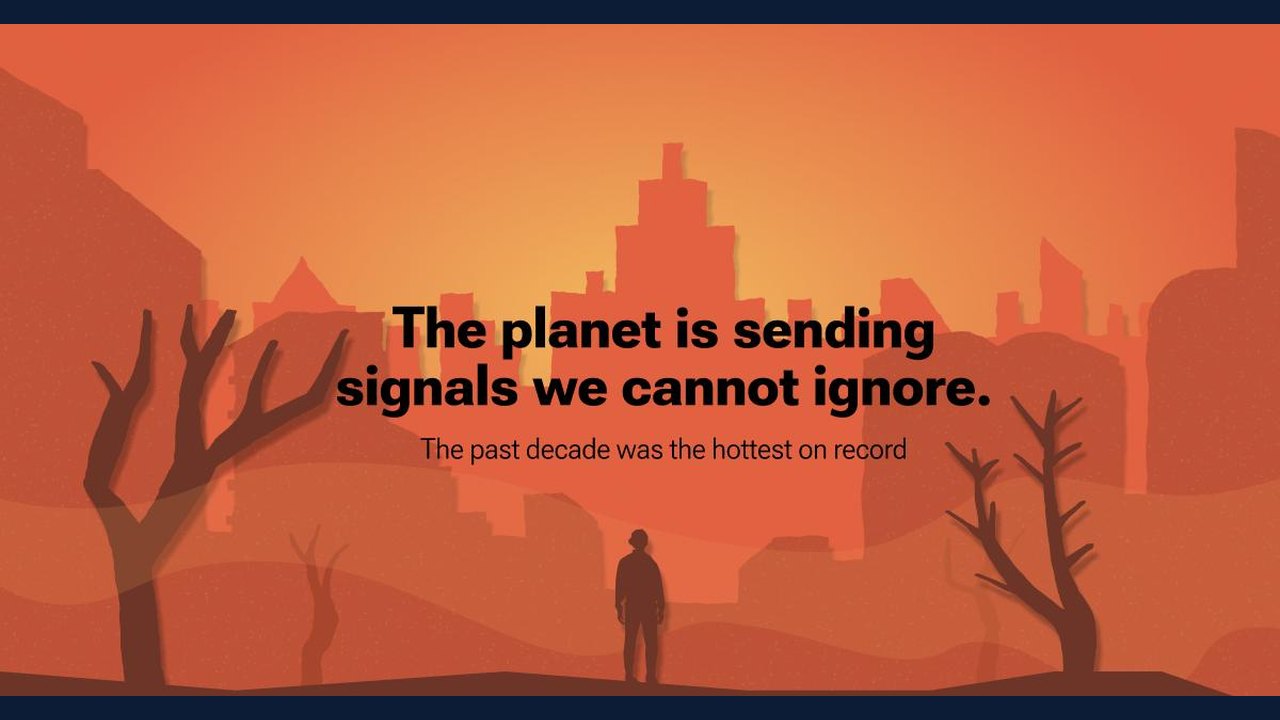
Image: UNEP - UN Environment Programme · Photo source · Resized and letterboxed to 16:9; no AI generation
The United Nations Environment Programme (UNEP) has released its 2026 Emissions Gap Report, highlighting a significant disconnect between current climate policies and the goals established by the Paris Agreement. The report indicates that the world is currently not on track to limit global warming to 1.5°C above pre-industrial levels.
Current Warming Projections
According to the report, current global policies are projected to lead to approximately 2.8°C of warming by the end of the century. Even if all nations fully implement their existing climate pledges, warming is expected to reach around 2.6°C. While overshooting the 1.5°C threshold is increasingly viewed as inevitable, the report emphasizes that the duration and extent of this overshoot depend on immediate, coordinated global actions.
Mitigation and Adaptation Priorities
To mitigate the most severe long-term impacts, the report outlines several critical areas for intervention:
- Rapid Emission Reductions: Sustained decreases in emissions are required to peak warming at 1.7–1.8°C before attempting to return to 1.5°C by 2100.
- Methane Abatement: As methane contributes to approximately one-third of current warming, targeted reductions offer one of the quickest methods to slow temperature increases.
- Carbon Dioxide Removal: Large-scale deployment of removal technologies is necessary alongside emissions cuts.
- Early Warning Systems: Protecting vulnerable populations requires strengthening adaptation measures and resilience infrastructures.
UNEP’s Strategy
UNEP continues to assist nations in transitioning from climate ambition to actionable policy by providing data-driven evidence and fostering public-private partnerships. The organization focuses on key sectors including sustainable construction, forestry, and nature-based solutions. To verify these findings and access detailed policy recommendations, stakeholders are encouraged to visit the official UNEP climate portal at unep.org.
Every year of delay compounds the challenge, with current emission levels potentially adding 0.1°C to peak warming within just five years.
AI-assisted reporting; source claims are attributed and have not been independently verified.
More to read
 World Environment Day 2026: UN Highlights Urgent Climate Action
 Urban Areas and Climate Change: UNEP Outlines Impacts, Emissions, and Mitigation Frameworks
 New UNEP Report Outlines Humanity's Options for Containing Climate Change
 Gyeonggi Credit Guarantee Foundation Honored at 2026 Korea Energy Awards for Climate Crisis Response