US Startup's Night-Time Space Mirror Demonstration Sparks Criticism from Scientists and Environmentalists
· GlobeWire Daily Climate Desk · Source: www.theguardian.com
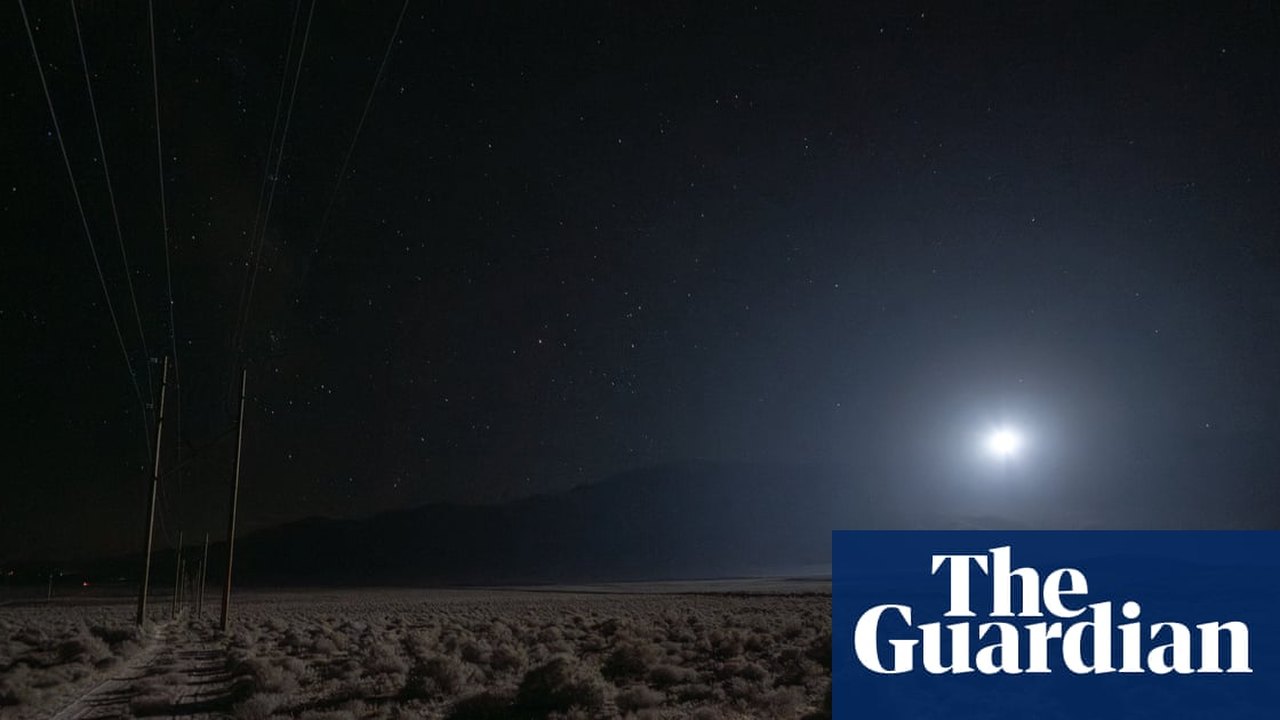
Image: www.theguardian.com — Creative Commons
Residents in a rural area of California near the Sierra Nevada region were recently startled by a dazzling light shining down from nearby mountains, illuminating the desert below. The nocturnal illumination was part of a demonstration by US startup Reflect Orbital, which aims to use thousands of space-based mirrors to reflect sunlight onto Earth during the night.
Ground Demonstration and Company Goals
The recent test near Mount Whitney used large mobile lights to simulate the radiance of a full moon. Reflect Orbital conducted the trial in partnership with a local search-and-rescue team. According to the company, potential uses for the technology include aiding emergency responders at night, bathing crops in sunlight, replacing broken streetlights, providing nocturnal solar power for military operations, and boosting the energy output of solar panels after dark.
The startup plans to launch 50,000 satellites into orbit over the next decade. In July, the Federal Communications Commission (FCC) approved a proposal by Reflect Orbital to launch an initial demonstration satellite next year. This satellite will operate at an altitude of about 400 miles (645 km) and feature a 59-foot-diameter mirror designed to reflect sunlight in 3-mile-wide beams, ranging in strength from moonlight to midday sun.
Environmental and Scientific Concerns
The project has drawn swift pushback from environmental groups, astronomers, and climate scientists. In August, four organizations represented by the environmental law firm Earthjustice petitioned the FCC to reconsider its approval, arguing that artificial night-time illumination threatens natural ecosystems, human health, and astronomy.
Critics emphasize that terrestrial life relies on the natural rhythm of day and night. Disruptions could negatively affect animal behaviors such as feeding, mating, and sheltering, particularly for birds, insects, and mammals. Astronomers warn that the reflective satellites will exacerbate existing light pollution, obscure stars, and contribute to space debris. Health experts also note potential disruptions to human circadian rhythms and risks to eyesight from direct glare.
Furthermore, climate scientists have questioned the wisdom of altering the planet's energy balance. David Ho, a climate scientist at the University of Hawaii, cautioned against interfering with solar radiation, noting the risks of adding further energy to a warming planet.
Practical Implications and What Remains Unknown
Reflect Orbital states that it has engaged in substantive discussions with scientists and astronomers to avoid pointing light toward sensitive areas such as national parks, astronomical sites, and wildlife habitats. The company maintains that it welcomes regulatory oversight and intends to collaborate with authorities and local communities.
- Confirmed Details: Reflect Orbital conducted a ground-based simulation near Mount Whitney with a local search-and-rescue team. The FCC approved an initial demonstration satellite for launch next year. Environmental groups have filed a petition asking the FCC to reconsider.
- Unknowns: The long-term ecological and atmospheric impacts of deploying thousands of operational mirrors remain unquantified and a subject of intense scientific debate.
- How to Verify: Readers can review official regulatory filings and public petitions via the Federal Communications Commission or read the original reporting at [The Guardian](https://www.theguardian.com/us-news/2026/oct/26/california-sunlight-space-mirrors-satellites).
AI-assisted reporting; source claims are attributed and have not been independently verified.
More to read
 US Climate Forecasting Capacity Hampered as Agency Faces Historic El Niño
 Finnish Police Launch Criminal Investigation Into Google Over Forest Clearing for Datacentre
 Why a Remote Atlantic Island Turns Off Its Public Lights Every Autumn to Save Seabirds
 UK Heat Pump Installers Voice Concern Over Anticipated Subsidy Reductions Ahead of Budget
Trending on GlobeWire Daily
Selected from recent coverage and related topics; not live search rankings.
 Tamil Nadu Cabinet Meeting Set for October 29 Under Chief Minister Thalapathy Vijay to Review Investments and Welfare Schemes
 Amazon and Tata Motors Partner to Deploy 3,000 Electric Trucks in India Across Key Freight Corridors
 Innow8 Lists Stem Innovation Engineer Role Across Multiple Locations in Northern India
 Wordsmith Learning Hub Recruits Senior Digital Marketing Manager for Tamil Edtech Sector
 Open‑Source Windows App Turns Video into Editable Human Animation with Local AI Processing
 Fintech Firm FatakPay Announces Search for Compliance Manager in Mumbai