Apple's iPhone Duo Hinge Shows First Signs of Wear After Over 451,000 Folds in Testing
· GlobeWire Daily Editorial Desk · Source: www.cnet.com
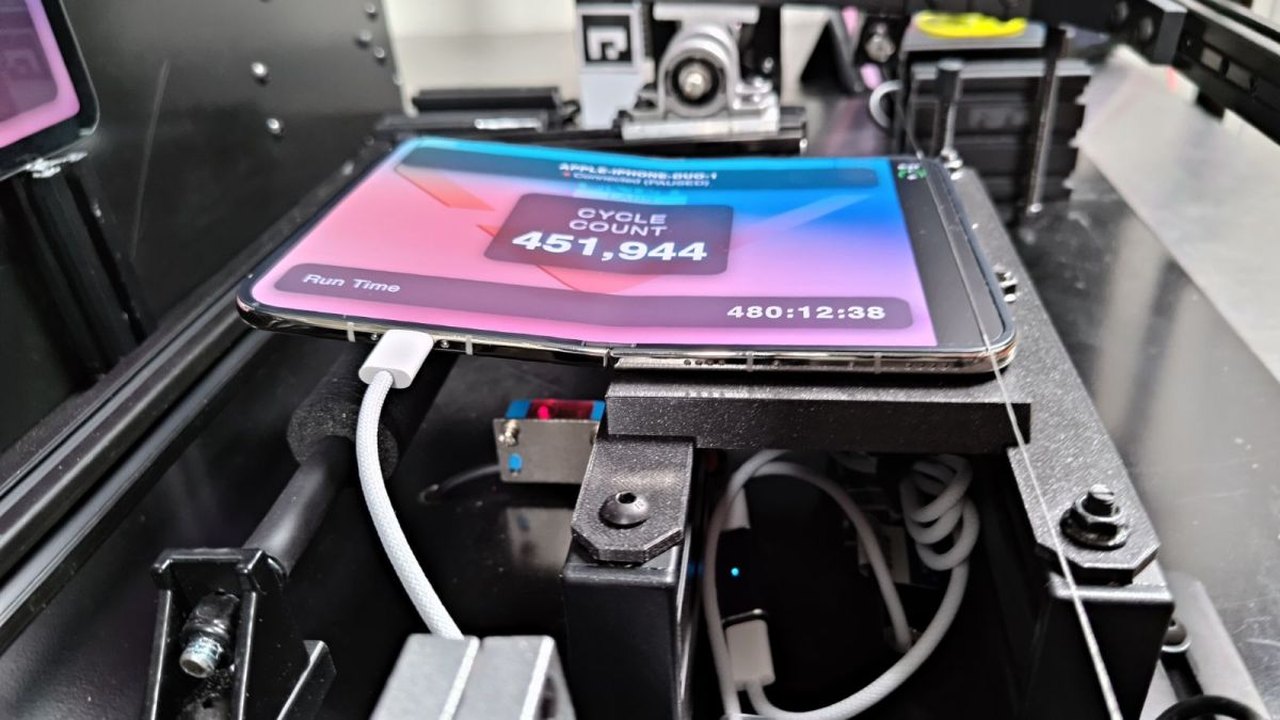
Image: CNET · Photo source · Resized and letterboxed to 16:9; no AI generation
A custom durability test conducted by CNET has recorded the first signs of wear on Apple's iPhone Duo hinge after more than three weeks and over 451,000 continuous folds on a mechanical testing rig called the Fold-a-Phone.
According to reported observations from the testing team, the device no longer opens completely flat on its own, stopping a few degrees short of a full open state. Sensor data indicates that changes in opening force and motion began around 390,000 folds on Tuesday afternoon, with mechanical behavior shifting further between 12:30 and 1 a.m. at approximately 440,300 folds.
Current Status and Operational Details
- Hinge Behavior: The phone falls short of opening fully flat by roughly 5 to 10 degrees, though it can still be pushed completely flat by hand.
- Functionality: The device remains operational, maintaining other screen positions without display blackouts, power loss, or visible screen cracking.
- Test Conditions: The testing setup subjects the device to automated folding using a specialized rig.
Context and Verification
- Testing Milestones: The 451,000 folds represent the equivalent of nearly 12 and a half years of use, calculated at an estimated rate of 100 folds per day.
- Manufacturer Specifications: Apple has not publicly stated an anticipated fold rating for the iPhone Duo. Internal estimates from the testing publication ranged from 500,000 to 1.5 million folds.
- Failure Criteria: The observed hinge wear does not currently meet the defined failure conditions, which require total power loss, sensor timing failures, or a complete screen blackout.
Observers can verify the ongoing durability assessment by watching the daily weekday livestreams hosted on YouTube between 1 p.m. and 5 p.m. ET to monitor the testing apparatus in real time.
AI-assisted reporting; source claims are attributed and have not been independently verified.
More to read
 Over 200,000 Apps Now Optimized for the iPhone Duo, Apple Reports
 Trying an iPhone Duo at the Apple Store? Don’t Leave Without Testing These 6 Things
 CNET Tests iPhone Duo Crease After 139,000 Folds Using Automated Machine
 Apple's iPhone Duo vs. iPhone 18 Pro: How the First Foldable Compares to the Latest Flagship