Ageing Muscles May Sacrifice Strength To Prevent Cell Damage, Study Reveals
· GlobeWire Daily Science Desk · Source: news.abplive.com
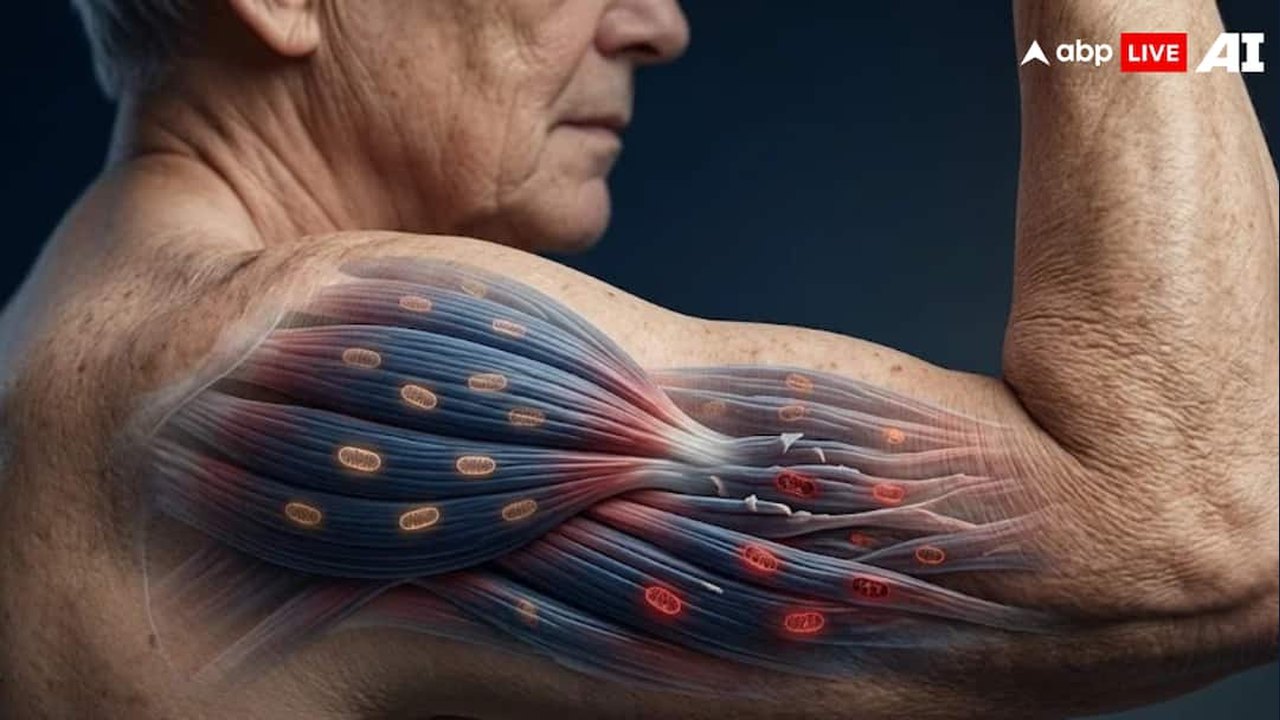
Image: Devyani Nautiyal · Photo source · Resized and letterboxed to 16:9; no AI generation
Scientists have reported that the natural decline in muscle strength during ageing may involve an unexpected protective response rather than simple failure. A recent study conducted by researchers at the University of Copenhagen suggests that ageing muscles might trade strength to protect cells from damage.
Key Findings From The Study
- Cardiolipin Molecule: Researchers identified that cardiolipin, a specialised fat molecule found in mitochondrial membranes, declines in ageing or diseased muscles in both mice and humans.
- Fibre Type Shift: Lower cardiolipin levels prompt a shift from fast-twitch fibres, which generate rapid movements, to slow-twitch fibres, which support sustained activity.
- Protective Signalling: The reduction in cardiolipin causes damaged mitochondria to produce reactive oxygen species (ROS), which act as stress signals triggering the muscle fibre adaptation.
- Metabolic Adaptation: Experiments indicated that muscle cells redirect glucose to produce internal antioxidants rather than energy, helping defend against oxidative stress.
Experimental Results In Mice
When researchers reduced cardiolipin levels in young mice, their muscles showed a similar transition to slow-twitch fibres. Furthermore, restoring cardiolipin to roughly two-thirds of normal levels reversed signs of muscle wasting and prevented premature deaths in the studied mice. Assistant Professor Fabian Finger noted that interfering with this protective response using antioxidants made the muscles fare worse, indicating a trade-off between power and cellular protection.
Future Implications And Limitations
While the findings offer a new perspective on muscle ageing, the therapeutic potential for humans remains unconfirmed. The experiments involving restoration and protective mechanisms were performed on mice, while human samples were only used to confirm declining cardiolipin levels with age.
Researchers noted that existing pathways could eventually be explored. For instance, the US Food and Drug Administration recently granted accelerated approval to elamipretide for Barth syndrome, a rare inherited disorder, as it helps stabilise cardiolipin. However, its efficacy against age-related muscle loss is currently unknown. Associate Professor Zachary Gerhart-Hines highlighted that future research must determine whether similar interventions can safely promote healthy adaptations in humans.
*Readers should consult a qualified healthcare provider for any medical advice or questions regarding health conditions.*
AI-assisted reporting; source claims are attributed and have not been independently verified.
More to read
 Common Anti-Inflammatory Drugs May Help Flu and COVID Viruses Spread, Study Warns
 Cleopatra's lead-based kohl may have helped ward off eye infections: Study
 Newly Identified Bird-Like Dinosaur May Be First Known Fruit-Eating Specialist, Study Finds
 How Jet Lag Throws Foraging Seabirds Off Course, Oxford Study Reveals
Trending on GlobeWire Daily
Selected from recent coverage and related topics; not live search rankings.
 Madhya Pradesh Government Plans Revenue Generation from 117-Year-Old Edward Villa in Mumbai Through Leasing
 iPhone 18 Pro Named TechRadar Product of the Year 2026
 Google Project Suncatcher Runs Gemma 4 AI on Orbiting Satellite and Receives First Response
 Gender Disparities in Eye Care Access Across India Examined
 Satellite Images Show Cyclone Arnab Weakening Over India As New System Brews
 Expanding Green and Blue Spaces Crucial for India's Economic and Public Health, Reports Indicate