Apple Updates iMac and Entry-Level MacBook Pro with M6 and N1 Chips
· GlobeWire Daily Science Desk · Source: arstechnica.com

Image: arstechnica.com — Creative Commons
Apple Refresh Brings M6 Generation to iMac and MacBook Pro
Apple has officially announced hardware refreshes for the iMac and the entry-level 14-inch MacBook Pro, integrating the M6 processor across both product lines. The M6 chip was previously introduced in the Mac mini. Alongside the processor upgrades, both computers now feature the N1 wireless connectivity chip, enabling Wi-Fi 7 and Bluetooth 6 capabilities.
Specifications and Model Variations
The update introduces distinct configuration tiers depending on the chosen model:
- iMac (Two Thunderbolt Ports): Equipped with a 10-core CPU and a 10-core GPU. This entry variant supports up to 24 GB of RAM and a maximum of 1 TB of storage, with a starting price of $1,499.
- iMac (Four Thunderbolt Ports): Features a 12-core CPU and a 12-core GPU. This option supports up to 32 GB of RAM and up to 2 TB of storage, starting at $1,699. This version also offers an optional configuration for up to 2.5Gb Ethernet.
- 14-inch MacBook Pro: Utilizes a single M6 option featuring a 12-core CPU and a 12-core GPU. It supports up to 32 GB of RAM and up to 4 TB of storage, with a starting price of $1,999. The MacBook Pro does not include an Ethernet port.
Both devices maintain the same exterior design as their immediate predecessors, showing no outward physical alterations.
Performance Improvements
The iMac receives a more substantial generational leap, bypassing the M5 to move directly from the M4 architecture. According to Apple's performance disclosures and prior testing data from the M6 Mac mini, users transitioning from the M4 iMac can anticipate up to 40 percent faster CPU performance, up to double the graphics performance, nearly five times faster on-device AI processing, and up to double the SSD read and write speeds.
For the entry-level 14-inch MacBook Pro, which previously featured the M5 chip, the single-generation upgrade delivers up to 30 percent faster graphics performance and up to double the Neural Engine performance compared to the prior model.
Launch Timeline
Preorders for the updated iMac and MacBook Pro begin on October 28, with official shipping scheduled to commence on November 6.
Practical Implications and Verification
For consumers evaluating these new releases, the decision largely depends on their current hardware generation and performance demands. Users on older M4 iMacs will notice the most significant jumps in AI processing, SSD speeds, and graphical output, whereas owners of recent M5 MacBook Pro models will experience more modest generational improvements.
Confirmed Details:
- Integration of the M6 processor and N1 wireless chip (Wi-Fi 7 and Bluetooth 6) in both the iMac and entry-level 14-inch MacBook Pro.
- Pricing tiers starting at $1,499 for the two-port iMac, $1,699 for the four-port iMac, and $1,999 for the MacBook Pro.
- Preorder date of October 28 and shipping date of November 6.
Unknown Details:
- Long-term real-world benchmarks outside of manufacturer claims and initial M6 Mac mini comparisons.
Readers can verify official specifications, pricing, and availability details directly through the [Ars Technica Report](https://arstechnica.com/apple/2026/10/apple-refreshes-the-imac-entry-level-macbook-pro-with-the-m6-chip/).
AI-assisted reporting; source claims are attributed and have not been independently verified.
More to read
 Anthropic S-1 Filing Highlights Extreme Risks, from AI Blackmail to Existential Threats
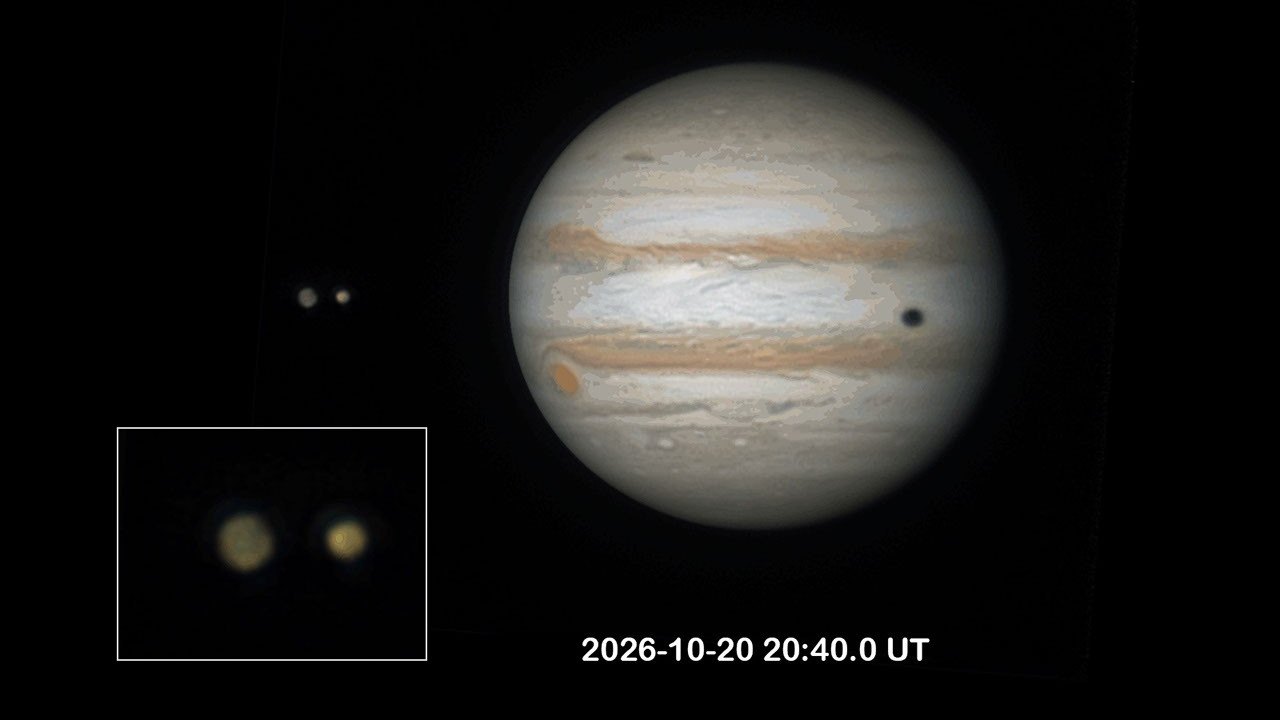 Rare Mutual Occultation of Jupiter's Moons Ganymede and Io Captured in New Astronomy Video
 Mysterious 1,000-Mile Cloud on Mars May Reveal Hitherto Unseen Atmospheric Physics
 OpenAI’s Latest Science Breakthroughs Draw Criticism Over Expert "Gatekeeping"
Trending on GlobeWire Daily
Selected from recent coverage and related topics; not live search rankings.
 NLC India Opens Applications for 1,067 ITI and Graduate Apprentice Positions
 India Women Secure ODI Series Against Zimbabwe After Record-Breaking Win
 Sony Pictures Releases Trailer for 'Jumanji: Open World' Ahead of December Release
 UPPSC Announces 501 Review Officer and Assistant Review Officer Posts – Application Window Opens Oct 26, 2026
 National Commission for Minorities Opens Offline Application for Principal Private Secretary Post in New Delhi
 Ministry of Civil Aviation Invites Applications for Airports Authority of India Member (Operations) Post