China’s Chang’e-7 Mission Prepares to Hunt for Lunar Ice at the Moon's South Pole
· GlobeWire Daily Science Desk · Source: news.abplive.com
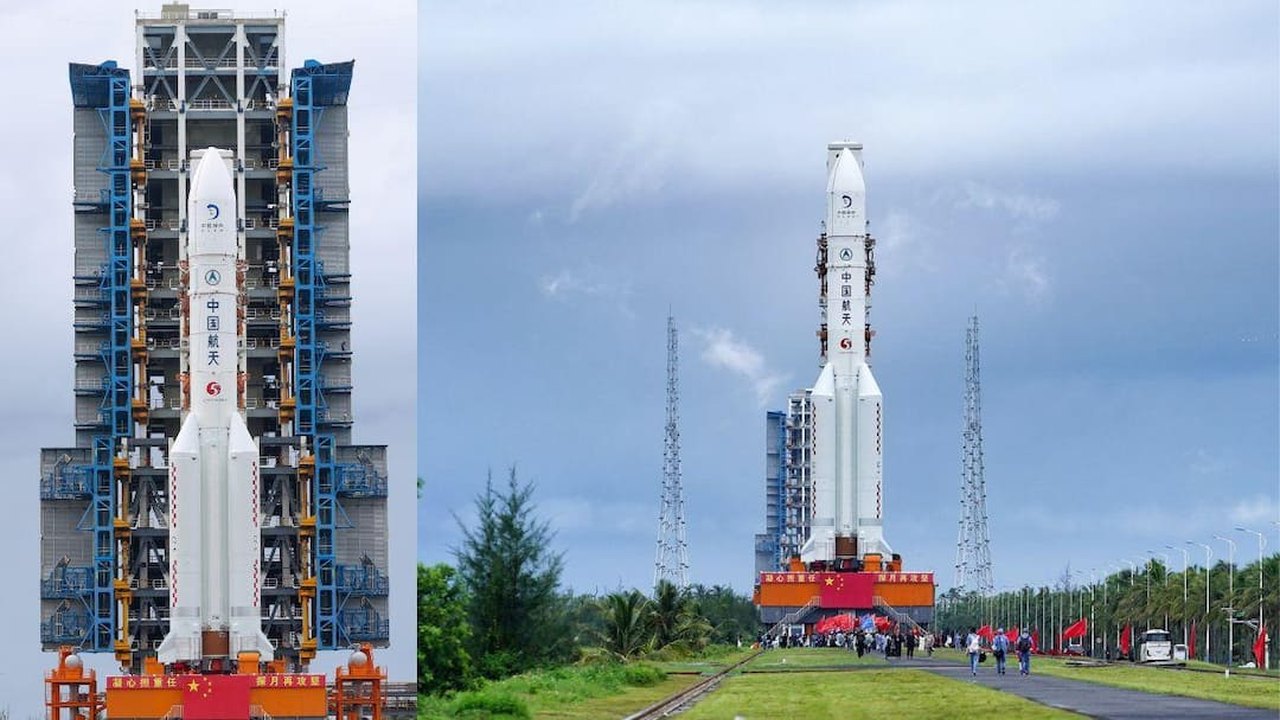
Image: Animesh Bhardwaj — Creative Commons
China is preparing to launch the Chang’e-7 uncrewed lunar mission, aimed at searching for frozen water within permanently shadowed craters near the Moon’s south pole. The advanced mission utilizes a combination of a robotic lander, a rover, and a specialized "hopping" probe to investigate some of the coldest environments in the solar system.
According to media reports, the spacecraft is scheduled to launch from the Wenchang Space Launch Site in Hainan using a Long March 5 rocket. Equipped with scientific instruments including water analysers, cameras, and radars, Chang’e-7 will enter lunar orbit to assess potential landing zones before attempting a touchdown.
Scientific Objectives and the Lunar South Pole
The primary goal of the mission is to determine whether frozen water exists in permanently shadowed regions of the lunar south pole. Certain craters in this area have remained untouched by direct sunlight for billions of years, causing temperatures to plummet to approximately minus 203 degrees Celsius (minus 334 Fahrenheit), as noted by NASA data.
Scientists believe these extreme conditions may preserve ancient water and volatile organic compounds. Accessing water on the Moon is considered vital for future exploration because it can potentially supply drinking water, generate oxygen for astronauts, and serve as raw material for rocket propellant.
One potential landing candidate being evaluated is near the rim of the Shackleton crater. While the crater's interior remains in permanent shadow, parts of its rugged rim experience nearly continuous sunlight, offering a stable thermal environment and continuous solar power for potential future outposts.
Innovative 'Hopping' Probe Technology
To navigate the treacherous, steep terrain of deeply shadowed craters that conventional wheeled rovers cannot easily cross, Chang’e-7 features an innovative hopping probe. Utilizing small thrusters, the probe will fly directly into shadowed craters and touch down on six articulated legs.
After exploring the dark terrain, the hopper is designed to return to sunlit areas to recharge its systems. It carries a water molecule analyser to study the presence of ice. However, specific technical details such as the hopper's exact weight, engine performance, and flight range have not been publicly disclosed.
International Context and Broader Lunar Ambitions
China has not announced an exact landing date, though space analysts cited in reports estimate a landing attempt could occur around November.
Chang’e-7 forms part of China's broader space roadmap, which includes aiming for a crewed lunar landing before 2030 and partnering with Russia to establish a joint research station by 2035. The mission also aligns with a wider international focus on the lunar south pole. Other nations and space agencies—including NASA, the European Space Agency, and space programs in India and Japan—are actively targeting the region. India previously achieved a successful landing near the lunar south pole with its Chandrayaan-3 mission in 2023.
Practical Implications and Verification
What is Confirmed vs. Unknown
- Confirmed: China is preparing the Chang’e-7 uncrewed mission to launch via a Long March 5 rocket from the Wenchang Space Launch Site, carrying a lander, rover, and a hopping probe to search for lunar ice at the south pole.
- Confirmed: Other international entities, including the US, India, and Russia, also have lunar south pole exploration initiatives.
- Unknown: A specific launch date, an exact landing date (estimated by observers around November), and technical specifications of the hopping probe have not been officially disclosed.
How to Verify the Announcement
Readers can review baseline reporting and updates regarding this space mission through official aerospace updates and verified news coverage, starting with the primary reporting available at the [ABP Live Source Article](https://news.abplive.com/science/china-s-chang-e-7-mission-to-hunt-for-lunar-ice-in-one-of-the-solar-system-s-coldest-places-what-it-means-for-india-1863169).
AI-assisted reporting; source claims are attributed and have not been independently verified.
More to read
 NASA Updates Research Solicitations, Program Announcements, and Submission Portals
 ISRO Employee Associations Seek Official Clarification Amid Space Sector Privatisation Push
 NASA's Lucy Spacecraft Enters Unexplored Jupiter Trojan Asteroid Region
 US Economists Robert Hall and Michael Woodford Win 2026 Nobel Economics Prize
Trending on GlobeWire Daily
Selected from recent coverage and related topics; not live search rankings.
 Uttar Pradesh Police Suspend Badhapur SHO After Obscene Video Shared in Official WhatsApp Group
 Exploring Official MyJio App Features and Limits of Promotional Data Codes
 Bihar Museum Ranks Ninth Globally, Sparking Praise From Anand Mahindra and an Official Invitation From State Leadership
 Latin’s Enduring Benefits: Teachers Report Lifelong Skills From Classical StudiesISRO Employee Associations Seek Official Clarification Amid Space Sector Privatisation Push
 Karva Chauth Dispute in Mathura: Woman Found at Acquaintance's Home Leads to Public Confrontation